


Cart
0

High-rise straight and wide-leg silhouettes are the safest starting points for most body types. From there, you refine by shape. Here is the quick breakdown:
- Apple: High-rise straight or wide-leg to define the waist and lengthen the torso
- Pear: High-rise bootcut or flare to balance hips with a wider leg opening
- Hourglass: High-rise skinny or straight to follow your curves without adding bulk
- Rectangle: Barrel-leg or flared high-rise to create the illusion of hips and waist
- Inverted triangle: Wide-leg or flare to add volume below and balance broad shoulders
- Petite: Dark-wash straight-leg with a matching shoe to create an unbroken leg line
- Curvy/plus: High-rise with a contoured waistband to reduce waist gap and support the hips
In-store, grab a high-rise straight-leg first. It works across the widest range of frames. Skip low-rise cuts on your first pass — they rarely flatter without significant trial and error.
Pro Tip: Wear your thinnest underwear and a fitted top when trying on jeans. Bulky layers distort how the waistband and seat actually sit.
According to rise measurement guidance, high-rise fits (10 inches or more) are recommended across most body types because they define the waist and visually lengthen the legs. Low-rise cuts (under 8 inches) tend to shorten the torso and work best on very specific proportions.
Table of Contents
- Jeans for apple shapes: what actually works in the fitting room
- Jeans for pear shapes: balancing hips and shoulders
- Jeans for hourglass shapes: following your curves without adding bulk
- Jeans for rectangle shapes: creating curves through cut and detail
- Jeans for inverted triangle and triangle shapes: evening out the silhouette
- What stylists actually tell their clients about denim
- Key Takeaways
- The confidence to shop without second-guessing yourself
- Cas7m picks that match these recommendations
- Useful sources
- FAQ
Jeans for apple shapes: what actually works in the fitting room
The goal for apple shapes is to define the waist and draw the eye downward. High-rise straight-leg and wide-leg cuts do this best because the rise sits above the widest point of the midsection, creating a visual waistline.
Do:
- Choose a rise of 10 inches or more
- Look for a straight or wide leg from hip to hem
- Pick dark, solid washes without front distressing
- Seek out back pockets placed high and centered to lift the seat visually
- Opt for denim with 1–2% elastane for comfort and shape retention throughout the day
Avoid:
- Low-rise cuts that sit below the belly and create a muffin-top effect
- Skinny jeans that cling through the thigh and midsection
- Heavy front distressing or large patch pockets that add visual bulk at the stomach
- Cropped hems that cut the leg line short
Styling: Pair with a slightly longer tunic or an untucked button-down that skims the hip. Ankle boots or heeled mules extend the leg. For a quick midsection fix, a dark wash with a flat front panel smooths the silhouette without adding structure.
Pro Tip: Look for jeans labeled “tummy control” or with a double-layer front panel. The extra fabric layer lies flat and does not add bulk.
Jeans for pear shapes: balancing hips and shoulders
Pear shapes carry more volume through the hips and thighs than the bust. The fix is a wider leg opening below the knee to mirror that hip volume and create a balanced line from shoulder to hem.
Do:
- Start with a high-rise bootcut or flare — the wider hem balances pear proportions by echoing hip width below the knee
- Look for contoured waistbands, which reduce the gap between waist and hip and are common in curvy-specific fits
- Choose dark washes on the lower half to minimize visual width at the hips
- Seek back pockets that are medium-sized and centered; small pockets make hips look larger by contrast
Avoid:
- Skinny or straight-leg cuts that taper through the thigh and emphasize hip width
- Light washes or heavy distressing concentrated at the thighs
- Low-rise cuts that sit below the hip curve and eliminate the waist definition you have
Fit tip: Thigh room is the first thing to check. If the denim pulls horizontally across the thigh when you stand, size up and tailor the waist. Contoured waistbands, found in curvy-specific lines, reduce waist gap and are worth the search.
| Feature | What to look for | Why it helps |
|---|---|---|
| Waistband | Contoured or elasticated back | Reduces gap between waist and hip |
| Leg shape | Bootcut or flare | Mirrors hip volume below the knee |
| Wash | Dark, solid | Minimizes visual width at hips |
| Price range | mid-range for curvy-specific features | Contoured waistbands appear at this tier |
Pro Tip: When trying on bootcut jeans, wear the shoes you plan to pair them with. The hem length changes how balanced the silhouette looks.
Jeans for hourglass shapes: following your curves without adding bulk
Hourglass frames have a defined waist with bust and hips in close proportion. The priority is preserving that waist definition rather than hiding or adding to it. High-rise structured denim and dark washes are consistently the most versatile choices here.
Do:
- Choose high-rise skinny or straight-leg cuts that follow the natural curve
- Look for medium-sized back pockets that sit at the fullest part of the seat
- Use a belt at the waist to anchor the rise if there is any gaping
Avoid:
- Low-rise cuts that cut across the hip and eliminate the waist curve
- Oversized or wide-leg silhouettes that hide the waist definition you have
- Very small back pockets that make the seat look larger by contrast
Styling: A tucked-in top shows the waist. Straight-leg cuts work well with both sneakers and heeled boots. If you experience waist gaping at the back, a tailor can take in the waistband for under $20 at most local shops.
Pro Tip: Straight-leg jeans are a reliable starting point for hourglass shapes because they neither cling nor overwhelm — they simply follow the line you already have.
Jeans for rectangle shapes: creating curves through cut and detail
Rectangle frames have shoulders, waist, and hips within a few inches of each other. The goal is to create the illusion of a waist and hips through silhouette and detail rather than fit alone.
Barrel-leg jeans are a standout choice here. Roomy through the thigh and tapered at the ankle, they add visual volume at the hip without bulk. Flared and wide-leg high-rise cuts work for the same reason.
Do:
- Try barrel-leg, flared, or wide-leg silhouettes in a high rise
- Look for front seam details, yoke stitching, or curved seams that suggest a waist
- Use a belt through the loops to cinch the waist visually
- Choose medium or light washes with subtle front detailing to add dimension
Avoid:
- Straight-leg cuts with no waist definition — they read as boxy on straighter frames
- Very dark, plain washes with no detail that flatten the silhouette further
- Elastic waistbands with no structure, which eliminate any waist suggestion
Styling: A cropped top or a tucked blouse shows the waist. Wide-leg jeans paired with a fitted top create contrast. Chunky shoes or platform sneakers add proportion at the base.
Pro Tip: Seam details and curved yoke stitching at the back create the suggestion of a waist and seat even when the measurements are close together. Check the back of the jeans before you try them on.
Jeans for inverted triangle and triangle shapes: evening out the silhouette
These two shapes are opposites, so the fix is different for each.
Inverted triangle (broad shoulders, narrow hips): The goal is to add volume below the waist to balance wide shoulders. Wide-leg, flared, or bootcut silhouettes in a mid-to-high rise do this well. Stylists Elana and Dina Solomon recommend denim that “skims rather than clings” for athletic builds with straighter hips, favoring mid-to-high-rise bootcut styles to add softness and shape at the hip.
Do (inverted triangle):
- Choose wide-leg, flare, or bootcut in a high rise
- Look for light or medium washes on the lower half to add visual weight
- Avoid tapered or skinny cuts that emphasize the narrow hip
Triangle (narrow shoulders, wider hips): This is essentially the pear shape. Refer to the pear section above. The key addition: structured tops with volume at the shoulder (puff sleeves, wide necklines) paired with a bootcut or straight-leg jean create balance from top to bottom.
Pro Tip: For inverted triangle frames, a high-waist bootcut legging or flared bottom adds the hip curve that straight cuts remove. Pair with a fitted top to keep the shoulder line visible.
What stylists actually tell their clients about denim
The most consistent advice from professional stylists comes down to fabric, rise, and silhouette — in that order.
“Athletic builds with straighter hips often benefit from denim that skims rather than clings. Mid- to high-rise bootcut styles add softness and shape at the hip while ensuring the fabric does not pull across the thighs.” — Elana and Dina Solomon, stylists, via Yahoo Shopping
The fabric point matters more than most shoppers realize. Around 1–2% elastane gives denim the stretch and recovery it needs to hold shape through a full day without bagging at the knees or seat. Pure rigid denim looks sharp on the rack but loses its shape fast on the body.
| Fabric blend | Best for | What to expect |
|---|---|---|
| Cotton with 1–2% elastane | Most body types | Comfortable stretch, good shape retention |
| Pure cotton (rigid) | Rectangle/straight frames | Structure and definition, less give |
| Higher elastane (3%+) | Curvy/plus shapes needing more flex | More stretch, may lose shape faster |
Silhouette trends worth knowing: Barrel-leg jeans are a defining silhouette right now, particularly useful for rectangle and straight frames. Wide-leg cuts remain strong across multiple shapes. Straight-leg stays the most universally flattering starting point, per stylist guidance.
Quick in-store checks pros use:
- Check the back yoke seam — a curved yoke lifts the seat; a straight one flattens it
- Look at the pocket placement from the back before trying on; low pockets elongate, high pockets lift
- Check the hem allowance — at least an inch of extra fabric means you can tailor the length
For hem length and how it interacts with your shoe choice, proper trouser break guidance is worth a quick read before your next shopping trip.
Key Takeaways
Choosing jeans for body type comes down to three decisions: rise, leg shape, and fabric blend — get those right and the rest is styling.
| Point | Details |
|---|---|
| Start with high-rise | A rise of 10 inches or more flatters most body types by defining the waist and lengthening the leg. |
| Match leg shape to your frame | Bootcut/flare for pear and inverted triangle; barrel-leg or wide-leg for rectangle; straight or skinny for hourglass. |
| Check fabric blend | Look for 1–2% elastane for shape retention; pure cotton bags quickly with wear. |
| Run four fitting-room tests | Waistband, sit, walk, and squat tests tell you more than the size tag ever will. |
| Cas7m high-waist denim | Cas7m’s high-waist women’s jeans cover the core rise recommendation for apple, pear, and hourglass shapes. |
The confidence to shop without second-guessing yourself
Most people walk into a denim aisle and grab what looks good on the hanger. That almost never works. Jeans are one of the few garments where the fit on the body has almost nothing to do with how the pair looks folded on a shelf.
The smarter move is to walk in knowing your two or three numbers (waist, hips, inseam), your shape category, and your try-first silhouette. That narrows a wall of options down to a manageable handful. From there, the fitting room does the rest.
One thing worth keeping in mind: size is a number assigned by a manufacturer, not a measurement of you. A size 10 in one brand fits like a size 8 in another. Fit is what matters. When a pair fits everywhere except the hem, a tailor fixes that in ten minutes. Keep one good local tailor in your contacts and you will get more out of every pair you buy.
Cas7m picks that match these recommendations
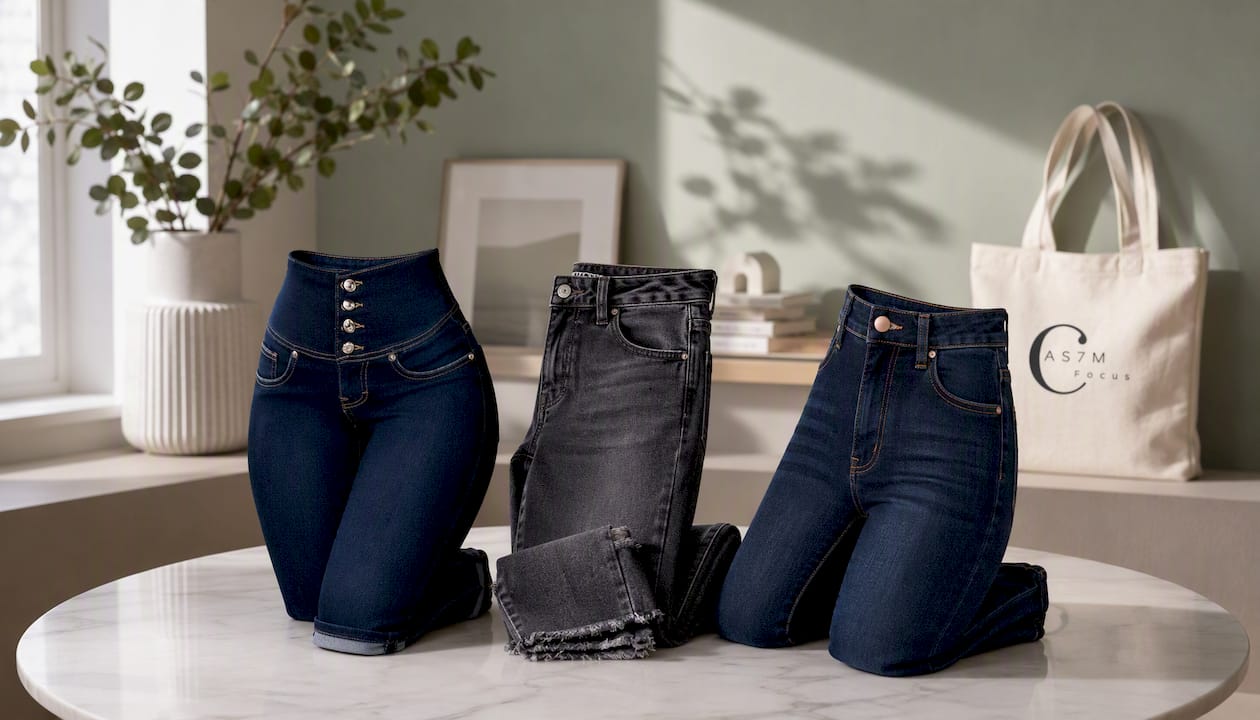
Cas7m carries three denim styles that map directly to the shape guidance above.
The Bodybuilding Peach Hip Shaping Jeans are built for pear and inverted triangle shapes. The hip-shaping construction adds curve and lift where straight-cut denim falls flat. Fit hint: size to your hips and check the waist with the two-finger test.
The Fashionable Retro Slim-fit Stretch Jeans For Women suit hourglass and petite frames. The slim cut follows the body’s natural line without clinging, and the stretch fabric passes the squat test without pulling. Fit hint: if the thigh fits, the waist can be belted or tailored.
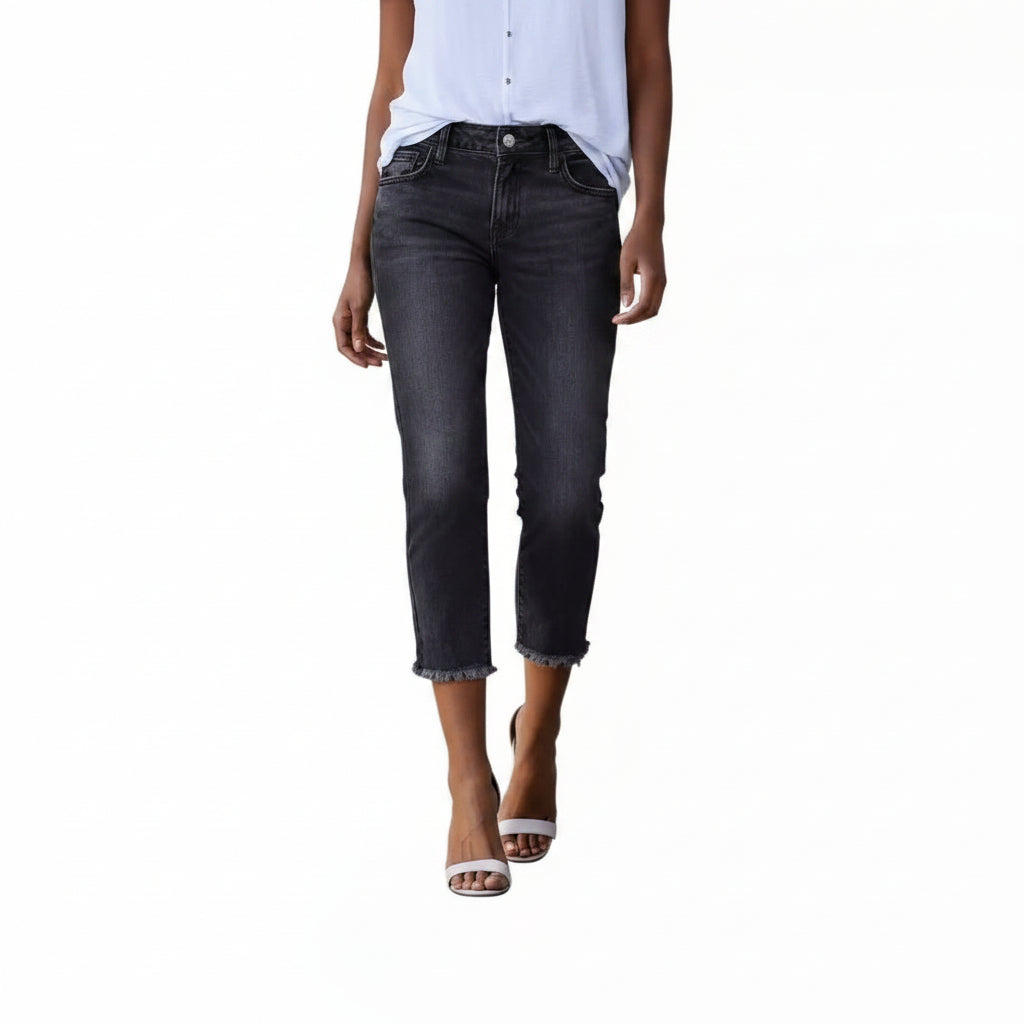
The High Waist Women’s Jeans are the most versatile pick in the range. The high rise works for apple, pear, rectangle, and hourglass shapes alike. Fit hint: start here if you are unsure of your shape and want a reliable first try.
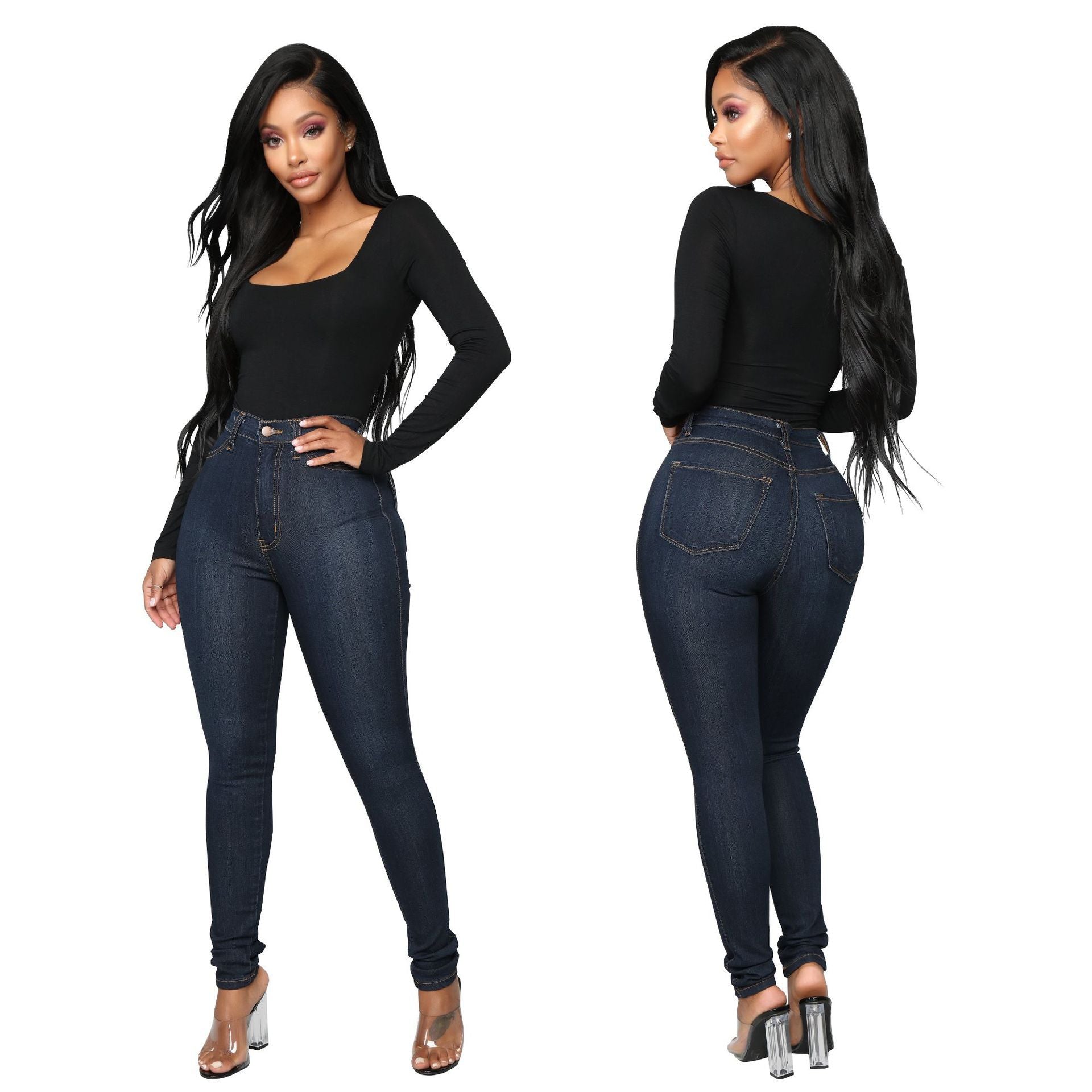
Browse the full collection at Cas7m to find your fit.
Useful sources
- Jeans for Every Body Type: 8 Flattering Styles That Work — FloraDress
- What are the most flattering jeans for different body types? Stylists share their tips
- Stylist reveals how to find your perfect pair of jeans according to your body shape | Gathered
- Best Jeans for Pear Shaped Body, Complete Guide with Examples
- The Best Editor-Approved Jeans For A Pear Shaped Body 2026
FAQ
What rise is best for most body types?
High-rise jeans (10 inches or more) are the most universally flattering because they define the waist and lengthen the leg line. Low-rise cuts work best only on very specific proportions.
How do I pick jeans for a pear-shaped body?
Choose a high-rise bootcut or flare to balance hip width with a wider hem, and look for contoured waistbands that reduce the gap between waist and hips. Dark washes on the lower half minimize visual width.
What jeans work for an athletic or rectangle build?
Barrel-leg, flared, or wide-leg high-rise cuts add the illusion of hips and waist on straighter frames. Avoid plain straight-leg cuts with no seam detail, as they can read as boxy.
When should I size up versus try a different cut?
Size up when the denim pulls horizontally across the thigh or seat. Try a different cut when you see vertical pulling at the crotch or excess fabric bunching at the knee — those are proportion issues, not size issues.
Is tailoring worth it for jeans?
Hemming typically costs $10–$20 and is almost always worth it. Waist taking-in runs $20–$40 and can make a mid-range pair fit as well as a premium one.

