


Cart
0
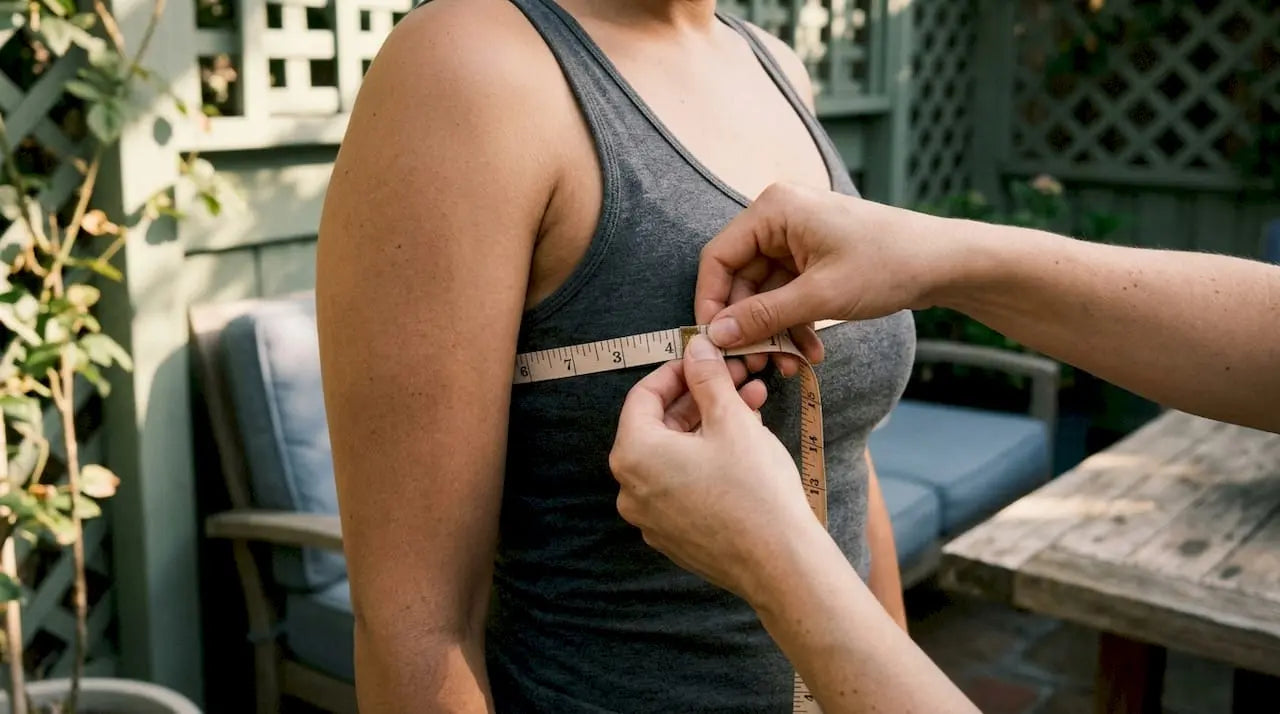
Measure your bust, waist, and hips with a soft tape, then match those three numbers to a size chart, prioritizing whichever measurement lands in the largest size. Always check the garment’s own measurements before you check the size label, since fabric, cut, and brand all shift the fit. This guide walks through the exact steps, gives you a US chart in inches and centimeters, and shows how CAS7MFOCUS applies these rules to real dresses.
TL;DR:
- Matching your largest measurement, whether bust, waist, or hips, ensures the best fit and easier tailoring options.
- Always compare your measurements to actual garment measurements listed on product pages rather than relying solely on size labels due to vanity sizing.
- Plus-size and petite shoppers should focus on chart specifics, accounting for different proportions like torso length or full-body curves.
- Fabrics with high elastane content or stretch qualities may require sizing down, while structured fabrics often need sizing up for comfort.
- Tailoring fixes are generally more affordable and effective for removing excess fabric than trying to size down through alterations or returns.
Table of Contents
- Dress Size Guide: How to Measure Bust, Waist, and Hips
- US Women’s Dress Size Chart: Numeric and Letter Sizes
- How Do US, UK, and EU Dress Sizes Compare?
- Which Measurement Matters Most for Your Dress Style
- Fixing Common Dress Fit Problems
- Should You Measure Over Clothes or in Undergarments?
- Measuring Tips for Plus-Size and Petite Shoppers
- Common Size Chart Mistakes That Lead to Returns
- Where CAS7M’s Sizing Expertise Comes In
- How to Choose Between Sheath, Wrap, and Casual Dress Sizing
- Where to Buy Dresses That Fit True to Size
- Sources
- FAQ
Dress Size Guide: How to Measure Bust, Waist, and Hips
Get these three numbers right and everything else in this dress size guide falls into place. You’ll need a soft, flexible tape measure (not the stiff metal kind from a toolbox), a mirror, and about five minutes.
Wear a well-fitted bra and underwear, or review this Boho Braids Size Selection Guide for tips on finding your fit, similar in measuring technique to selecting dress sizes, or the type of shapewear you’d actually wear under the dress. Skip bulky sweaters or leggings that add false inches.
- Bust: Wrap the tape around the fullest part of your bust, keeping it level across your back. Breathe normally and don’t pull the tape tight.
- Waist: Find your natural waistline (bend to one side; the crease that forms is it), then wrap the tape around, keeping one finger between tape and skin.
- Hips: Stand with feet together and measure around the widest part of your hips and backside, usually 7 to 9 inches below your waist.
- Length (optional): Measure from the top of your shoulder to where you want the hem to fall, useful for maxi or midi styles.
For stretch fabrics like jersey or ribbed knits, measure the garment both relaxed and pulled taut. Retailers sometimes list both figures, and step-by-step measurement guidance suggests matching your body number to the relaxed measurement for a looser feel, or the stretched number if you want something closer to the body.
Pro Tip: Write your three measurements down somewhere you’ll actually find them again, like a note on your phone. Brands change their size charts every year or two, so having your real numbers on hand saves you from re-measuring every time you shop.
US Women’s Dress Size Chart: Numeric and Letter Sizes
There’s no single agency that regulates dress sizes in the United States, which is exactly why two size 8 dresses from different brands can fit like different garments entirely. A breakdown of why dress sizing varies points out that a size 8 or 10 is generally treated as a medium, but every brand sets its own chart around that rough consensus.
Here’s a general mapping using bust, waist, and hip ranges, drawn from standard dress size calculator data:
- XS (US 0-2): Bust 32-33 in (81-84 cm), Waist 24-25 in (61-64 cm), Hips 34-35 in (86-89 cm)
- S (US 4-6): Bust 34-35 in (86-89 cm), Waist 26-27 in (66-69 cm), Hips 36-37 in (91-94 cm)
- M (US 8-10): Bust 36-37.5 in (91-95 cm), Waist 28-30 in (71-76 cm), Hips 38-39.5 in (97-100 cm)
- L (US 12-14): Bust 39-41 in (99-104 cm), Waist 31.5-33.5 in (80-85 cm), Hips 41-43 in (104-109 cm)
- XL (US 16-18): Bust 43-45 in (109-114 cm), Waist 35.5-38 in (90-97 cm), Hips 45-47 in (114-119 cm)
- XXL (US 20-22): Bust 47-49 in (119-124 cm), Waist 40-43 in (102-109 cm), Hips 49-51 in (124-130 cm)
Treat these ranges as a starting point, not gospel. Vanity sizing means a size 8 at one retailer can match a size 12 at another, and your own measurements stay the same no matter what the tag says. Whenever a product page lists the actual garment measurements, in inches or centimeters, use those over the size label every time.
How Do US, UK, and EU Dress Sizes Compare?
A US 8 typically lines up with a UK 12 and an EU 40, but that conversion is a rough guide, not a promise. Common equivalents look like this, based on international conversion chart data:
- US 4 = UK 8 = EU 36 = S
- US 6 = UK 10 = EU 38 = S/M
- US 8 = UK 12 = EU 40 = M
- US 10 = UK 14 = EU 42 = M/L
- US 12 = UK 16 = EU 44 = L
These conversions break down fastest in two spots: plus-size lines, where brands often build a completely separate chart rather than just extending the standard one, and petite or tall ranges, where the numeric size stays the same but proportions shift. A EU 40 petite and a EU 40 tall can differ by several inches in torso length even though the label reads identically.
Treat every conversion chart as a fallback, not a rule. Measurements settle disputes that size labels can’t.
Which Measurement Matters Most for Your Dress Style
The general rule holds for most dresses: size for your largest measurement. A too-tight bodice or waistband is harder to fix than a slightly loose hem, and tailoring guidance on sizing decisions backs this up. Letting out a seam is a quick fix; adding fabric to a garment that’s too small usually isn’t possible at all.
That said, the silhouette changes which measurement carries the most weight:
- A-line and empire-waist: Prioritize the bust or high-waist measurement, since the skirt flares out and hides hip width.
- Sheath and column dresses: Bust, waist, and hips all matter roughly equally because the cut follows your body closely.
- Bodycon: Size for hips first, since that’s usually the tightest point, and confirm the fabric has enough stretch to move with you.
- Wrap dresses: These are the most forgiving; a slightly smaller bust measurement often still works because the tie adjusts the fit.
Fabric content changes the math too. Pro Tip: Read the actual customer reviews on a listing before you check out. Comments like “runs small in the shoulders” or “true to size but long” tell you more than any chart ever will.
Fixing Common Dress Fit Problems
A dress that’s close but not quite right is often salvageable. Here’s how to handle the most common issues:
- Gaping at the bust: A tailor can add or adjust bust darts, usually a low-cost fix.
- Too loose at the waist: Taking in the side seams is one of the simplest and cheapest alterations available.
- Hem too long or short: A hem adjustment is typically the least expensive tailoring job you can request.
- Sleeves too tight: This one is harder to fix and often means sizing up or choosing a different style.
As a rule of thumb, if alterations cost less than a third of the dress’s price, it’s usually worth tailoring rather than returning. Reading the garment measurements and zooming into review photos before you buy cuts down on how often you’ll need this list at all.
Should You Measure Over Clothes or in Undergarments?
Measure in the undergarments you’d actually wear under the dress, not bare skin and not a bulky sweater. A properly fitted bra changes your bust measurement enough to shift you a full size in either direction, so putting it on before you pick up the tape matters more than people expect.
If you’re deciding between a fitted seamless bra and a padded one, measure in whichever you’ll wear with that specific dress. A strapless gown calls for a strapless bra measurement; a casual day dress calls for whatever you normally wear underneath. Shapewear counts too. If you plan to wear it, measure with it on, since shapewear can shave half an inch or more off your waist and hip numbers.
Never measure over a coat, cardigan, or thick sweater. It sounds obvious, but it’s one of the most common reasons people size up unnecessarily and end up with a dress that gapes at the shoulders. The same logic applies if you’re measuring for a fitted style versus something loose and relaxed. A snug sheath dress needs a precise, close-to-skin measurement, while a flowy dress has more room for error.
If you’re unsure which undergarment you’ll wear, measure in a basic, well-fitted bra and plain underwear as your baseline. That gives you a consistent number you can compare across every chart, whether you’re checking a dress size calculator or a specific brand’s product page.
Measuring Tips for Plus-Size and Petite Shoppers
Plus-size charts frequently start at a different baseline than standard charts, so don’t assume a plus-size XL and a standard-size XL share the same bust or hip range. Many brands build plus-size lines with their own proportions rather than simply scaling up the standard chart, which means checking that specific chart matters more here than almost anywhere else in this dress size guide.
For petite frames, torso length is the detail most charts leave out. Two people with identical bust and waist measurements can need completely different dress lengths if one has a shorter torso. When a brand offers petite or tall options, use them. When it doesn’t, pay close attention to the total length listed on the product page and compare it to your shoulder-to-hem measurement rather than guessing from the size label alone.
Both plus-size and petite shoppers benefit from measuring hips a second way: at the absolute widest point, even if that falls a couple inches lower than the standard 7 to 9 inch guideline. Curves distribute differently from body to body, and a chart built on averages won’t always catch where your fullest point actually sits.
One more detail worth checking: fabric weight. Heavier fabrics like structured cotton or twill hold their shape and need more precise measurements, while lighter jersey or rayon blends have built-in give. If you’re between two sizes on a plus-size or petite chart, lean toward the heavier fabric size up and the stretch fabric size down, matching the earlier rule about elastane content.
Common Size Chart Mistakes That Lead to Returns
The single biggest mistake is trusting the size label over the garment’s actual measurements. A “medium” at one store and a “medium” at another can differ by two full inches in the bust, which is exactly why vanity sizing trips up even experienced shoppers.
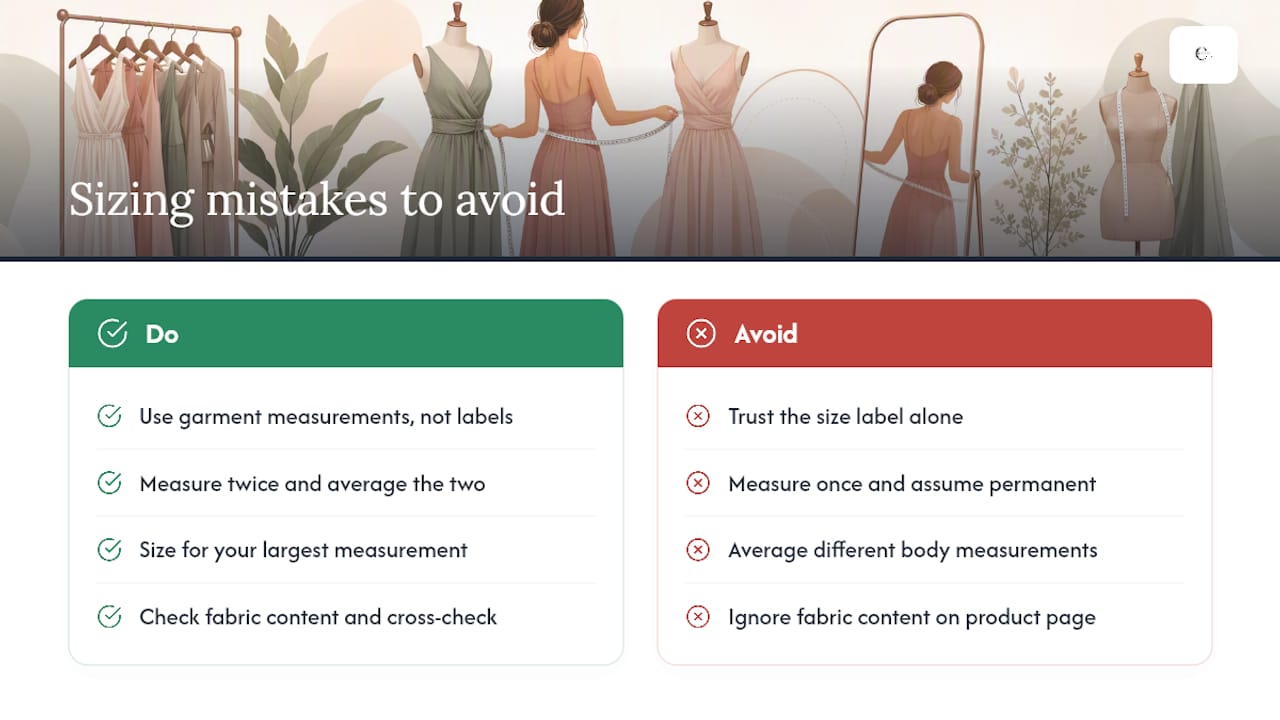
The second mistake is measuring once and assuming it’s permanent. Bodies shift with the season, with weight changes, and honestly with how snugly you pull the tape that day. Measuring twice and averaging the two numbers gives you a more reliable figure than a single quick check.
Third, shoppers often average their three measurements together instead of sizing for the largest one. If your bust says small and your hips say medium, you’re a medium, not something in between. Averaging leads directly to a dress that’s tight where it counts.
Finally, ignoring fabric content on the product page causes more returns than almost any other factor. Some garment measurement apps can help cross-check your numbers against a brand’s chart, but they’re only as good as the measurements you feed them.
Where CAS7M’s Sizing Expertise Comes In
CAS7MFOCUS builds size charts around the same measurement-first logic covered in this dress size guide, applied across casual wear, occasion dresses, and everyday basics. Every dress listing includes garment measurements alongside the standard size label, so you can check both before you buy.
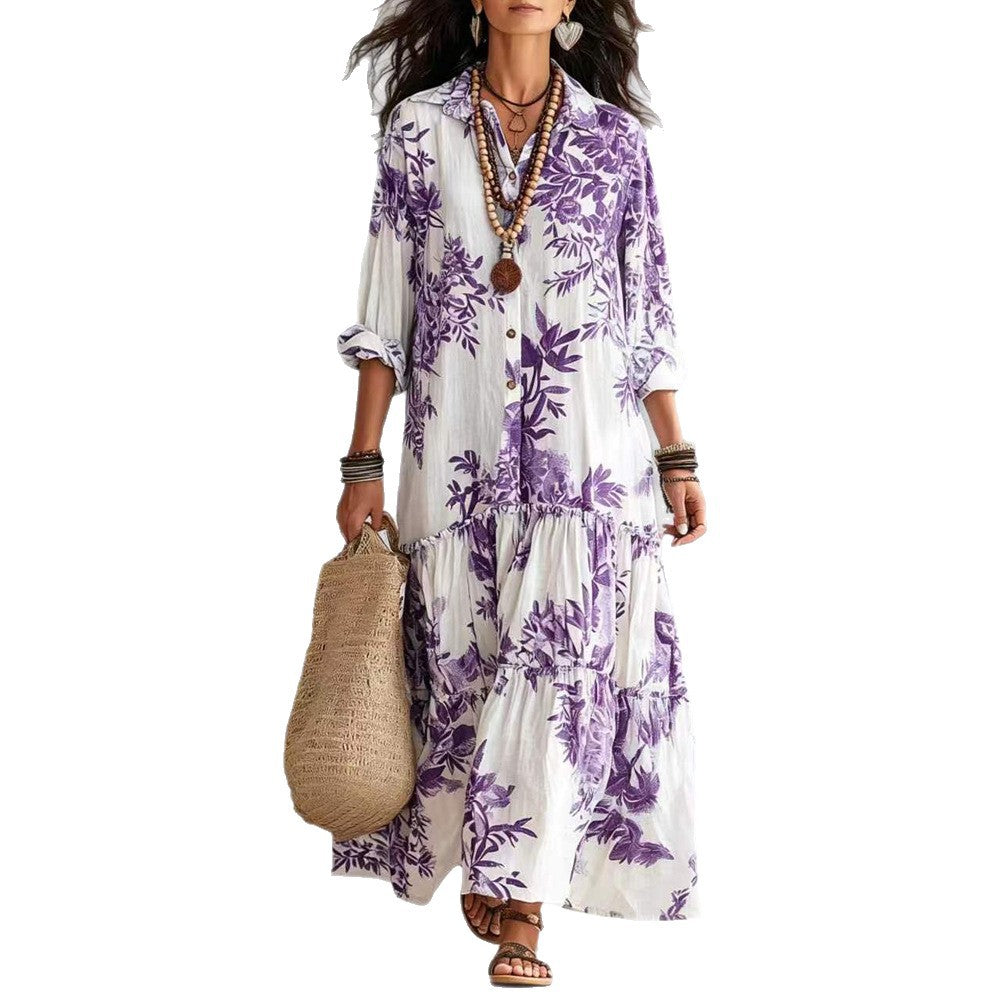
Take three examples from the current lineup. The Plus Size Women’s Cotton and Linen Round Neck Long Sleeve Dress uses a relaxed, breathable cut, so sizing to your hip measurement works well as the linen doesn’t stretch. A turtleneck sheath dress calls for close attention to both bust and hip numbers since the silhouette follows the body closely. A casual lapel dress with long sleeves offers more room through the shoulders, making it more forgiving if you land between two sizes.
How to Choose Between Sheath, Wrap, and Casual Dress Sizing
Conventional sizing advice tends to treat all dresses the same way, telling shoppers to just find their “usual size” and move on. That advice falls apart the moment you compare a stretch bodycon dress to a structured woven sheath. The fabric and cut change the math every time, which is why this guide leans so heavily on silhouette-specific rules instead of a single blanket recommendation.
What gets underestimated most is how much fabric content matters compared to the number on the tag. Two dresses labeled identically can fit completely differently once you factor in elastane percentage, and that detail sits buried in the product description far more often than it should. Reading that line before checking the size chart would save more shoppers from a return than any conversion table could.
If there’s one place to start, it’s measuring your hips accurately. Most fit complaints trace back to that single number being wrong, whether from measuring over the wrong undergarments or skipping the widest point. Get that measurement right, cross-check it against the garment’s own chart, and the rest of the sizing process gets considerably easier.
— CAS7M
Where to Buy Dresses That Fit True to Size
Every dress on CAS7MFOCUS lists its own garment measurements next to the standard size label, so you’re never stuck guessing between a brand’s version of “medium” and your own. That’s the real advantage here: you check your bust, waist, and hip numbers against the actual product measurements, not just a size chart that may run differently from what you’re used to.
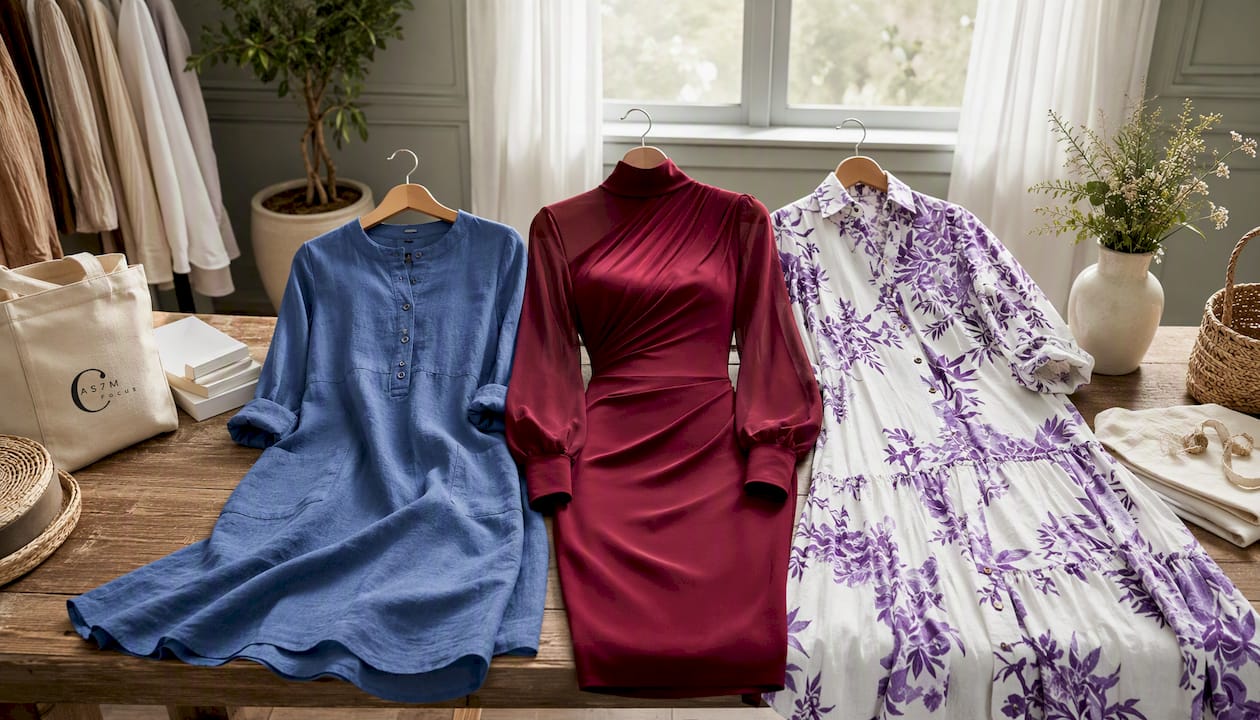
The Plus Size Women’s Cotton and Linen Round Neck Long Sleeve Dress works best when you size to your hip measurement, since the linen blend holds its shape rather than stretching. The Turtleneck Slim-Fit Sheath Dress calls for checking both bust and hip figures on the product page, since the fitted cut leaves little room for error. The New Women’s Casual Long-Sleeve Lapel Dress has a more relaxed shoulder and body, making it a safer pick if your measurements fall between two sizes.
Before you add anything to your cart, scroll to the measurement table on the product page and compare it directly to the numbers you took earlier in this guide. It takes an extra minute and it’s the single best way to skip a return altogether.
Sources
FAQ
How Do I Know My Dress Size?
Measure your bust, waist, and hips with a soft tape measure, then compare those numbers to the brand’s size chart, sizing for whichever measurement falls into the largest category.
How Do I Determine My Dress Size If Brands Vary?
Check the specific garment measurements listed on the product page rather than relying on the size label alone, since vanity sizing means a size 8 at one store can differ from a size 8 elsewhere.
Is a US Size 8 a Medium or Large?
A US size 8 is generally considered a medium, though the exact fit depends on the brand’s own chart. Dress size data confirms there’s no universal standard tying numeric sizes to letter sizes.
Is a Size 10 Woman a Medium or Large?
A US size 10 typically falls at the upper end of medium, sometimes labeled medium/large depending on the brand, which is why checking the garment measurements on listings like those at CAS7MFOCUS gives a more reliable answer than the letter size alone.
What Should I Do If My Measurements Fall Between Two Sizes?
Size up for structured or woven fabrics and budget for a simple alteration like taking in the side seams, but consider sizing down for stretch fabrics with enough elastane content to move with your body.

