


Cart
0
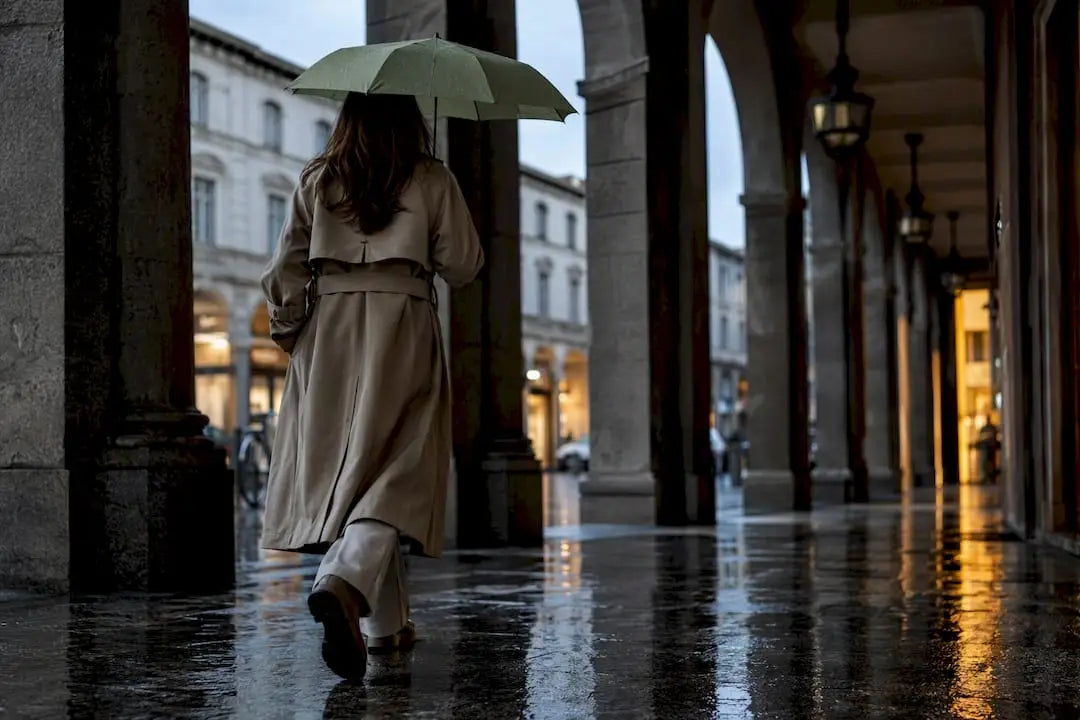
Every rainy day outfit that works starts the same way: a water-resistant outer layer plus waterproof footwear, styled to look intentional rather than thrown together. A belted trench or sealed-seam shell handles the top half; a rubber Chelsea boot or lug-sole boot handles the bottom. Everything else, from base layers to accessories, gets built around that pairing. Ahead: six formulas, the fabric science behind them, and a quick-fix checklist for when the sky doesn’t cooperate.
TL;DR:
- Waterproof fabrics like nylon and polyester resist saturation and dry faster than cotton and suede, making them essential for rainy-day outfits.
- Tall rubber boots are the only footwear fully protected against standing water, with waterproof leather or duck boots as dressier options for light rain.
- Building a versatile rain capsule with one good structured coat and one waterproof boot allows flexibility across various weather conditions and occasions.
- Bright colors and busy prints improve visibility and mood on gray, rainy days, especially when placed on moisture-resistant fabrics to avoid transparency.
- Using contrast in proportions, like cinched waist coats and cuffed hems, helps prevent bulky rain gear from looking sloppy or shapeless.
Table of Contents
- Six Rainy Day Outfit Formulas You Can Copy Today
- Which Fabrics Actually Hold Up in the Rain?
- Footwear and Accessories: What Protects You and What Doesn’t
- Your Rainy Day Emergency Kit
- Dressing for Warm Rain vs. Cold Downpours
- How to Keep Rain Gear From Looking Bulky or Sloppy
- Do Bright Colors and Prints Actually Help on Rainy Days?
- Balancing Waterproof Function With a Cohesive Outfit
- Rain-Proofing Your Hair and Makeup
- CAS7M’s Take on Building a Rain-Ready Wardrobe
- Shop Rain-Ready Picks From CAS7MFOCUS
- Sources
- FAQ
Six Rainy Day Outfit Formulas You Can Copy Today
Stylists consistently point to structure over bulk when building rainy-day looks — a defined silhouette reads as put together even when you’re layered for weather. These six rainy day outfit ideas cover the situations you’ll actually face.
- The commute. A belted trench over a merino crewneck, straight-leg trousers cropped at the ankle, and a rubber Chelsea boot. Cuff the trousers once so they clear the boot’s shaft and never wick water up the leg.
- The office. A tailored waterproof shell (knee length, sealed seams) over a blouse, wide-leg pants, and a low block heel with a rubber sole. Tuck the blouse to keep the coat’s clean line from getting swallowed by fabric.
- The weekend errand run. An oversized hooded anorak, bike shorts or leggings, and tall rubber boots. This is the one formula where volume on top actually works, since the boots ground the look.
- Warm rain. A lightweight trench or waxed jacket over a tank, capris, and rubber-soled loafers or ballet flats. Skip the heavy shell entirely; breathability matters more than seam-sealing once temperatures climb, a point Who What Wear makes well in their summer rain roundup.
- The cold downpour. A windproof down coat, a turtleneck, straight denim (dark wash only, more on that below), and tall waterproof boots with wool socks underneath. This is bulk you actually want, since insulation matters as much as water resistance here.
- Rainy-day streetwear. A technical jacket with visible seam tape, a graphic hoodie, wide-leg cargo pants, and lug-sole boots. Vogue’s guidance on treating functional pieces as the outfit’s anchor rather than an afterthought applies directly here: let the jacket’s hardware and the boot’s tread do the visual work instead of hiding them.
Pro Tip: Every one of these formulas can shift with the season just by swapping the outer layer’s weight. Keep the same silhouette (belted, cropped, or cuffed) and just trade a down coat for a waxed jacket when the weather turns from cold rain to warm drizzle. The formula stays; only the fabric weight changes.
Which Fabrics Actually Hold Up in the Rain?
Cotton is the fabric to avoid for anything more than a five-minute dash. It absorbs water into its fibers and dries slowly, which means a cotton hoodie or a pair of jeans can double as a sponge and stay cold against your skin for hours after you’ve come inside. Suede behaves even worse, since water permanently stains and warps the nap. Merino wool and synthetics like nylon or polyester resist saturation and dry in a fraction of the time, which is why they show up in nearly every technical rain piece worth owning.
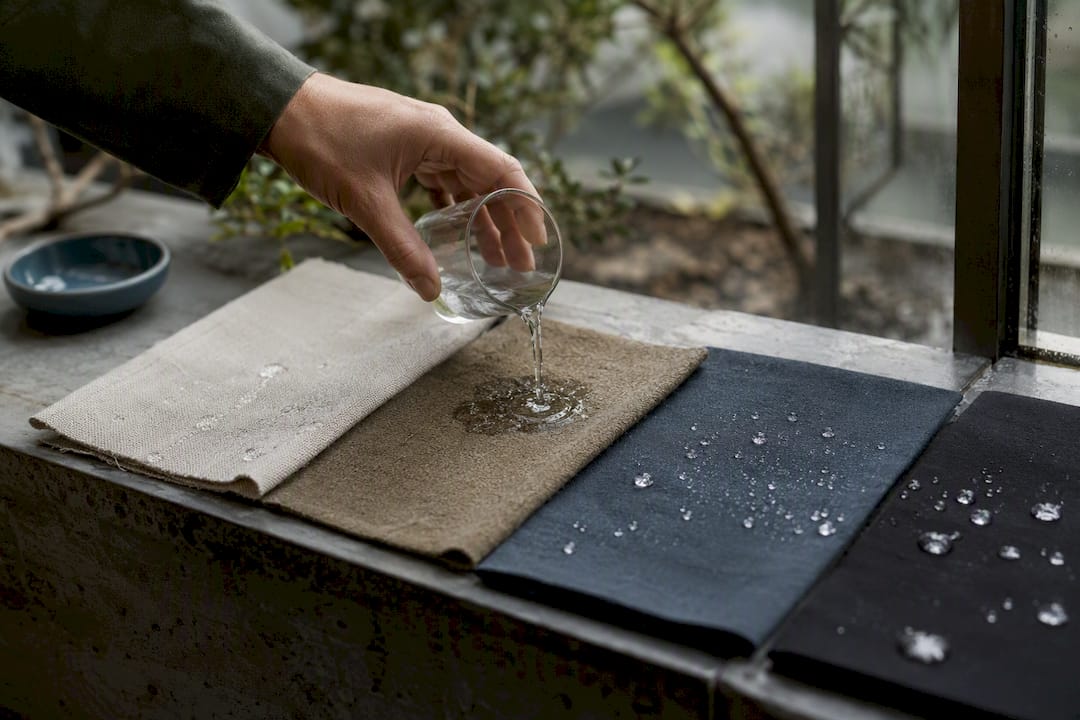
“Water-resistant” and “waterproof” are not interchangeable, even though brands use them loosely. Water-resistant fabric slows moisture penetration for light rain or a short walk. Waterproof fabric, usually rated with a coating or membrane plus sealed or taped seams, blocks water entirely, which matters most in sustained downpours. A simple two-piece system, a 2.5 layer or 3 layer sealed-seam jacket paired with waterproof footwear, handles most urban rain scenarios without needing anything more elaborate.
Hem length and silhouette matter almost as much as fabric choice:
- Crop trousers or jeans to ankle length so hems don’t drag through puddles and wick water up the leg.
- Choose a belted or cinched-waist coat over a boxy one. It sheds water off the body instead of pooling fabric against your legs.
- Save maxi skirts and long dresses for dry days, or pair them with tall boots that clear the hemline entirely.
A quick fabric-drying comparison worth knowing: cotton retains moisture and dries slowly, while merino wool and synthetic fibers shed water and dry markedly faster, according to fabric behavior tracked by Outfit Forecast. That single difference is why a “rain capsule” swaps cotton basics for merino or synthetic ones first.
Footwear and Accessories: What Protects You and What Doesn’t
Match your shoe to the rain, not just the outfit. Tall rubber rain boots are the only option that’s fully waterproof in standing water, which makes them the right call for flooded curbs and sustained downpours. Waterproof leather boots or duck boots are the dressier compromise for light to moderate rain, when you still want a polished look. Canvas sneakers and suede loafers are the two to leave at home; both soak through and take days to fully dry.
- Heavy rain or flooding: tall rubber boots, no exceptions.
- Light to moderate rain, dressier occasions: waterproof leather boots, duck boots, or a rubber-soled Chelsea boot.
- Puddles and uneven pavement: a lug sole or a block heel gives better grip and keeps you above standing water.
- Cold, wet days: wool socks underneath anything, since wool insulates even when slightly damp.
For bags, coated canvas, treated leather, and nylon shed water well. Untreated raffia, straw, and suede bags do not, and they’re hard to fully dry once soaked. Carry crossbody bags under your coat rather than over it, and keep a compact umbrella on hand even if you’re wearing a hood. Compact or vented double-canopy umbrellas hold up better in wind than standard ones, which matters more than most people expect on a genuinely stormy day. A durable, well-made umbrella is worth the investment if you’re tired of replacing flipped-out ones every season, and it’s worth browsing durable outdoor accessories built to survive real wind and repeated use.
Your Rainy Day Emergency Kit
Keep a small kit in your bag or car for the days weather forecasts get it wrong.
- A compact umbrella, ideally vented or double-canopy for wind.
- A spare pair of socks, rolled tight, for when your shoes fail you.
- A plastic bag to isolate anything wet before it soaks your other belongings.
- An absorbent microfiber cloth for blotting bags, phones, and shoes.
If you do get soaked, act fast. Blot fabric immediately rather than rubbing, stuff wet shoes with paper to hold their shape and pull out moisture, and remove rings before water gets trapped underneath metal and skin. Once home, dry leather and suede at room temperature, never near a heater, since direct heat cracks leather and shrinks fabric. Condition leather boots after they dry and reapply a durable water repellent spray to shells once you notice water stops beading on the surface.
Pro Tip: Reapply DWR spray to your rain shell every few months of regular wear, not just once a season. The coating wears off faster than most people assume, especially at friction points like cuffs and shoulders where a bag strap sits.
Dressing for Warm Rain vs. Cold Downpours
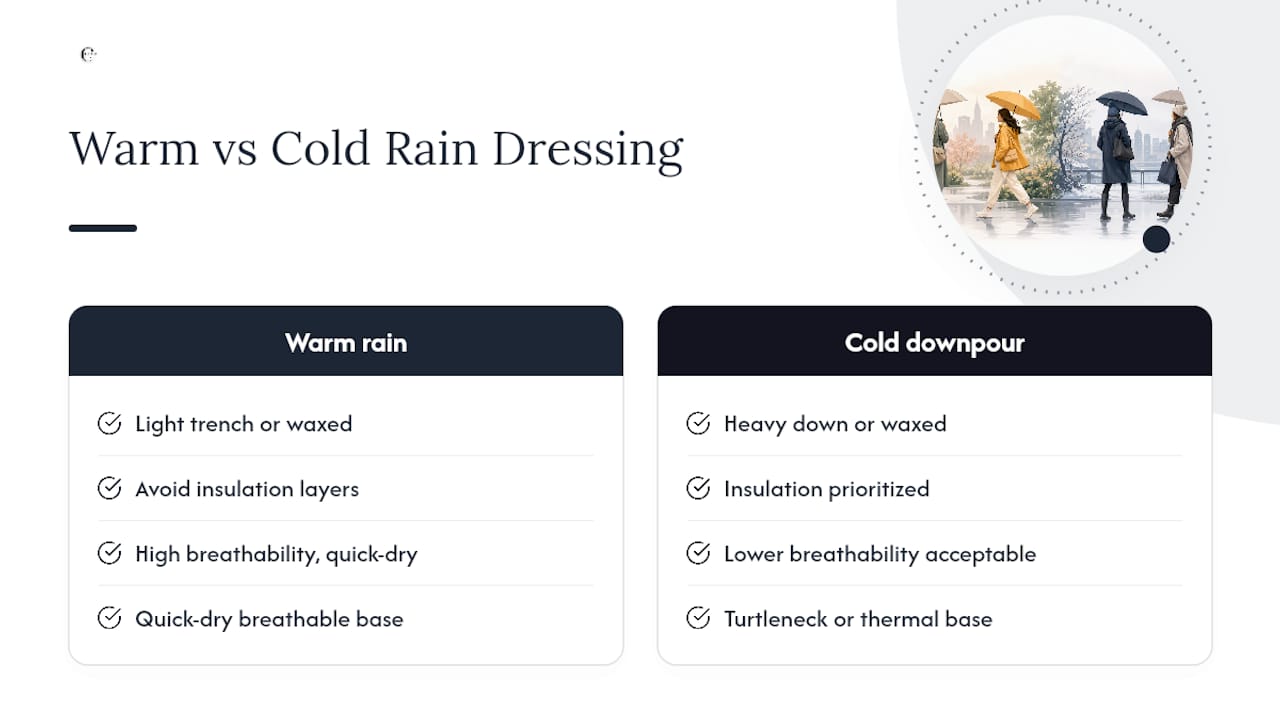
Rain isn’t one climate problem; it’s two entirely different styling challenges. Cold downpours call for insulation first and water resistance second, which is why a windproof down coat or a heavier waxed jacket makes sense once temperatures drop. Layer a turtleneck or thermal base underneath, and don’t be afraid of bulk here since warmth matters more than a slim silhouette.
Warm rain flips that logic. Heavy shells trap heat and moisture against your skin, which feels worse than getting a little wet. Lightweight trenches and waxed jackets are the better move, paired with breathable bottoms like capris and rubber-soled flats or loafers rather than tall boots that turn your legs into a sauna. Skip synthetic base layers built for insulation, since you want quick-dry breathability instead.
Fabric weight should track the thermometer as much as the forecast. A 3 layer sealed shell that feels perfect in a March downpour will feel like plastic wrap in a humid August storm. Keep at least one lightweight rain layer and one insulated one in rotation, and you’ll rarely be stuck choosing between staying dry and overheating.
For humid climates or tropical downpours, some stylists suggest skipping the jacket entirely in favor of a sturdy umbrella and quick-dry fabrics, since a heavy shell in 90-degree humidity does more harm than good.
How to Keep Rain Gear From Looking Bulky or Sloppy
Bulky rain gear reads as sloppy the moment proportions go flat all over. The fix is contrast: if your jacket is oversized, tighten everything underneath it. A cinched waist or a defined shape under a loose coat keeps the silhouette from disappearing into fabric, which is exactly the structure-over-bulk principle stylists lean on for rainy-day looks.
Tuck in your base layer even under a heavy coat. It sounds minor, but an untucked shirt under a boxy anorak doubles the visual bulk without adding any warmth or protection. Belt any coat that has belt loops, even if you’d normally leave it open on a dry day; a rainy day is exactly when that extra definition earns its place.
Roll or cuff sleeves and pant hems slightly higher than usual. Wet fabric clings and drags, so a half-inch of extra clearance at the wrist and ankle keeps everything looking crisp instead of soggy by midday. If you’re wearing tall boots, tuck pants in rather than leaving them to bunch above the boot shaft, which reads far more polished.
One more trick: match your accessories’ finish to your coat’s, not your shoes’. A matte rain shell paired with a glossy bag looks accidental. A matte shell with a matte or coated-canvas bag looks planned, even if you grabbed both in under a minute on your way out the door.
Do Bright Colors and Prints Actually Help on Rainy Days?
Yes, on two fronts: mood and visibility. Gray skies flatten everything, so a rainy day outfit built entirely in neutrals can feel more draining than the weather itself. A single bright piece, a yellow rain boot, a red umbrella, a cobalt shell, does real work against a monochrome backdrop, both for how you feel and for how visible you are crossing streets in low light.
Prints work almost as well, provided the print sits on a piece that isn’t at risk of turning sheer when wet. Glamour’s summer rain guidance specifically flags prints or mid-tone colors as safer bets than pale pastels, since light, thin fabric can go see-through the moment it’s soaked. A busy print also hides water spotting far better than a solid pale color does.
If bright isn’t your instinct, a rich jewel tone, emerald, burgundy, deep teal, gives you the same visibility and mood lift without feeling like a safety vest. Save head-to-toe black for dry days if you can help it; on an overcast afternoon it reads as flat rather than sleek.
Balancing Waterproof Function With a Cohesive Outfit
The mistake most people make is buying rain gear as a single emergency piece rather than as part of a wardrobe. A technical shell in an odd color or an ill-fitting cut gets worn exactly twice before it’s abandoned in a closet, which defeats the entire point.
Build your rain pieces the same way you build the rest of your closet: think about what they pair with before you buy them. A neutral or classic-colored shell, navy, olive, black, camel, works with nearly everything you already own, which means you’ll actually reach for it. The two-piece system of a sealed jacket plus waterproof footwear is popular precisely because it’s modular. Swap the base layer and bottoms underneath, and the same two pieces carry you through a week of varied rainy weather without ever looking repetitive.
Fit matters just as much as color. A shell cut too large hides your shape entirely and can make even a well-put-together outfit underneath look shapeless. Look for a rain jacket with some structure at the shoulder and waist, even if it’s not fully tailored. Treating a functional jacket or a lug-sole boot as a core wardrobe piece, not just weather insurance, is what separates a genuinely stylish rain outfit from one that just happens to keep you dry.
Rain-Proofing Your Hair and Makeup
Frizz and smudged makeup ruin more rainy-day outfits than any wrong fabric choice. A few adjustments make a real difference. Swap leave-in creams for a lightweight anti-humidity serum before you leave the house, and finish hair with a light-hold spray rather than a heavy one, which tends to get tacky and attract more moisture in humid air.
Braids, low buns, and slicked-back styles hold up far better than loose waves once humidity spikes. If you’re set on wearing your hair down, a silk-lined hood or scarf protects it without flattening the style the way a plastic hood liner does.
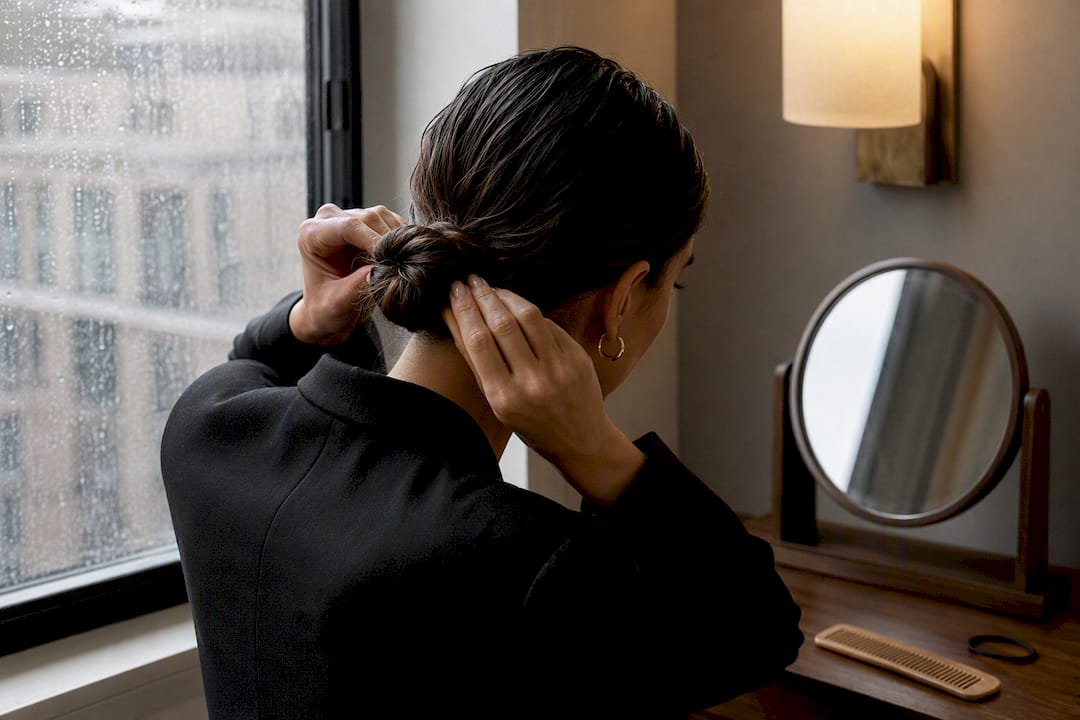
For makeup, swap cream products for long-wear or waterproof formulas wherever possible: waterproof mascara, a tinted lip stain instead of gloss, and a setting spray over foundation. Powder products generally hold up better than liquid ones in humidity, since liquid formulas are more prone to sliding. Keep blotting papers in your bag kit alongside your spare socks. A quick blot does more for a rain-day face than a full touch-up ever will.
CAS7M’s Take on Building a Rain-Ready Wardrobe
We think a rain capsule shouldn’t feel like separate “rain clothes” tucked in the back of your closet. It should be two or three genuinely well-fitting pieces, a structured coat, a pair of waterproof boots, that pull double duty on dry days too. The idea is to have outerwear and streetwear with versatile fits that hold up to wet weather without looking like gear. Start small. One good coat and one good boot outperform five mediocre pieces bought in a panic before a storm.
— CAS7M
Shop Rain-Ready Picks From CAS7MFOCUS
Once you know the formulas, shopping for them gets a lot easier. A few pieces map directly onto the looks above.
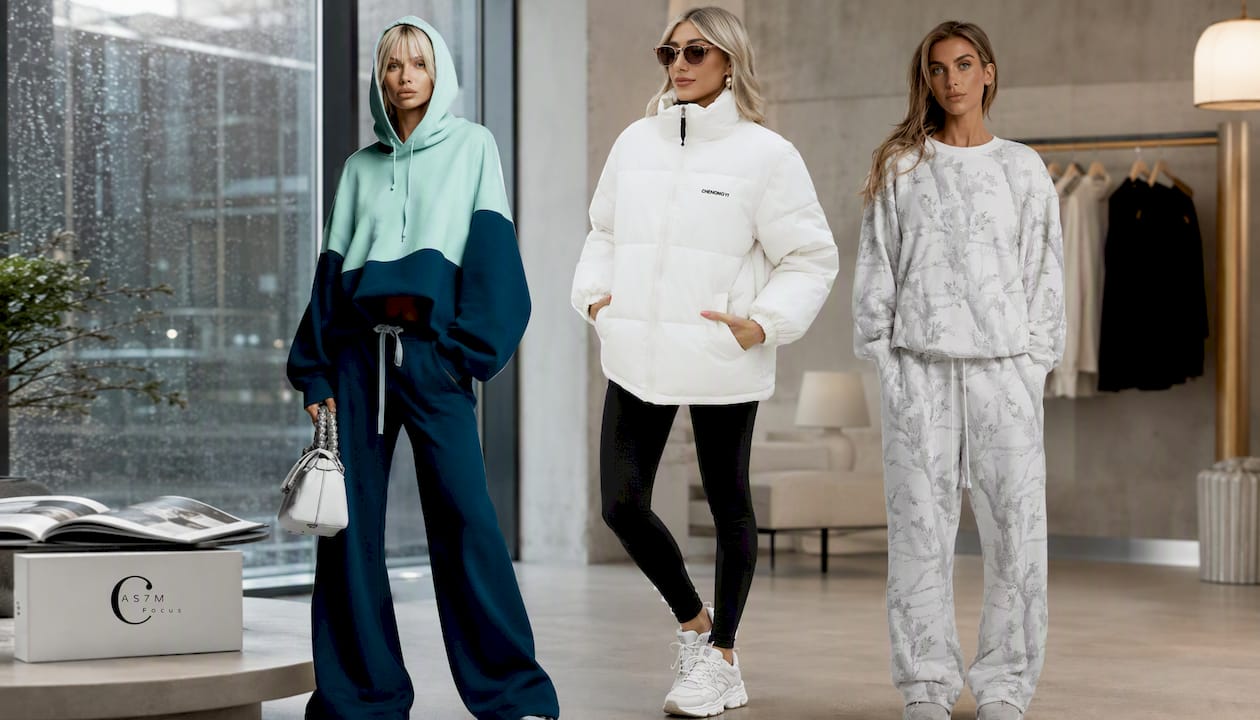
For the weekend errand run or rainy-day streetwear formula, the color-blocked hoodie and wide-leg pants set gives you a coordinated base layer that pairs easily under an anorak or technical shell, no separate shopping trip required. For the cold downpour formula, the windproof down coat covers the insulation half of the equation on its own, thick enough for real cold and cut loose enough to layer a turtleneck underneath. And for a graphic streetwear formula with built-in warmth, the camouflage hoodie and jogger set gives you a printed base layer that hides water spotting far better than a plain solid would.
Save the pieces that match your go-to formula, and building a capsule that handles the next six months of unpredictable weather takes minutes instead of an afternoon of scattered browsing.
Sources
- 12 Rainy Day Outfits to Keep You Looking Chic, Not Soggy
- Weather Report! 9 Ways to Dress for April Showers | Vogue
- 5 Chic Rainy-Day Summer Outfits to Wear in 2026 | Who What Wear
- What To Wear on a Rainy Summer Day to Stay Dry and Look Chic | Glamour UK
FAQ
What’s the Best Thing to Wear on a Rainy Day?
Build the outfit around a water-resistant or waterproof outer layer, like a sealed-seam shell or a belted trench, paired with waterproof footwear such as a rubber Chelsea boot or tall rain boot for heavier rain.
What Is the 3-3-3 Rule for Clothes?
The 3-3-3 rule is a capsule-wardrobe method where you build outfits from 3 tops, 3 bottoms, and 3 pairs of shoes for a set period. It’s not rain-specific, but applying it to a small rain capsule (a versatile coat, one boot, a couple of base layers) makes wet-weather dressing far simpler.
What Are Some Good Outfits for Rainy Days?
A belted trench with cropped trousers and a Chelsea boot works for the commute, while a windproof down coat with a turtleneck and tall boots handles a cold downpour; both pair a defined outer layer with waterproof footwear.
What Should I Wear in Rainy Weather?
Choose merino or synthetic fabrics over cotton and denim, since cotton absorbs water and dries slowly, and match your footwear to the rain’s intensity, from waterproof leather for light rain up to tall rubber boots for standing water.
