


Cart
0
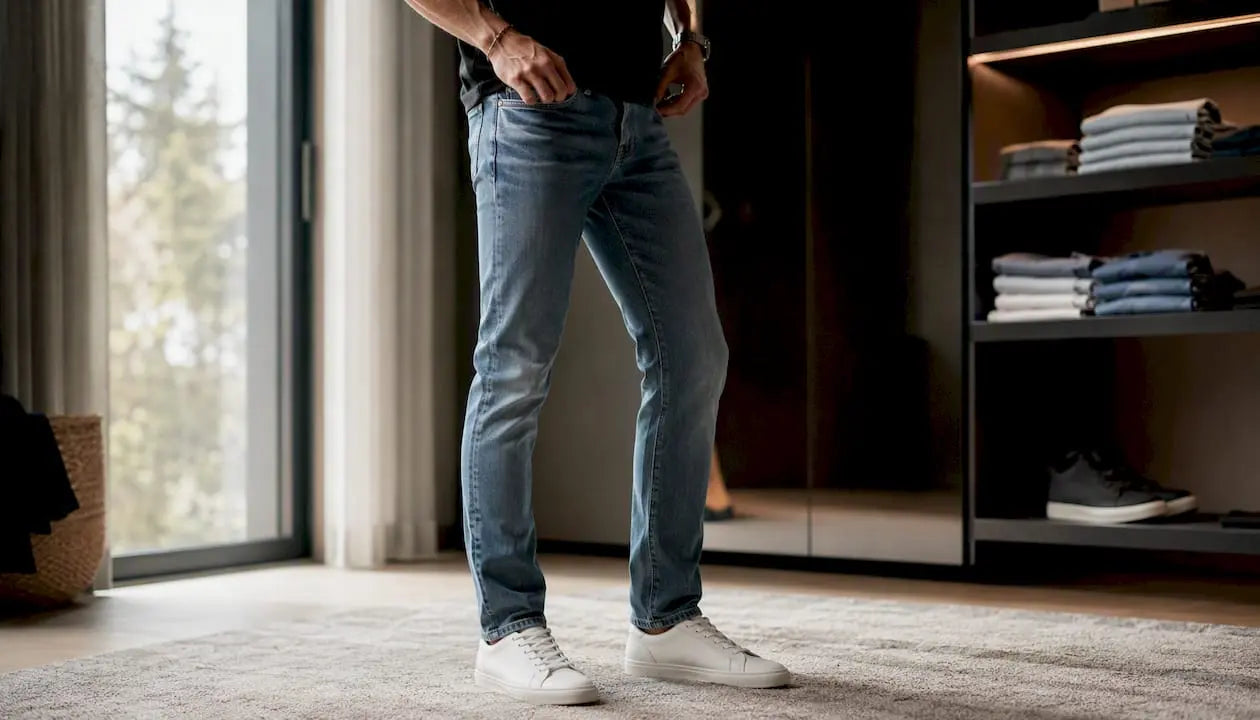
For most men, the three fits worth trying first are slim-straight, tapered, and relaxed. Your waist measurement plus your inseam length are the two numbers that matter most before anything else. Buy rigid denim slightly snug at the waist — it will relax with wear. For stretch blends, buy true-to-size for immediate comfort.
- Try first: Slim-straight for versatility, tapered for a cleaner modern line, relaxed/athletic if you carry more volume in the thighs.
- Measure first: Waist circumference and inseam length. These two numbers translate across almost every brand’s size chart.
- Buy rule: Rigid (100% cotton) denim — size snug. Stretch denim (cotton + elastane) — size true-to-size or one size up if you want ease of movement.
CAS7MFOCUS publishes this jeans fit guide as part of its ongoing measurement-led apparel content. The standard to use in-store: a flexible tape measure, measured over bare skin or light underwear, not over other pants.
Key Takeaways
The most reliable approach to finding jeans that fit is to measure your waist and inseam first, match your body type to a fit category, and use a 6-step try-on checklist before committing to any pair.
| Point | Details |
|---|---|
| Measure before you shop | Waist and inseam are the two essential numbers; add thigh measurement for athletic builds. |
| Match fit to body type | Athletic builds need tapered or relaxed; slender builds suit slim-taper or slim-straight. |
| Rigid vs. stretch denim | Buy rigid denim snug (it relaxes); buy stretch denim true-to-size for immediate comfort. |
| Use the 6-step checklist | Check waist, seat, thigh pinch, knee line, rise, and squat test before every purchase. |
| CAS7MFOCUS for flat measurements | CAS7MFOCUS product pages list flat measurements so you can verify fit before ordering. |
Table of Contents
- What does every men’s jeans fit actually look like?
- How to measure yourself for jeans
- How to choose a fit based on your body type
- How denim construction changes what you feel after a few wears
- What to check in the dressing room before you buy
- Shopping shorthand: what to look for and why
- CAS7MFOCUS’s 6-step fit check for in-store or at home
- Common fit mistakes that cost you money
- A practical perspective on the trade-offs that actually matter
- Ready to put the checklist to work?
- Sources
- FAQ
What does every men’s jeans fit actually look like?
Understanding the jean fit types before you shop saves you from guessing in a dressing room. Each cut has a distinct silhouette, a natural rise, and a leg shape that either works with your body or fights it.
Straight
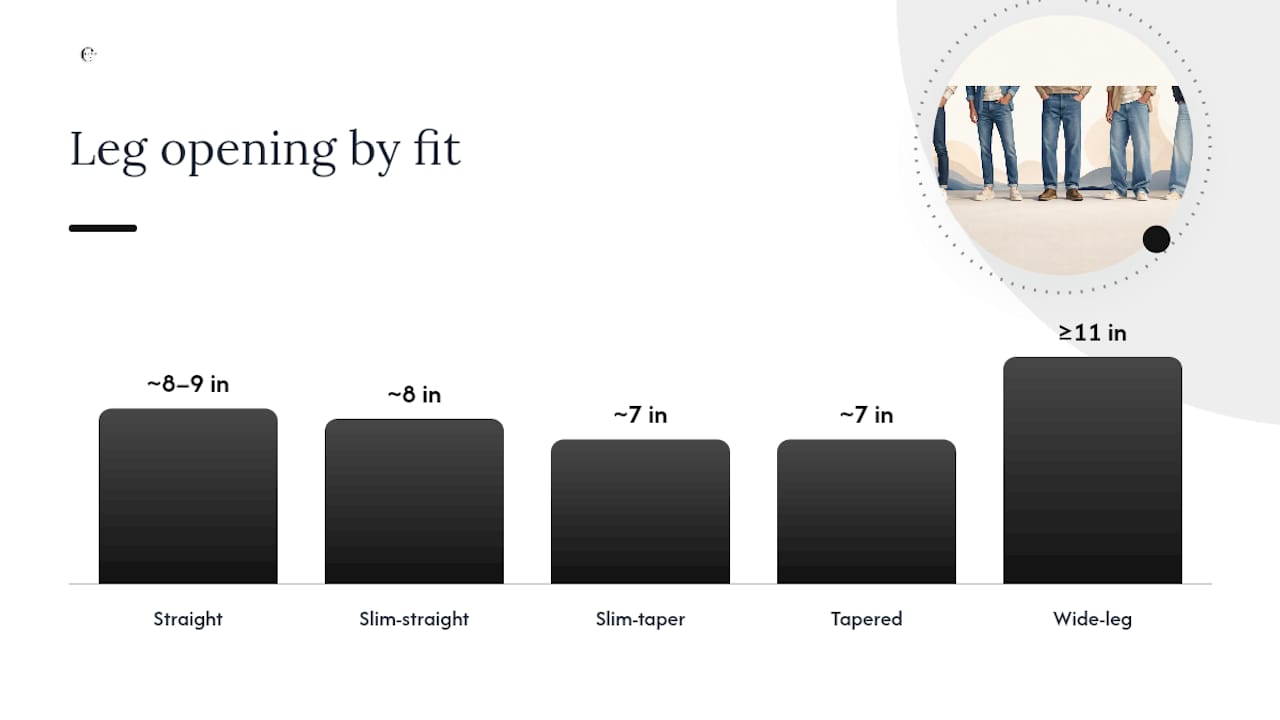
Consistent width from hip to hem. No taper. The leg opening sits around 8–9 inches flat. Sits at mid-rise on most bodies. Wear with chunky boots or let them stack slightly. The Levi’s 501 is the textbook straight-fit reference: a rigid, mid-rise, full-leg cut with a leg opening that holds its shape.
Slim-straight
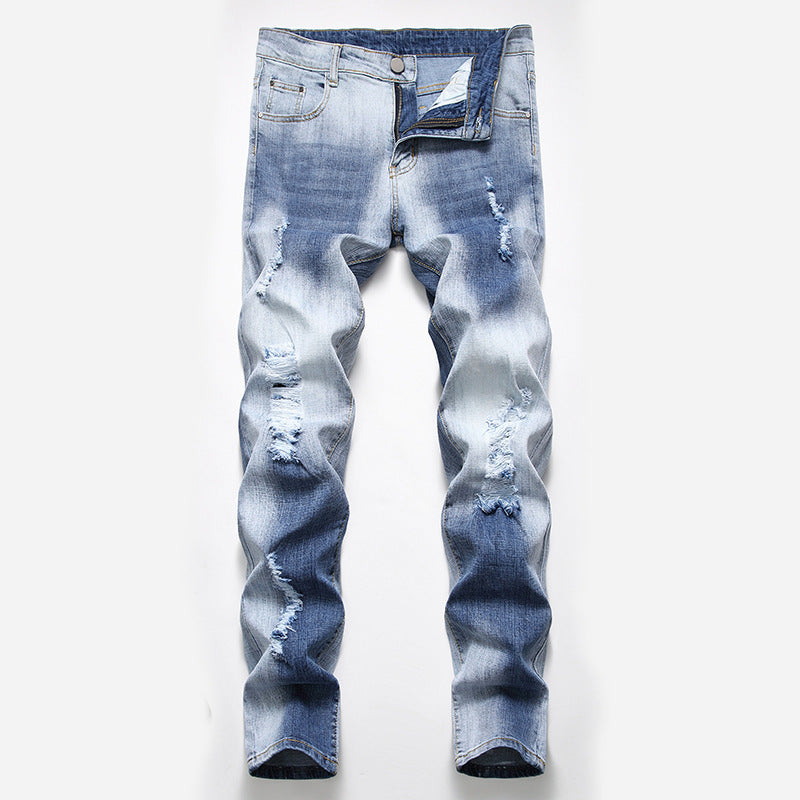
Slightly narrower through the thigh than a true straight, but the leg opening stays consistent rather than tapering to the ankle. Knee measures roughly 9 inches flat, leg opening roughly 8 inches. This is the most versatile cut in most wardrobes. Works with sneakers, boots, and dress shoes.
Slim-taper
Fitted through the thigh, then narrows toward the ankle. Cleaner silhouette than slim-straight. Best worn with low-profile sneakers or Chelsea boots so the taper reads clearly. The Levi’s 511 sits in this territory: slim through the seat and thigh, with a noticeable taper toward a narrower leg opening.
Skinny
Very close-fitting from hip to ankle. Minimal thigh room, leg opening under 7 inches flat. Works best on lean or slender builds. Stacks well with high-top sneakers.
Tapered
Can have a relaxed or regular top block (more room in the seat and thigh) but narrows significantly below the knee. Knee around 8 inches flat, leg opening around 7 inches. A strong choice for athletic builds who need thigh room but want a tidy ankle.
Relaxed/athletic
More room through the seat and thigh than a straight fit, with a leg that stays relatively consistent. It is designed for men who find slim cuts restrictive. Pairs well with wider sneakers or work boots.
Loose/baggy
Generous through the entire leg. Intentionally oversized silhouette. Works with chunky footwear and streetwear layering. Harder to tailor down without significant cost.
Wide-leg
Dramatic volume from hip to hem. Knee at or above 11 inches flat. A strong style statement. Wear with a fitted top to balance proportions. See barrel-leg silhouettes for a modern take on this volume shape.
Bootcut
Straight through the thigh, then flares slightly from the knee down to accommodate boot shafts. Leg opening wider than a straight fit. Best worn with boots, not sneakers.
The table below covers five core fits using flat measurement benchmarks that let you compare across brands even when fit names differ.
| Fit | Silhouette | Best for | Rise | Leg opening (flat) | Thigh room | Stretch preference |
|---|---|---|---|---|---|---|
| Straight | Consistent hip to hem | Most body types | Mid | ~8–9 in | Moderate | Rigid or stretch |
| Slim-straight | Slightly narrower, no taper | Average to slender builds | Mid | ~8 in | Moderate-low | Either |
| Slim-taper | Fitted thigh, tapers to ankle | Slender to average | Mid-low | ~7 inches | Low | Stretch preferred |
| Tapered | Relaxed top, narrows below knee | Athletic/muscular thighs | Mid | ~7 in | Moderate-high | Rigid or stretch |
| Wide-leg | Full volume hip to hem | Taller, slender builds | High or mid | ≥11 in | High | Rigid |
How to measure yourself for jeans
Accurate measurements are the foundation of any good men’s jeans fit guide. Take these with a flexible tape measure over bare skin or light underwear.
- Waist: Measure around your natural waist, roughly one inch above your hip bone. Keep the tape snug but not tight. This is your jean waist size.
- Front rise: From the top of the waistband at center front, down to the crotch seam. Determines how high the jeans sit on your torso.
- Back rise: Same as front rise but measured along the back. Back rise is typically 2–3 inches longer than front rise and affects seat coverage.
- Inseam: From the crotch seam to the bottom of the leg. Measure along the inner leg. Standard lengths are common lengths suitable for most men.
- Thigh: Around the fullest part of your thigh, usually 1 inch below the crotch seam.
- Knee: Around the knee with your leg slightly bent.
- Leg opening: Around the ankle or hem opening of a reference pair laid flat, then doubled.
The two-finger test and pinch test
At the waist, you should be able to slide two fingers flat inside the waistband when the jeans are buttoned. Tighter than that and you’ll feel restricted after an hour of sitting. Looser and you’ll need a belt to keep them up. At the thigh, pinch the fabric on the side of your leg. About one inch of excess fabric is right for a slim fit. Two inches or more signals a relaxed fit. Less than half an inch means the fit is too tight for daily wear.

Pro Tip: Lay a pair of jeans you already love flat on a table. Measure the waistband doubled (that’s your waist), the inseam, and the thigh. Use those numbers as your reference when shopping online — they translate directly to most brand size charts.
For rigid or raw denim, size down one waist size from your reference pair. Raw denim stretches roughly 1 inch in the waist and 0.5 inches in the thigh after a few weeks of wear, and it can shrink up to one full inseam size in a hot wash. Pre-shrunk denim behaves more predictably. The raw denim buying approach is: buy snug, expect break-in, and avoid hot washing.
How to choose a fit based on your body type
The same labeled fit looks different on different bodies. Fit category, leg shape, and rise are the three variables that actually determine whether a pair works for you.
-
Average build: Most fits work. Start with slim-straight mid-rise. Quick rule: if the slim-straight feels comfortable in the thigh and waist, you’re done. Red flags: avoid very low-rise cuts if you have a longer torso — they shorten your legs visually.
-
Shorter stature: Tapered or slim-taper fits with a 30-inch inseam. Avoid wide-leg or bootcut — they add visual weight at the hem and shorten the leg line. Quick rule: the cleaner the hem, the taller you read. Cuff or hem to the ankle, never let fabric bunch at the floor.
-
Taller build: Straight, relaxed, or wide-leg fits in 34-inch inseam. More volume in the leg balances a longer frame. Quick rule: if you’re above 6’2", a slim-taper can look undersized — go straight or relaxed. Red flag: avoid 30-inch inseams unless you’re intentionally cropping.
-
Athletic/muscular build: Tapered or relaxed-taper fits. The top block needs to accommodate thighs and seat; the taper below the knee keeps the silhouette clean. Quick rule: if you can’t button a slim fit without pulling at the thigh seam, move to tapered. Red flag: slim-taper and skinny fits will gap at the waist if you size up for thigh room.
-
Bigger/plus-size build: Relaxed straight or loose fits with a mid-to-high rise. More rise means better coverage and comfort when seated. Quick rule: prioritize seat and thigh room first, then tailor the waist if needed. Red flag: low-rise cuts drop below the seat when you sit, creating discomfort and an unflattering line.
Rise and torso proportions: Low rise (front rise under 10 inches) works best on men with shorter torsos or when worn with untucked shirts. Mid rise (10–11 inches) is the most universally flattering. High rise (12 inches or more) suits taller men and pairs well with tucked shirts or fitted tops. Rise also affects how your shoes read: low-rise with a slight stack looks intentional; high-rise with a clean hem shows more of the shoe.
How denim construction changes what you feel after a few wears
Rigid denim (100% cotton) and stretch denim (cotton blended with elastane or polyester) behave very differently once you start wearing them. Choosing the wrong construction for your lifestyle is one of the most common buying mistakes.
- Rigid denim holds its shape precisely but requires break-in. Expect tightness in the thigh and knee for the first 10–15 wears. The fabric molds to your body over time, which is why raw denim enthusiasts prefer it. Heavyweight rigid denim develops a character and fade pattern that stretch blends can’t replicate.
- Stretch denim (typically 1–3% elastane) feels comfortable immediately. It recovers its shape after washing better than pure cotton but tends to bag out at the knees and seat after extended wear.
- Sizing for rigid: Buy one waist size snug. The waist will relax roughly 1 inch after break-in. Do not size down more than one — the thigh and seat won’t stretch as much as the waist.
- Sizing for stretch: Buy true-to-size. If you’re between sizes, go up. Stretch denim doesn’t need break-in allowance.
- Washing: Cold wash, hang dry. A hot wash can shrink a rigid jean’s inseam by up to a full size. Even stretch blends lose elasticity faster with repeated hot washing. Wash rigid denim as infrequently as possible — every 10–15 wears is a reasonable target.
- Seasonal note: In winter, thicker socks and base layers under jeans take up real space. If you layer a thermal base layer under your jeans in cold months, size up one waist or choose a relaxed fit for that season’s rotation.
What to check in the dressing room before you buy
A quick try-on routine catches problems that measurements alone miss.
- Stand and check the waist. Two fingers should slide in flat. No gaping at the back waistband.
- Sit down. The waistband should stay in place. If it drops two inches below your waist when seated, the rise is too low.
- Squat or bend. No pulling at the crotch seam. No tearing sensation at the thigh. If the fabric goes white from tension, the thigh is too tight.
- Walk a few steps. The leg should move with you, not restrict your stride.
- Check the hem. Bring the shoes you’ll actually wear. A hem that hits perfectly with sneakers may stack awkwardly with boots.
- Pinch the thigh. One inch of fabric for slim, two inches for relaxed. Less than half an inch is too tight for all-day wear.
- Check the seat. Enough room to sit comfortably, but no excess fabric sagging below the seat line.
For tailoring: hemming a too-long inseam costs roughly $10–$20 at most alterations shops and takes a day. Tapering the leg from the knee down costs more but transforms a straight fit into something closer to a tapered silhouette. Taking in the waist is possible but limited — a tailor can usually take in up to 1.5 inches at the back seam. Letting out the waist depends on seam allowance; most jeans have minimal allowance, so don’t count on it.
Walk away when: the waistband gaps more than two fingers at the back, the thigh seam pulls white when you squat, or you need a belt just to hold them at your hips while standing.
Shopping shorthand: what to look for and why
Knowing the fits is one thing. Translating that into a search filter or a store conversation is another. When shopping online, type the fit name plus rise and inseam: “slim-straight mid-rise 32 inseam” returns far more useful results than “slim jeans.”
The Levi’s 501 is the reference point for straight-fit, rigid denim. Mid-rise, consistent leg width, available in raw and washed versions. If a straight fit is what you want, the 501 tells you exactly what that silhouette looks like on a real body. The Levi’s 511 is the slim-taper benchmark: fitted through the seat and thigh, narrowing toward a leg opening that works with low-profile sneakers or Chelsea boots. Both are widely available in US stores and online, making them easy to try in person before committing to a less accessible brand.
For product photos, look for front, back, and side shots on a model whose build resembles yours. Flat-lay images with measurements listed (waist, inseam, thigh, knee, leg opening) let you cross-reference against your own numbers. If a product page only shows a front shot on a single model, that’s a signal to check the return policy before buying.
- Size up: When buying rigid denim or when your thigh measurement is at the top of the listed range.
- Size down: Never more than one size, and only for rigid denim with confirmed break-in stretch.
- Filter tip: Use “mid-rise” as a default filter. Low-rise cuts are harder to style and less comfortable for most men. High-rise is worth trying if you have a longer torso or prefer a tucked-shirt look.
CAS7MFOCUS’s 6-step fit check for in-store or at home
This checklist synthesizes measurement, mobility, and styling checks into one repeatable routine. Use it every time you try a new pair, whether in a dressing room or assessing a delivery at home. CAS7MFOCUS applies the same measurement-led approach across its apparel guides, including its men’s suit sizing content.
- Waist while standing. Two fingers flat inside the waistband. Pass: snug but not pinching. Fail: can’t get fingers in, or waistband gaps more than two fingers.
- Seat while sitting. Sit on a hard chair. Pass: waistband stays within one inch of your natural waist. Fail: drops two or more inches, or fabric pulls tight across the seat.
- Thigh pinch test. Pinch the side of the thigh. Pass: 0.5–2 inches of fabric depending on desired fit. Fail: no fabric to pinch (too tight) or more than 3 inches (too loose for the intended silhouette).
- Knee and leg opening line. Stand and look at the leg from the front. Pass: the leg falls cleanly without bunching above the knee. Fail: fabric folds or creases horizontally above the knee, signaling the knee is too narrow for your leg.
- Rise comfort. Sit and stand three times. Pass: the waistband returns to the same position each time. Fail: the rise shifts significantly or the front waistband digs into your stomach when seated.
- Movement and squat test. Do a full squat. Pass: no pulling at the crotch seam, no tearing sensation, no white stress lines on the fabric. Fail: any of the above.
Pro Tip: Always bring the shoes you’ll wear most with these jeans when trying them on. The hem length, the stack, and even how the leg taper reads all change depending on the shoe’s sole height and shaft.
Common fit mistakes that cost you money
Most bad jeans purchases come down to a handful of predictable errors.
Buying by waist size alone. Two jeans with identical waist and inseam numbers can fit completely differently depending on rise, thigh cut, and taper. Always check the thigh measurement and the rise before ordering online.
Ignoring rise. Low-rise jeans look fine standing up and uncomfortable the moment you sit. If you spend most of your day seated, mid-rise is the practical default.
Sizing up for thigh room in a slim fit. Going up a waist size to get thigh room in a slim-taper leaves you with a gaping waist and a silhouette that doesn’t work. The right answer is a different fit category, not a larger size.
Skipping the squat test. A pair of jeans that feels fine standing will reveal its real fit the moment you bend. Always squat before buying.
Not accounting for denim type. Buying stretch denim snug because you expect it to break in like rigid denim is a mistake. Stretch blends don’t break in the same way — they bag out instead of molding to your shape.
Buying too long and not hemming. A hem that drags on the floor wears out fast and looks unfinished. Hemming is cheap and fast. Do it.
A practical perspective on the trade-offs that actually matter
The conventional wisdom says “find your fit and stick to it.” That’s true in principle, but it skips three real trade-offs most men face.
First: style longevity versus immediate comfort. Rigid denim looks better longer and develops character with wear, but the first few weeks are genuinely uncomfortable. Stretch denim is comfortable from day one but tends to look worn out faster, especially at the knees and seat. Neither is wrong — the choice depends on how often you wear jeans and whether you care about fade patterns.
Second: tailoring cost versus off-the-rack fit. A $40 pair of jeans that fits perfectly off the rack beats a $120 pair that needs $60 in alterations. But a $120 pair that needs a $15 hem is still a better deal than a $40 pair that never fits right. The math only works if you actually get the alterations done. Factor tailoring into your budget from the start.
Third: rise choice versus intended shoes. This one gets overlooked. A low-rise jean with a clean hem and a chunky sneaker looks intentional. The same jean with a dress shoe looks like a sizing mistake. Before you commit to a rise, think about the shoes you’ll wear 80% of the time. CAS7MFOCUS’s jacket fit guidance applies the same principle across outerwear: the fit of one piece affects how every other piece reads.
One seasonal note: in winter, thicker socks and thermal base layers take up real space inside your jeans. If you plan to layer, account for that when choosing fit and inseam length — a pair that fits perfectly in summer may feel tight through the thigh or short at the hem once you add a base layer.
Ready to put the checklist to work?
CAS7MFOCUS carries a curated selection of men’s jeans and casual bottoms with flat measurements listed on every product page, so you can cross-reference your numbers before you order. No guessing, no sizing charts that only show waist and inseam. Browse the collection, check the thigh and knee measurements against your reference pair, and use the return policy if the fit isn’t right on the first try.
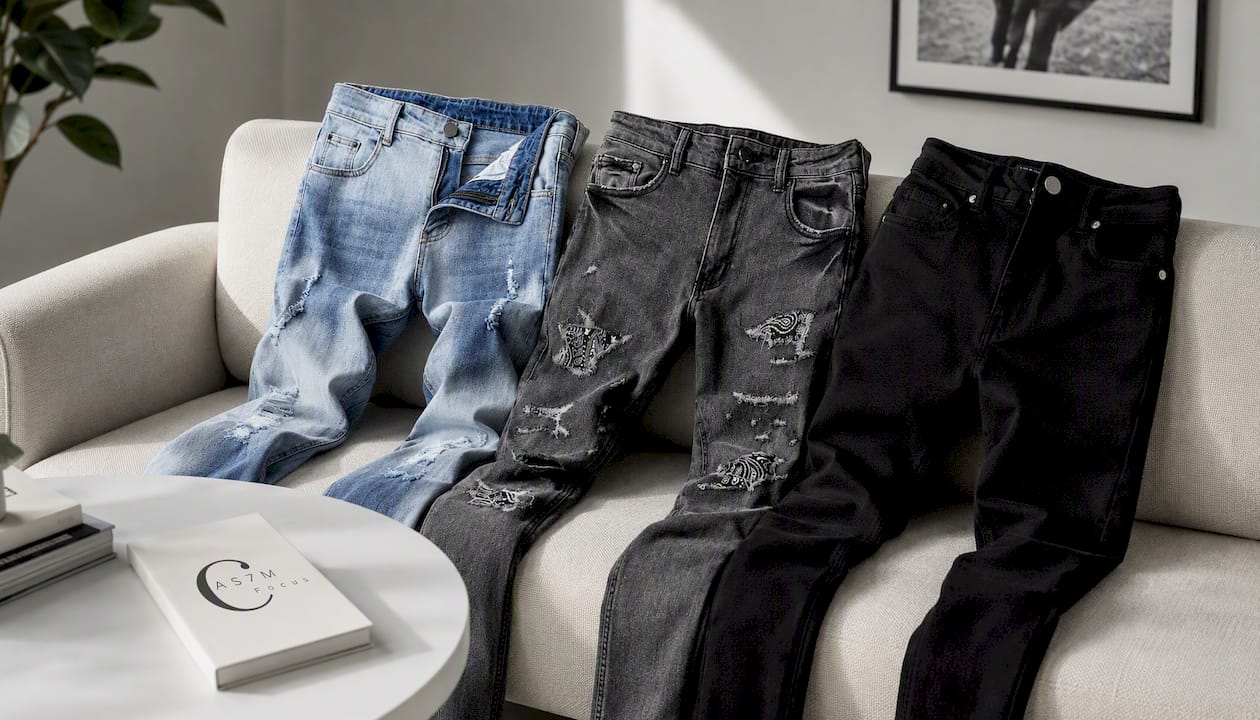
The fit checklist above works best when you can see the measurements before you click “add to cart.” Shop the CAS7MFOCUS store and find styles that match the fits covered in this guide — from slim-straight everyday options to relaxed cuts built for comfort.
Sources
- Types of Jeans for Men: Every Single Jean Fit, Explained | GQ
- How Your Jeans Should Fit — The Essential Man
- How to Buy Raw Denim Jeans That Actually Fit You (Men’s Fit Guide) - Denimhunters
FAQ
How do I know what jeans fit me?
Measure your waist and inseam, then use the two-finger test and thigh pinch test in the dressing room. Match your body type to a fit category — athletic builds typically need tapered or relaxed fits, while slender builds suit slim-straight or slim-taper.
What is the two-finger test for jeans?
With the jeans buttoned, slide two fingers flat inside the waistband at the front. If they fit snugly without forcing, the waist is right. If you can’t get them in, size up; if there’s room for a whole hand, size down.
Is it better to buy jeans a little tight or a little loose?
For rigid denim, buy slightly snug at the waist — the fabric relaxes with wear. For stretch denim, buy true-to-size. Never buy tight in the thigh regardless of fabric, since that area doesn’t break in the same way the waist does.
Should I get a 32 or 34 length jeans?
Stand barefoot and measure from your crotch seam to the floor. A 32-inch inseam suits most men between 5’7" and 5’10"; a 34-inch inseam fits men from roughly 5’11" to 6’2". When in doubt, buy the longer length and hem to your exact measurement.

