


Cart
0
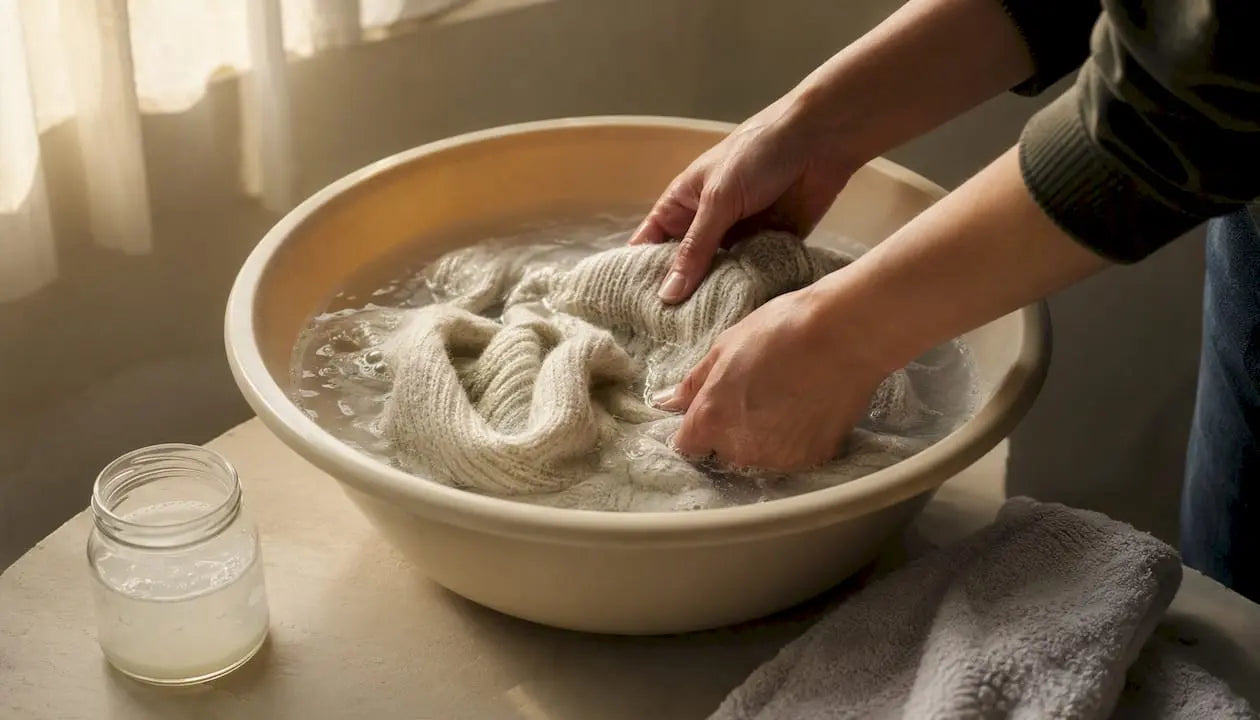
You can safely wash most sweaters at home if you follow three rules: cool water, minimal agitation, and flat drying. That’s the whole game. Everything else, fiber type, detergent choice, spin speed, is just applying those three rules to your specific garment.
Why do those three rules matter so much? Heat and friction together cause felting, the irreversible process where wool and other protein fibers lock together and shrink. Gravity stretches a wet sweater out of shape when it’s hung to dry. Alkaline or enzyme-based detergents break down keratin, the protein that gives wool and cashmere their softness. Controlling temperature and agitation is the most effective way to prevent felting and preserve fit.
Start here before anything else:
- Check the care label. It’s the manufacturer’s tested instruction for that exact fiber blend and construction.
- Default to hand washing if the label is unclear or the fiber is delicate (wool, cashmere, alpaca, silk).
- Use a wool-safe detergent — pH-neutral and enzyme-free — every single time.
Key Takeaways
Cold water, minimal agitation, and flat drying are the three rules that prevent shrinkage, stretching, and pilling in almost every sweater fiber.
| Point | Details |
|---|---|
| Cold water is non-negotiable | Keep wash temperature at or below 30°C (86°F) for wool, cashmere, alpaca, and silk blends. |
| Hand wash when in doubt | Hand washing controls agitation better than any machine; use it for cashmere, alpaca, and handmade knitwear. |
| Machine wash with protection | Use a mesh bag, wool or delicate cycle, and 400–600 rpm spin only when the care label permits machine washing. |
| Always dry flat | Hanging wet sweaters causes permanent stretch; tumble heat causes felting. Reshape while damp. |
| Wash less, air more | Most wool sweaters need washing every 5–6 wears; airing and spot-cleaning extend time between full washes. |
Table of Contents
- How often do you actually need to wash a sweater?
- What do sweater care label symbols actually mean?
- How to hand wash sweaters step by step
- When can you machine wash a sweater?
- How to dry, reshape, and block sweaters properly
- Fiber-specific quick guide: which method fits your sweater?
- How to spot-clean and remove stains from sweaters
- How to prevent and remove pilling on sweaters
- When should you take a sweater to a professional cleaner?
- Which detergents and tools should you use for sweaters?
- How to freshen sweaters and extend time between washes
- CAS7MFOCUS’s take on buying and caring for sweaters
- Sources
- FAQ
How often do you actually need to wash a sweater?
Less often than you think. Wool’s natural odor- and crease-resistance means many sweaters need only airing or a quick spot treatment between wears. Washing too frequently accelerates pilling, weakens fibers, and shortens a garment’s life.
A practical guide to frequency:
- Worn over a base layer: every 5–6 wears, or when visibly soiled
- Worn directly against skin: every 2–3 wears
- Cashmere: every 3–4 wears; it’s more delicate than standard wool and benefits from fewer wash cycles
- Cotton or synthetic sweaters: every 1–2 wears if worn close to skin
Between full washes, try these freshening methods:
- Air it out. Hang the sweater on a rack away from direct sunlight for several hours after wearing. Wool especially benefits from this.
- Steam it. A handheld steamer removes light odors and relaxes wrinkles in minutes without wetting the fibers.
- Spot-clean. A dab of gentle detergent on a damp cloth handles most small marks without a full wash.
- Use a fabric spray. A light mist of a fabric refresher works for odors between wears.
Pro Tip: Wearing a thin cotton or moisture-wicking base layer under your sweater dramatically reduces body-oil transfer to the fibers, cutting how often you need to wash it.
What do sweater care label symbols actually mean?
The care label is the primary authority for every garment, because manufacturers test and specify safe care methods tailored to that exact fiber blend, construction, and any applied finishes. Guessing costs you a sweater.
Key things to look for on every label:
- Water temperature: A number inside a tub icon (e.g., 30) means maximum degrees Celsius. One dot = cold (up to 30°C/86°F), two dots = warm (up to 40°C/104°F).
- Hand wash symbol: A hand inside a tub. This means machine washing is not recommended.
- Machine wash symbol: A plain tub icon, sometimes with a number. One bar under the tub = gentle cycle; two bars = very gentle.
- Do not wash: A crossed-out tub. Dry clean or professional wet-clean only.
- Tumble dry: A square with a circle inside. An X through it means no tumble drying. One dot = low heat; two dots = medium.
- Dry clean: A circle. A letter inside (P, F) tells the cleaner which solvent to use. An X through it means no dry cleaning.
Under the FTC Care Labeling Rule, U.S. manufacturers must provide at least one safe care method. If the label lists only “dry clean,” that’s the one tested method — not a suggestion. If it lists both hand wash and machine wash, either is approved.
Watch for these phrases: “Dry flat,” “Reshape while damp,” and “Do not wring” are instructions, not suggestions. Follow them.
How to hand wash sweaters step by step
Hand washing controls agitation and temperature better than any machine, making it the safest universal method for wool, cashmere, alpaca, and handmade knitwear. The American Cleaning Institute recommends gentle swishing, no wringing, towel-roll water removal, and flat drying.
- Fill a clean basin or sink with cool or lukewarm water, no warmer than 30°C (86°F).
- Add a small amount of wool or delicate detergent — about a teaspoon. Swirl to dissolve before adding the garment.
- Turn the sweater inside out. This protects the outer surface from friction and reduces pilling.
- Submerge the sweater and gently press it down until fully saturated. Do not drop it in and walk away.
- Swish gently for 1–2 minutes. Press the water through the fabric with your palms. No rubbing, no scrubbing, no twisting.
- Soak for 10–15 minutes. Longer soaks can weaken fibers, so set a timer.
- Rinse thoroughly. Drain the soapy water, refill with clean cool water, and gently press the sweater until the water runs clear. Repeat if needed.
- Remove water without wringing. Lift the sweater supporting its full weight, press gently against the side of the basin, then lay it flat on a clean dry towel.
- Roll the towel. Roll the sweater inside the towel like a scroll and press firmly to absorb excess water. Unroll, transfer to a fresh dry towel or a mesh drying rack, and reshape to its original dimensions.
- Dry flat away from direct heat and sunlight.
Pro Tip: Products like Eucalan are no-rinse wool washes — add them to the soak water and skip the rinse step entirely. This reduces handling and is gentler on delicate fibers like cashmere.
When can you machine wash a sweater?
Machine washing is acceptable only when the care label explicitly permits it, or when the garment is labeled superwash, machine-washable, or made from cotton or synthetic fibers. Woolmark confirms that Woolmark-approved machine-washable wool garments can be washed on a wool or cold/delicate cycle with a wool-safe detergent and flat drying afterward.
Follow this checklist every time you machine wash a sweater:
- Confirm the label says machine wash. If it says hand wash or dry clean only, stop here.
- Place the sweater in a mesh laundry bag. This limits friction and prevents stretching during the cycle. The Spruce recommends mesh bags as a standard protective measure for delicate knits.
- Select the wool, delicate, or hand-wash cycle on your machine. These cycles use less agitation and shorter wash times.
- Set the water temperature to cold, no warmer than 30°C (86°F).
- Choose the lowest spin speed available, ideally 400–600 rpm. High spin distorts the knit structure.
- Use a pH-neutral, enzyme-free detergent formulated for wool or delicates.
- Wash with similar delicates only. Never mix sweaters with heavy denim or items with zippers.
- Remove the sweater immediately when the cycle ends. Leaving it sitting wet in a bag causes creasing and can stretch the fabric.
- Reshape and dry flat following the same steps as hand washing.
Pro Tip: If your machine doesn’t have a wool cycle, use the shortest available delicate cycle and manually set the spin to its lowest option. A 15-minute cycle is plenty for most sweaters.
How to dry, reshape, and block sweaters properly
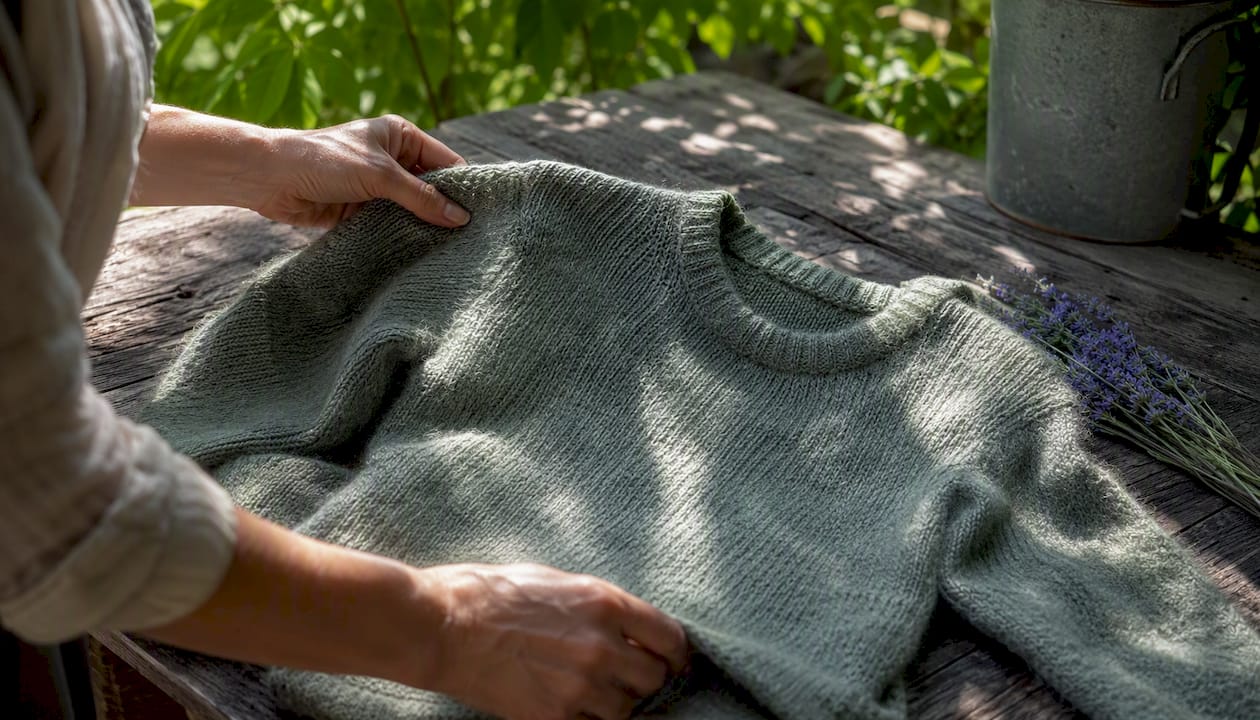
Flat drying is non-negotiable for animal fiber sweaters. Hanging a wet wool or cashmere sweater lets gravity pull moisture through the fabric, stretching the body and shoulders permanently. Hot tumble drying causes felting. Neither is reversible.
The flat-dry method:
- After the towel roll, transfer the sweater to a clean dry towel or a mesh drying rack.
- Reshape it to its original outline while it’s still damp. Smooth the ribbing, align the seams, and gently pull the body to its correct length and width.
- Turn it over halfway through drying to allow even airflow on both sides.
- Keep it away from direct sunlight (which fades color) and radiators or vents (which cause uneven drying and can felt the fibers).
Blocking goes one step further. It’s the technique knitters use to set a garment’s final shape after washing, and it’s also useful for reversing minor distortion in store-bought knitwear.
- Wet the sweater thoroughly (or complete a full wash), then lay it on a foam blocking mat or a folded towel.
- Pin or shape it to the target measurements using rust-proof blocking pins or your hands.
- Let it dry completely before moving it. This can take 24 hours or more for chunky knits.
Pro Tip: For a sweater that has tightened slightly, a brief conditioning soak (a drop of hair conditioner in cool water, 20 minutes) can relax the fibers enough to gently stretch them back toward their original size while blocking.
Fiber-specific quick guide: which method fits your sweater?
Different fibers have different tolerances. The fiber-by-fiber data from Natuclothes gives specific safe wash temperatures and spin speeds for common knit materials.
A few special cases worth noting:
- Superwash wool has been treated to resist felting, so it tolerates machine washing better than untreated wool. Still use cold water and a gentle cycle.
- Cashmere is the most delicate common fiber. Even a single aggressive wash can cause pilling or felting. Hand wash only, always.
- Silk blends stretch easily when wet. Support the garment’s full weight at all times and never wring.
- Hand-knit chunky pieces carry extra risk because the gauge is open and the fibers can felt or distort quickly. Hand wash and block every time.
- Heavily embellished or structured sweaters (beading, leather trim, fused interlinings) should go straight to a professional cleaner.
How to spot-clean and remove stains from sweaters
Treat stains promptly. The longer a stain sits in protein fibers, the harder it is to remove without aggressive methods that damage the knit.
- Blot, don’t rub. Use a clean white cloth to lift as much of the stain as possible before applying anything.
- Test on a hidden area first. Apply a small amount of your chosen cleaner to an inside seam or hem and wait a few minutes.
- Apply a small amount of gentle detergent directly to the stain. Work it in with your fingertip using light circular motions.
- Rinse carefully with cool water, pressing the water through rather than rubbing.
- Repeat if needed, but stop before the fiber shows any distortion.
Common stain types:
- Oil or grease: Apply a small amount of dish soap or a dedicated degreasing stain remover. Let it sit for 5 minutes before rinsing.
- Food or protein stains (blood, egg): Use cold water only. Hot water sets protein stains permanently. A small amount of enzyme-free detergent works here.
- Dye transfer: Act fast. A gentle detergent soak in cool water is the first step. Stubborn dye transfer may need professional attention.
When to stop and call a professional: If the stain involves a dry-clean-only garment, if the trim includes leather, suede, or heavy beading, or if home treatment has already altered the fabric’s texture, take it to a reputable cleaner. Attempting further home treatment on a compromised knit usually makes things worse.
How to prevent and remove pilling on sweaters
Pilling happens when short or broken fibers tangle together on the fabric surface from friction. It’s most common on areas that rub during wear (underarms, sides) and during washing. It doesn’t mean the sweater is low quality — even cashmere pills.
Preventive steps:
- Wash sweaters inside out to protect the outer surface.
- Use a mesh laundry bag in the machine to limit fiber-on-fiber friction.
- Avoid washing sweaters with rough fabrics like denim or items with Velcro.
- Keep spin speed low and cycle time short.
For removal, you have a few good options:
- Sweater comb: A manual tool with fine teeth that lifts pills cleanly without cutting the base fabric. Best for delicate fibers.
- Electric fabric shaver (defuzzer): Faster for larger areas. Use a light touch and keep the shaver moving to avoid cutting into the knit.
- Scissors: For a single large snag or pill cluster, carefully snip it at the base. Never pull a snag — that can unravel a stitch.
- Needle tacking: For a pulled loop or small snag, use a blunt tapestry needle to gently work the extra yarn back into the knit from the inside.
When should you take a sweater to a professional cleaner?
Some garments are simply beyond safe home washing, and recognizing that early saves the sweater.
Take a sweater to a professional cleaner when:
- The care label says “Dry Clean Only” with no alternative method listed.
- The sweater has fused interlinings (structured shoulders or a tailored body that would collapse when wet).
- It features leather, suede, or fur trim that cannot get wet.
- Heavy beading, sequins, or embroidery are present — water and agitation can loosen or distort these.
- The garment is vintage or heirloom knitwear with unknown fiber content.
- A stain or odor has not responded to careful home treatment.
When you visit a cleaner, ask specifically about wet cleaning as an alternative to traditional dry cleaning. Wet cleaning uses water and specialized equipment with gentler chemistry than solvent-based dry cleaning, and many reputable cleaners offer it for delicate knitwear. It’s worth asking, especially if you prefer to avoid harsh solvents on fine fibers.
Which detergents and tools should you use for sweaters?
The right products make a real difference. Here’s what to keep on hand:
- pH-neutral, enzyme-free wool wash: Enzymes digest protein fibers — exactly what wool and cashmere are made of. Look for formulas specifically labeled for wool or delicates. Eucalan (no-rinse formula), Woolite Delicates, and The Laundress Wool & Cashmere Shampoo are widely available options. Natuclothes’ fiber care data confirms enzyme-free, pH-neutral formulas as the safer choice for animal fibers.
- Woolmark-approved detergents: The Woolmark certification on a detergent label means it has been tested and approved against the wool industry’s care standards. It’s a reliable shortcut when comparing products.
- Mesh laundry bags: A fine-mesh bag reduces abrasion in the machine and keeps the sweater contained during the spin cycle. Get at least two in different sizes.
- Sweater comb or electric defuzzer: A sweater comb (like the D-Fuzz-It) works well for delicate fibers; an electric shaver (like the Conair Fabric Defuzzer) handles larger areas faster.
- Blocking boards or foam mats: Interlocking foam puzzle mats work perfectly for blocking. They’re inexpensive and easy to store.
- Mild hair conditioner: Useful for a conditioning soak when blocking slightly shrunken garments.
A note on detergent quantity: More soap is not better. Excess detergent is hard to rinse out of knit fabric and can leave a residue that attracts dirt and stiffens fibers. Use half the amount you’d use for regular laundry, or follow the wool wash label’s minimum recommendation.
How to freshen sweaters and extend time between washes
Reducing wash frequency is one of the best things you can do for a sweater’s longevity. Art of Manliness documents wool’s natural odor resistance and recommends airing and spot-cleaning as the primary maintenance strategy between full washes.
Practical freshening methods:
- Air over a rack for 24 hours after wearing. Drape the sweater flat or over a wide hanger (not a thin wire one) in a well-ventilated spot. This alone handles most light odors.
- Steam briefly. A handheld steamer or even a few minutes in a steamy bathroom relaxes fibers, removes wrinkles, and neutralizes odors without wetting the garment through.
- Spot-clean small marks with a damp cloth and a drop of gentle detergent rather than running a full wash.
- Distilled white vinegar rinse: A brief soak in a solution of cool water and a small splash of white vinegar can reduce scratchiness in wool and neutralize odors. Rinse thoroughly with cool water afterward.
- Fabric refresher spray: A light mist works for mild odors between wears. Choose an alcohol-free formula for delicate fibers.
Pro Tip: Store sweaters with cedar blocks to deter moths. Cedar’s aromatic oils dissipate over time, so sand the blocks lightly with fine-grit sandpaper each season or replace them every 1–2 years to keep them effective.
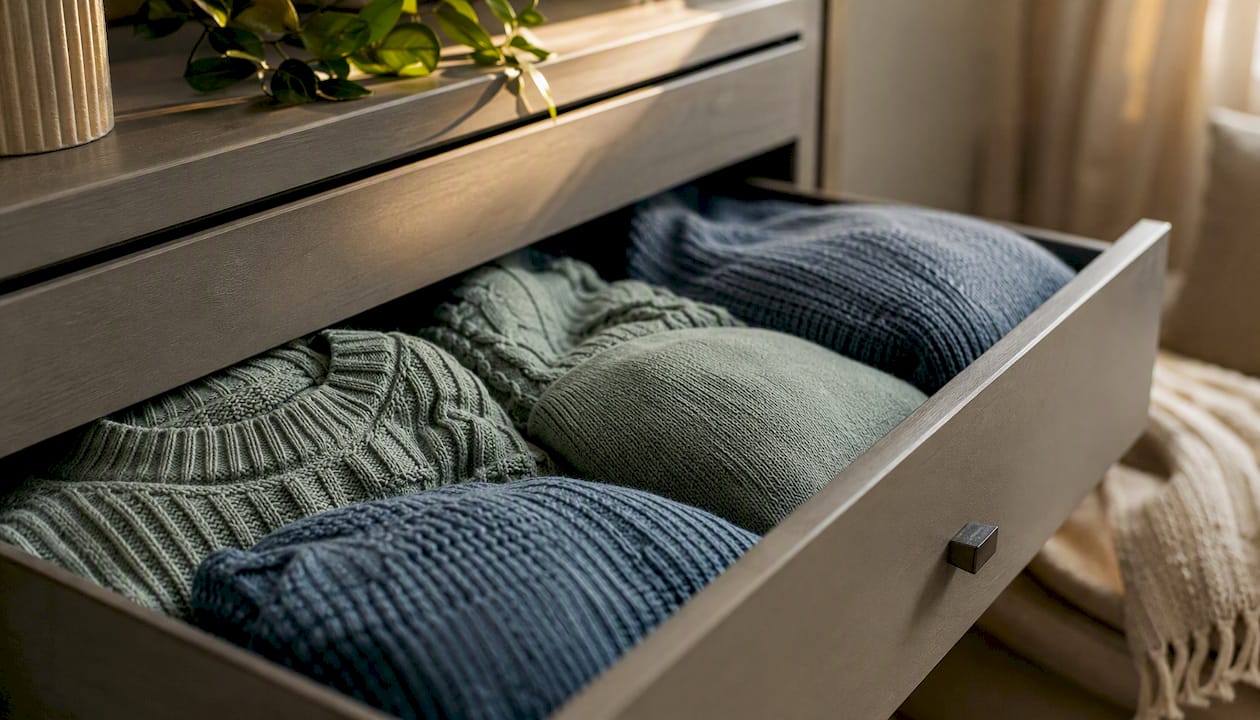
For longer-term sweater storage ideas, fold sweaters and store them flat in a drawer or on a shelf rather than hanging them. Hanging causes shoulder distortion over time, especially for heavier knits.
CAS7MFOCUS’s take on buying and caring for sweaters
Choosing a sweater with care in mind starts at the point of purchase. Look for garments with clear care labels that specify machine-washable or hand-wash instructions — vague labels are a sign the manufacturer hasn’t fully tested the garment’s durability. Prefer a tighter gauge knit for everyday casual wear; it’s more resistant to pilling and holds its shape through more wash cycles than a loose, open weave.
From a retail perspective, the care label should be part of the buying decision, not an afterthought. At CAS7MFOCUS, product listings include construction details so customers can make informed choices before they buy. A colorful women’s round neck sweater with a clear machine-wash label is a better everyday choice than an unspecified blend that requires guesswork at laundry time.
Keep a mesh laundry bag and a bottle of wool-safe detergent next to your washer. That small habit removes the friction from doing the right thing when laundry day arrives. Pair your sweaters with breathable base layers to reduce how often they need washing, and you’ll get significantly more wears per garment before the next full wash cycle.
Ready to build a wardrobe that’s as easy to care for as it is to wear? Shop CAS7MFOCUS for sweaters, hoodies, and everyday layers with clear care labels and styles built for real life.

Sources
These are the primary sources used to compile this guide, each offering deeper technical detail on specific aspects of sweater care:
- How to wash a wool sweater | Woolmark
- Sweater Care | The American Cleaning Institute (ACI)
- How to Wash Wool Sweaters Without Shrinking Them
- How to Wash a Knit Sweater: Fiber-by-Fiber Care Data
- How to Wash a Sweater the Right Way | The Art of Manliness
- How to clean and care for sweaters | The Spruce
FAQ
Can you wash sweaters in the washing machine?
Yes, but only if the care label explicitly permits it or the garment is labeled superwash or machine-washable. Use a wool or delicate cycle, cold water, a mesh laundry bag, and the lowest spin speed available (400–600 rpm), then dry flat.
How do you wash sweaters without ruining them?
Use cool water (at or below 30°C/86°F), a pH-neutral enzyme-free detergent, and minimal agitation — either by hand washing with gentle pressing or by machine on a delicate cycle. Always dry flat and reshape while damp.
Should you wash sweaters in hot or cold water?
Always cold or cool water, no warmer than 30°C (86°F) for wool, cashmere, alpaca, and silk blends. Hot water combined with agitation causes felting, which permanently shrinks and stiffens the fiber structure.
Is it better to hand wash or dry clean wool sweaters?
Hand washing is the preferred method for most wool sweaters, including those labeled “hand wash only.” Dry cleaning is reserved for garments labeled “dry clean only,” those with structured interlinings, leather or suede trim, or heavy embellishment that cannot safely get wet.

