


Cart
0
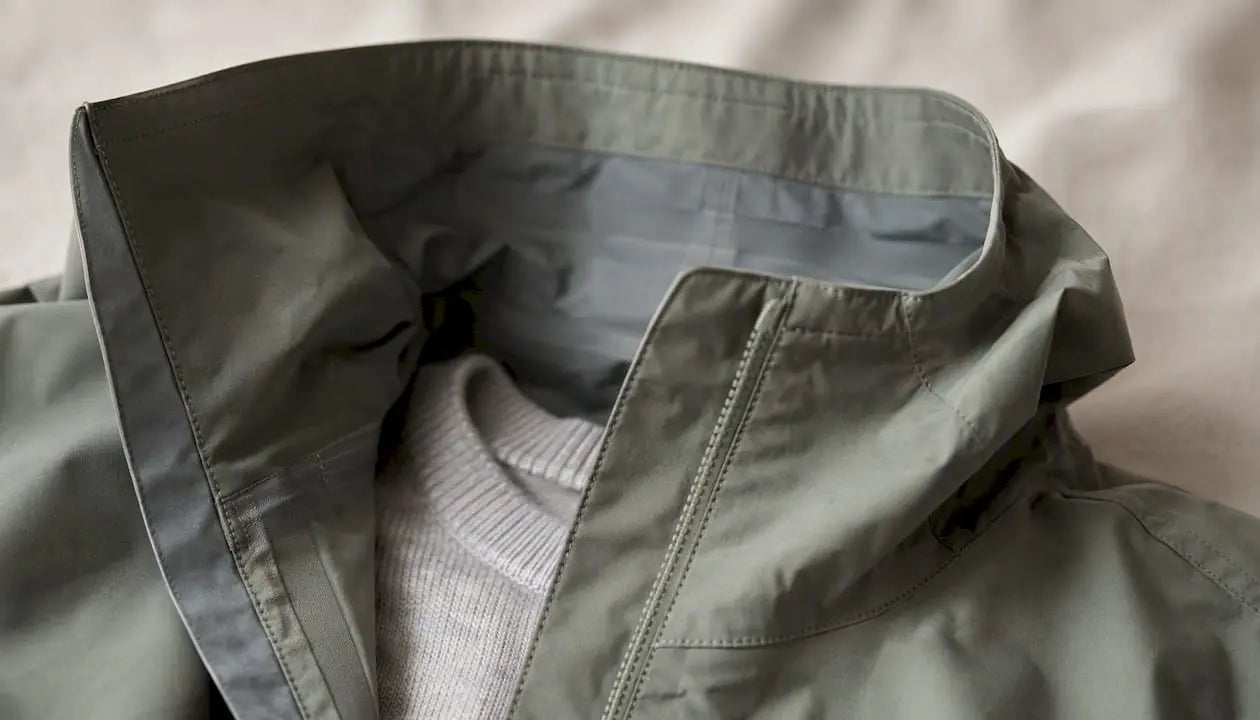
Waterproof jackets block sustained rain with a sealed membrane and taped seams. Water-resistant jackets shed light moisture through a tight weave or coating but wet out if the rain keeps falling. Water-repellent, or DWR-treated, jackets bead water on the surface until that finish wears down.
- Pick water-resistant for a short commute, school drop-off, or a quick dash between errands.
- Pick waterproof for hiking, an all-day soaking, or any activity where staying dry actually matters.
The rest of this guide covers how brands test these claims, what “DWR” means on a tag, why breathability works against waterproofing, how to keep a shell performing, and what to check before you buy.
Key Takeaways
Waterproof jackets rely on a sealed membrane and taped seams to block sustained rain, while water-resistant and water-repellent jackets only shed light moisture until their surface treatment wears down.
| Point | Details |
|---|---|
| Know the three labels | Waterproof uses a membrane, water-resistant uses a coating or tight weave, water-repellent (DWR) is a surface finish that beads water. |
| Check the hydrostatic head number | Look for at least 10,000mm for real wet-weather protection, and 15,000 to 20,000mm or higher for storms. |
| Confirm seams and zippers | Taped seams and waterproof zippers matter as much as the fabric rating itself. |
| Reproof DWR regularly | Clean the jacket and reapply a wash-in or spray DWR treatment once water stops beading on the surface. |
| Match the jacket to your activity | CAS7MFOCUS offers water-repellent, packable jackets suited to commuting and casual outdoor days rather than extreme storm conditions. |
Table of Contents
- Water Resistant vs. Waterproof Jacket: What Each Label Actually Means
- How Do Waterproof Jackets Actually Keep You Dry?
- What Does DWR Mean and Why Does It Wear Off?
- How Is a Jacket’s Waterproof Rating Measured?
- Which Jacket Type Fits Your Activity?
- How Do You Restore Water Repellency on an Old Jacket?
- What Should You Check Before Buying a Jacket?
- Sources
- FAQ
Water Resistant vs. Waterproof Jacket: What Each Label Actually Means
A waterproof jacket uses a membrane, like Gore-Tex or eVent, bonded to the fabric with every seam taped shut. Water cannot get through under normal rain pressure, and it stays that way for hours, not minutes.
A water-resistant jacket relies on a tightly woven fabric or a basic coating. It handles a light drizzle fine, but heavier or sustained rain eventually soaks through.
A water-repellent jacket has a DWR finish, a chemical coating sprayed or baked onto the outer fabric that makes water bead up and roll off. It is not a membrane, and it degrades with wear.
- Waterproof: trail running in a downpour, backpacking, ski touring.
- Water-resistant: walking the dog, a soccer game sideline, mild city drizzle.
- Water-repellent (DWR): the surface layer on nearly every rain jacket, waterproof or not.
Pro Tip: If a tag only says “water-repellent” with no mention of taped seams or a membrane, treat it as light-rain gear only.
How Do Waterproof Jackets Actually Keep You Dry?
The membrane is the real workhorse. It is a microscopic, semi-permeable layer with pores small enough to block liquid water droplets but large enough to let water vapor from sweat escape. Gore-Tex’s ePTFE membrane works this way, and several brands run proprietary versions of the same idea.
Layer count changes how that membrane gets used:
- 2-layer: membrane bonded to the face fabric, with a separate hanging liner inside. Affordable, a bit bulkier.
- 2.5-layer: membrane with a thin printed coating instead of a liner. Ultralight and packable, less durable over years of hard use.
- 3-layer: membrane sandwiched between face fabric and a bonded inner layer. Tougher, pricier, and the standard for serious hiking shells.
Seams are the weak point on any jacket, so waterproof models get every seam taped from the inside, and zippers get either a waterproof coating or a storm flap. Skip either one and water finds its way in at the stitch line, no matter how good the fabric is.
Pro Tip: Match layer count to how hard you’ll use the jacket. A 2.5-layer shell is great for a light daypack; a 3-layer shell earns its weight on multi-day trips.
What Does DWR Mean and Why Does It Wear Off?
DWR stands for durable water repellent, and “durable” is doing some optimistic marketing work there. It’s a thin coating applied to the outer fabric that makes rain bead and roll off instead of soaking in, and when it’s fresh, it also helps the jacket breathe better because the outer layer isn’t saturated.
The catch: DWR wears down from dirt, body oils, and abrasion long before the membrane underneath fails. Once that happens, the fabric “wets out,” meaning it looks and feels soaked even if the membrane is still keeping you technically dry underneath. A wet-out jacket also stops breathing well, because the saturated outer layer traps vapor instead of releasing it.
- Wash the jacket when water stops beading and starts soaking into the fabric.
- Check the product page or hangtag for reproofing instructions before you buy.
- Treat “water-resistant” as fine for short outings, but plan on a real waterproof shell for anything longer than an hour in steady rain.
How Is a Jacket’s Waterproof Rating Measured?
Brands rate waterproofness with a hydrostatic head test: a column of water sits on the fabric, and technicians measure, in millimeters, how high that column climbs before water seeps through.
By the numbers: Backpacker’s testing standards put the useful range between 5,000mm and 30,000mm, and a widely used baseline for calling a jacket “waterproof” sits around 10,000mm. Serious storm-and-mountain shells often run 15,000 to 20,000mm or higher.
Lab pressure doesn’t perfectly mirror a windy trailhead, though. A pack strap pressing fabric against your shoulder generates more localized pressure than a static column test, which is why reviewers pair the mm number with real rain-shower checks before calling a jacket dependable.
When you’re reading a spec page, check for:
- The hydrostatic head number in mm.
- Confirmation that seams are taped, not just sewn.
- The membrane or coating name (Gore-Tex, eVent, or a house brand).
- Waterproof zippers or storm flaps.
- Any DWR reapplication guidance.
In a store, run water from a bottle across the shoulder and cuff seams. If it beads and rolls, the DWR is working. If it darkens the fabric immediately, that’s a water-resistant piece, not a waterproof one.
Which Jacket Type Fits Your Activity?
Breathability and waterproofing pull in opposite directions. A fully sealed membrane blocks rain well but also traps more body heat and sweat than a looser, more breathable fabric, so the “best” jacket depends entirely on how hard you’re moving.
Casual wear around town or the school run doesn’t generate much sweat, so a water-resistant jacket with a good DWR finish covers most days. Active use is a different story: hikers and runners need pit zips, vents, or a highly breathable membrane, or they end up damp from sweat inside a jacket that kept the rain out perfectly.
| Use case | Best fit | Layer/features to look for |
|---|---|---|
| Commute or errands | Water-resistant | Light coating, hood, packable |
| Outdoor time with kids | Water-resistant or 2.5-layer waterproof | DWR finish, easy machine wash |
| Hiking or backpacking | Waterproof, 3-layer | Taped seams, pit zips, durable face fabric |
| Running | Waterproof, 2.5-layer | High breathability rating, minimal weight |
| Ski or backcountry touring | Waterproof, 3-layer | Helmet-compatible hood, powder skirt, high mm rating |

Budget shells in the $50 to $100 range usually rely on coatings rather than true membranes, and they perform fine for short exposure. Mid-tier jackets ($150 to $250) typically bring a real membrane with 2.5-layer construction. Above $300, you’re paying for 3-layer durability, better breathability, and more thoughtful details like pit zips and articulated hoods, along with matching pants and layering pieces built for the same conditions.
How Do You Restore Water Repellency on an Old Jacket?
A dirty jacket is a jacket that has stopped repelling water, because grime and body oil coat the fabric and block the DWR finish from doing its job.
- Machine-wash on a gentle cycle with a technical cleaner, never regular laundry detergent or fabric softener, which coat and clog the fabric.
- Apply a wash-in or spray-on DWR product once the jacket is clean and still damp.
- Reactivate the treatment with low heat, either a dryer’s low setting or a warm iron over a cloth, if the care label allows it.
Clean, reproofed DWR restores beading and breathability almost immediately. If water still soaks straight through after reproofing and the jacket feels stiff or crackly inside, the membrane itself may have delaminated.
Pro Tip: A jacket that’s peeling or flaking on the inside lining is past reproofing. That’s a membrane failure, not a DWR problem, and it usually means it’s time to replace the jacket rather than repair it.
What Should You Check Before Buying a Jacket?
Work through this list on any product page or in-store tag before you decide:
- Hydrostatic head rating in mm, and whether it clears 10,000mm for real wet-weather use.
- Taped seams, confirmed, not just implied.
- Waterproof zippers or a storm flap at the main zip.
- Hood design: does it move with your head, and does it fit over a hat or helmet if you need that?
- Pit zips or mesh vents if you’ll be active in it.
- Weight and pack size if it’s going in a daypack.
- Price against how often you’ll actually wear it in real rain.
Match those features to your top three uses. Someone splitting time between school pickups and weekend trail walks needs different priorities than someone training for a hiking trip that also demands the right footwear. Know your main use case first, then shop the spec sheet against it instead of chasing the highest mm number on the shelf.
A Practical Take on Picking Between Them
Most people overbuy on waterproofing and underbuy on breathability. A $300 mountaineering shell is wasted on school runs, while a flimsy water-resistant jacket falls apart on a real hike. Match the jacket to how you actually spend your time outside, not to the worst-case storm you rarely face.

Jackets Built Around These Same Priorities
Everything in this guide, from DWR finishes to packable layers to family sizing, shapes how CAS7MFOCUS builds its own outdoor and casual jackets. Our trendy jacket with a loose, everyday fit works well for the commute-and-errands crowd who wants water-repellent protection without the bulk of a full hardshell.

If you’re building out a full outdoor wardrobe rather than shopping one item at a time, browse the full CAS7MFOCUS collection for jackets, layering pieces, and everyday wear sized for the whole family. Check the product page for fabric details and sizing before you add a jacket to your cart, and pick the fit that matches the use case you settled on above.
Sources
- The Best Men’s Rain Jackets, Tested and Reviewed (2026)
- 10 Best Rain Jackets of 2026 | Tested & Ranked
- Best running rain jacket (guide) — iRunFar
- Water-Resistant vs Waterproof: What’s the Difference? | BobVila
FAQ
What Is Better, Waterproof or Water-Resistant?
Neither is universally better. Waterproof wins for extended exposure to rain, while water-resistant is lighter, cheaper, and often more breathable for short outings.
Is Water-Resistant OK in the Rain?
It’s fine for light drizzle or brief exposure, but it will eventually let water through in sustained rain, so it’s not a substitute for a waterproof shell on a long hike.
How Do I Know if My Jacket Is Waterproof or Water-Resistant?
Check the tag or product page for a hydrostatic head rating in mm, taped seams, and membrane details. Water-resistant jackets typically list only a coating or finish with no mm rating.
Does Water-Resistant Mean It’s Waterproof?
No. Water-resistant fabric resists water for a limited time before it soaks through, while waterproof fabric uses a sealed membrane built to keep water out through sustained exposure.

