


Carrito
0
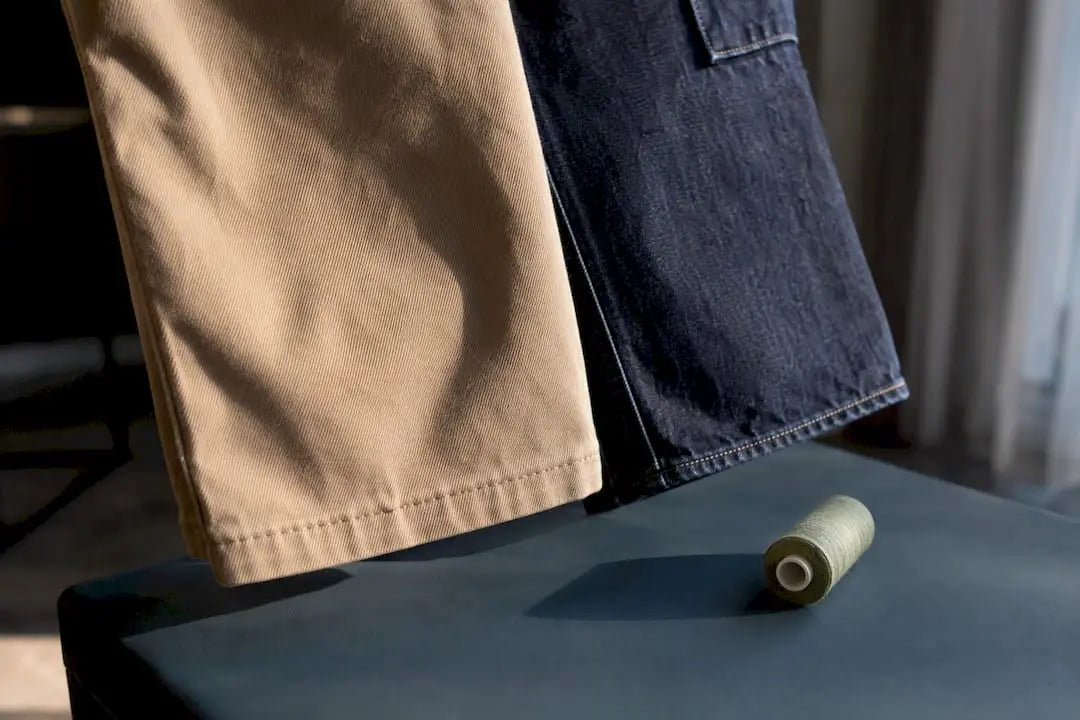
Pick chinos when you need a cleaner, more put-together look for the office, dinner, or anywhere smart-casual applies. Pick jeans when you want durability and a laid-back edge for weekends, travel, or physical work. The difference comes down to fabric weight and finish: chino cloth is lighter and presses crisp, while denim is heavier and reads more rugged. Everything below breaks down the fabric, fit, care, and styling choices that make that call easier.
TL;DR:
- Chinos are made from lighter twill fabric weighing 7 to 10 ounces, making them more breathable and crease-prone than the heavier 10 to 14 ounce denim used for jeans.
- Denim’s durability comes from its heavier weight and rugged construction, with visible rivets and five-pocket designs distinguishing it from the cleaner look of chinos.
- Dark jeans can substitute for chinos in smart-casual settings when well-fitted, but light-colored chinos require more frequent pressing and stain management to maintain a polished appearance.
- Climate influences choice: chinos suit warm weather with lighter fabrics, while denim excels in cold or rugged outdoor conditions for its wind resistance and toughness.
- Proper sizing, especially rise and inseam, is critical to achieving a polished look, with stretch fabric added to chinos for comfort without sacrificing crispness.
Table of Contents
- Chinos vs Jeans Fabric: Weight, Fit, and Durability Compared
- Which Pant Fits Which Occasion?
- How Should You Decide Between Chinos and Jeans?
- Why Jeans and Chinos Carry Different Reputations
- What CAS7MFOCUS Gets Right About Denim and Twill
- Choosing quality basics without unnecessary markups or guesswork matters for shoppers. Here’s how three pieces map to the decision checklist above.
- Sources
- FAQ
Chinos vs Jeans Fabric: Weight, Fit, and Durability Compared
The real split between these two pants starts with the cloth itself, not the color or the brand tag. Chinos are cut from a lighter twill weave, typically landing around 7 to 10 ounces per yard, while most jeans use denim in the 10 to 14 ounce range or heavier. That weight gap explains almost everything else: lighter chino cloth breathes better in warm weather and takes a crease more easily, which is why it looks sharper under a blazer or in a business-casual setting.
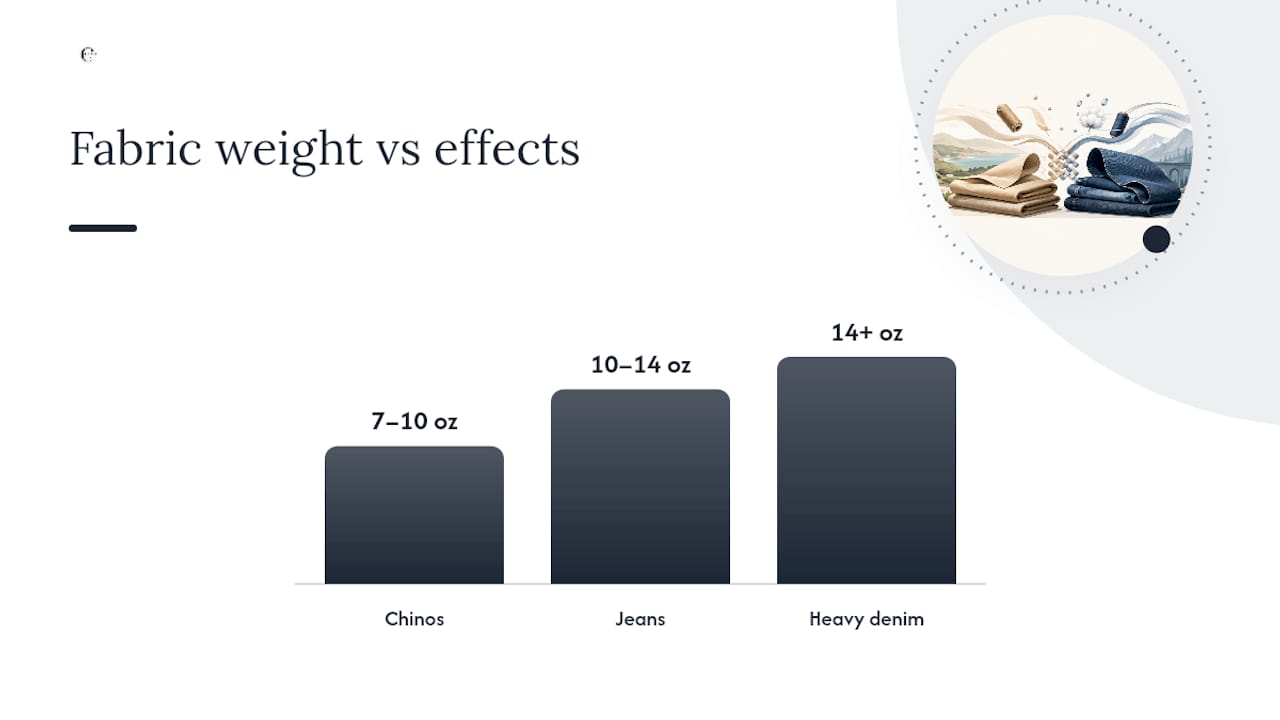
Denim’s heft is also why it historically became the workwear standard. Manufacturers have long noted that denim holds up better under abrasion than lighter chino cloth, which made it the natural choice for laborers who needed pants that could survive years of friction and strain. Most people sitting at a desk don’t need that level of toughness, but it’s worth knowing why jeans earned their reputation for lasting.
Fit changes the formality equation more than fabric does. A well-fitted dark jean can read smart-casual just as easily as a chino, while a baggy or wrinkled chino undermines the polish it’s supposed to deliver. Tapered and slim cuts dress up either fabric; straight and relaxed cuts pull both toward the casual end.
Care habits matter more than people expect. Chinos generally need more frequent washing and pressing to keep their clean look intact, since light-colored twill shows wrinkles and stains fast. Denim tolerates longer stretches between washes without losing its shape or color, which is part of why jean owners often go weeks between laundry days.
Quick trade-off summary:
- Chinos: lighter, cooler, dressier, but wrinkle and stain more easily.
- Jeans: heavier, tougher, more casual, but slower to press and less flexible for dress codes.
- Chinos: rely on plain-front or slight taper for a polished line.
- Jeans: rely on rivets, five-pocket construction, and contrast stitching for their signature look.
Visual cues make the difference obvious at a glance. Jeans typically show rivets at stress points, five-pocket construction, and contrast topstitching, while chinos favor welt or slanted pockets and a cleaner front with no visible hardware. Those small construction choices are the fastest way to tell, at a distance, which pair is dressier.
Pro Tip: If you only remember one rule, remember this: chinos wrinkle faster but press cleaner, jeans wrinkle less but never look “sharp” the way pressed twill does. Match the fabric to how much upkeep you’re willing to do that week.
Which Pant Fits Which Occasion?
Dress codes don’t care about brand names. They care about silhouette, color, and fabric texture, and each pant has a lane where it performs best.
Chinos for business-casual and smart-casual settings:
- Tucked Oxford shirt, navy chinos, and leather loafers for the office.
- Polo shirt, khaki chinos, and clean white sneakers for a client lunch.
- Chinos with a blazer and derby shoes for dinner or a semi-formal gathering.
Jeans for casual, weekend, and outdoor settings:
- Dark jeans, overshirt, and boots for a fall weekend outing.
- Plain tee, straight-leg jeans, and canvas sneakers for errands or travel.
- Jeans with a flannel and work boots for outdoor labor or yard work.
Dark, unwashed jeans occupy a gray zone. Plain dark denim can substitute for chinos in some smart-casual environments, especially paired with a structured blazer, but chinos remain the safer bet when a dress code is ambiguous or when you’re meeting someone for the first time in a professional setting.
Climate should factor into the choice too. Lighter chinos make more sense in warm months since the twill breathes and doesn’t trap heat the way heavier denim does. Cold weather or rugged outdoor use favors heavier denim, which resists wind and holds up against scraping on gear or rough surfaces. For outfit inspiration beyond these basics, these graphic sweatshirt pairings show how casual tops can dress either pant up or down depending on the rest of the fit.
Pro Tip: Match shoe weight to pant cut. Slim chinos pair best with slim-profile loafers or low sneakers, while relaxed jeans can carry chunkier boots without looking top-heavy.
How Should You Decide Between Chinos and Jeans?
Start with three questions: what will you be doing in these pants, what’s the climate, and how much upkeep are you willing to do?
- Primary use: office or events lean chino; physical activity or rough wear leans jean.
- Climate: hot and humid favors lighter chino twill; cold or wet conditions favor denim’s density.
- Care tolerance: if you don’t want to iron often, jeans forgive more between washes.
- Fit priority: slim or tapered cuts dress up either fabric; relaxed cuts stay casual regardless of material.
On sizing, get the rise and inseam right before anything else. A too-long chino pools at the ankle and kills the clean line that makes it work in the first place. Small amounts of stretch, usually a modest percentage of elastane, have become standard in daily-wear chinos because they add comfort for commuting and sitting without sacrificing the crisp finish.
When shopping, prioritize stretch blends for everyday chinos, heavier denim weights for durability, and dark indigo washes when you want jeans that can pull double duty in smart-casual settings. Watch for red flags: dye that bleeds onto other fabrics, chinos with no sanforization warning (they can shrink significantly after the first wash), and denim so stiff it fights a slim cut instead of settling into it.
If you’re building a stretch-forward everyday pair, CAS7MFOCUS carries a slim fit stretch cropped jean built for comfort without losing shape, and a distressed washed denim option for a more casual, worn-in look.
Why Jeans and Chinos Carry Different Reputations
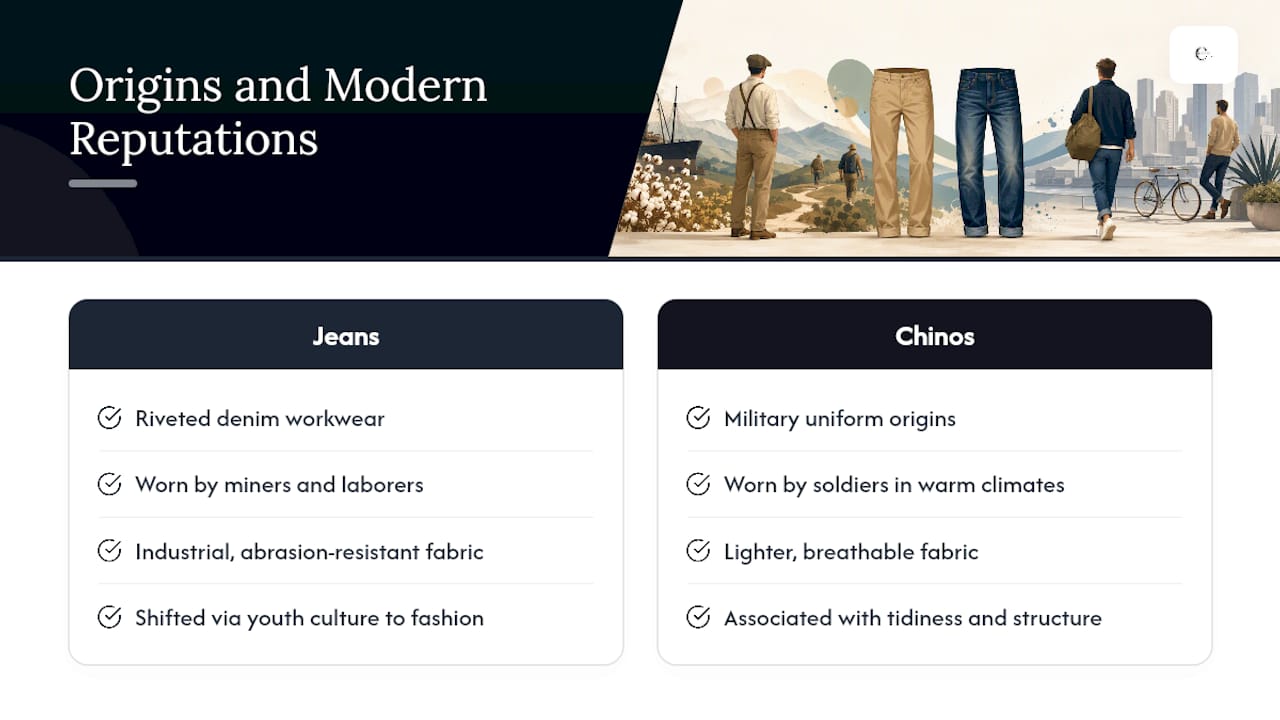
Jeans started as workwear. Riveted denim was built for miners and laborers who needed pants tough enough to survive daily abrasion, and that industrial pedigree stuck with the fabric for decades. It wasn’t until denim crossed into youth culture and later high fashion that jeans shed their blue-collar-only image and became acceptable in far more settings.
Chinos trace back to military uniforms, originally worn by soldiers who needed a lighter, breathable pant for warm climates. That heritage gave chinos an association with tidiness and structure long before they became a business-casual staple. The contrast still shapes how people read each pant today: jeans carry a rebellious, utilitarian undertone even in premium versions, while chinos retain a buttoned-up quality even in relaxed cuts.
That cultural residue is why a slim dark jean can pass in a casual office but rarely feels right at a formal dinner, no matter how expensive it is. Chinos, by contrast, can flex from boardroom to backyard barbecue without looking out of place. Neither pant fully shed its origin story, and that history still quietly shapes what feels appropriate on any given day.
What CAS7MFOCUS Gets Right About Denim and Twill
Fit and finish decide whether a pair of pants earns a place in regular rotation, not just the fabric label. CAS7MFOCUS builds its jeans and casual pants around that principle, favoring cuts that hold their shape through repeated wear and washing instead of stretching out after a month.
The catalog leans into the two-pair approach that works for most wardrobes: a versatile stretch jean for daily comfort and a distressed or trend-driven option for weekend rotation. Neutral tones paired with one dark denim option cover the widest range of dress codes without requiring a closet full of near-identical pants.
— CAS7M
Choosing quality basics without unnecessary markups or guesswork matters for shoppers. Here’s how three pieces map to the decision checklist above.
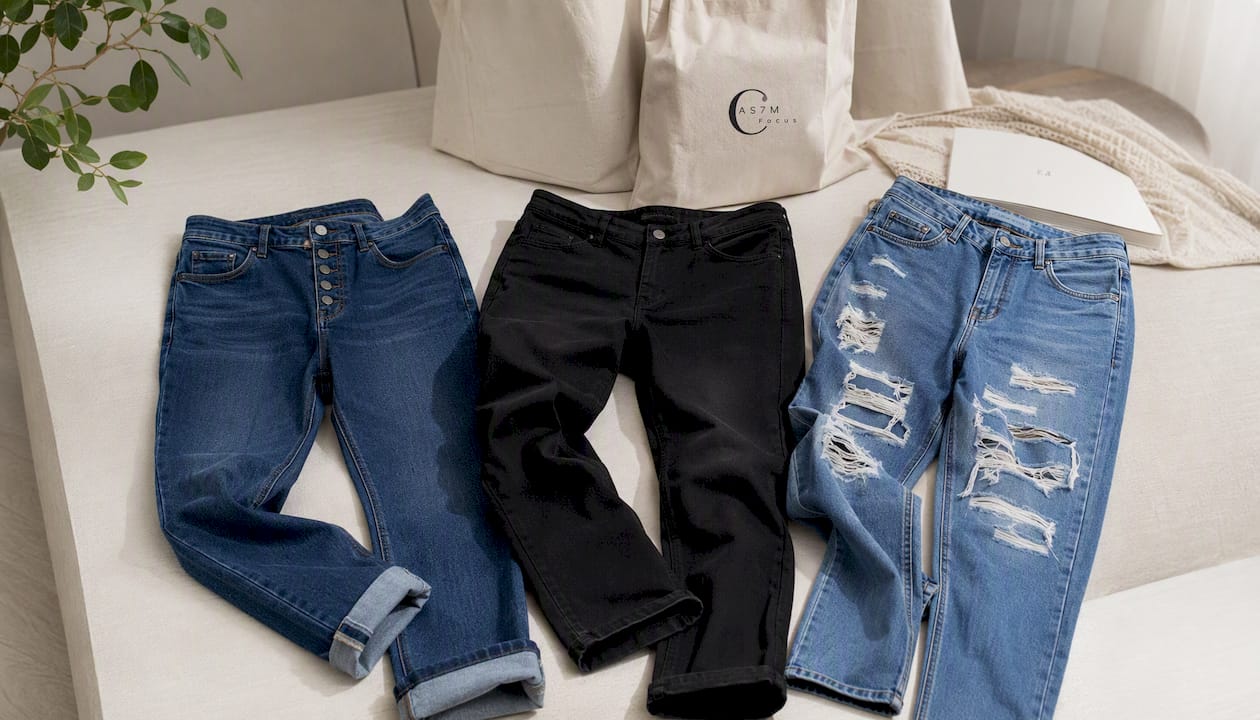
If daily comfort and a clean silhouette top your list, the slim fit stretch cropped jeans deliver the stretch blend that keeps commuting and sitting comfortable while still holding a tapered line. For a trend-forward look with a slimmer, self-cultivated silhouette, the Korean-style stretch black pants work well for anyone building a going-out rotation that skews modern rather than classic. If your priority is casual durability with texture and character, the distressed washed denim jeans fit weekend errands, travel days, or anywhere a worn-in look feels right. Browse the full jeans lineup and pick the pair that matches your next occasion.
Sources
- Chinos vs Jeans: Your Complete 2026 Comparison Guide
- Jeans vs Chinos: Key Differences & How to Wear Them from an Expert | Stridewise
- Best Men’s Chino Pants (2026): Dockers vs. Amazon Essentials | MyAwesomeBuy
FAQ
Are Chino Pants Better Than Jeans?
Neither pant is universally better. Chinos win for smart-casual and business settings because of their lighter 7 to 10 ounce twill and cleaner finish, while jeans win for durability and low-maintenance casual wear.
Can Chinos Be Worn Casually?
Yes, chinos work fine casually when paired with a tee, sneakers, or an overshirt instead of dress shoes. A relaxed or straight cut in a lighter wash pushes chinos toward the casual end without looking out of place.
Are Chinos Just Khakis?
Khaki refers to a color, while chino refers to the fabric and cut. Most khakis are chinos in that specific tan shade, but chinos come in navy, olive, black, and other colors that aren’t khaki at all.
Who Should Wear Chinos?
Anyone who needs a pant that transitions between office, dinner, and casual outings benefits from chinos. They suit people who want one versatile pair rather than separate pants for every dress code, especially when fit takes priority over fabric in determining how dressy the final look reads.

