


Chariot
0
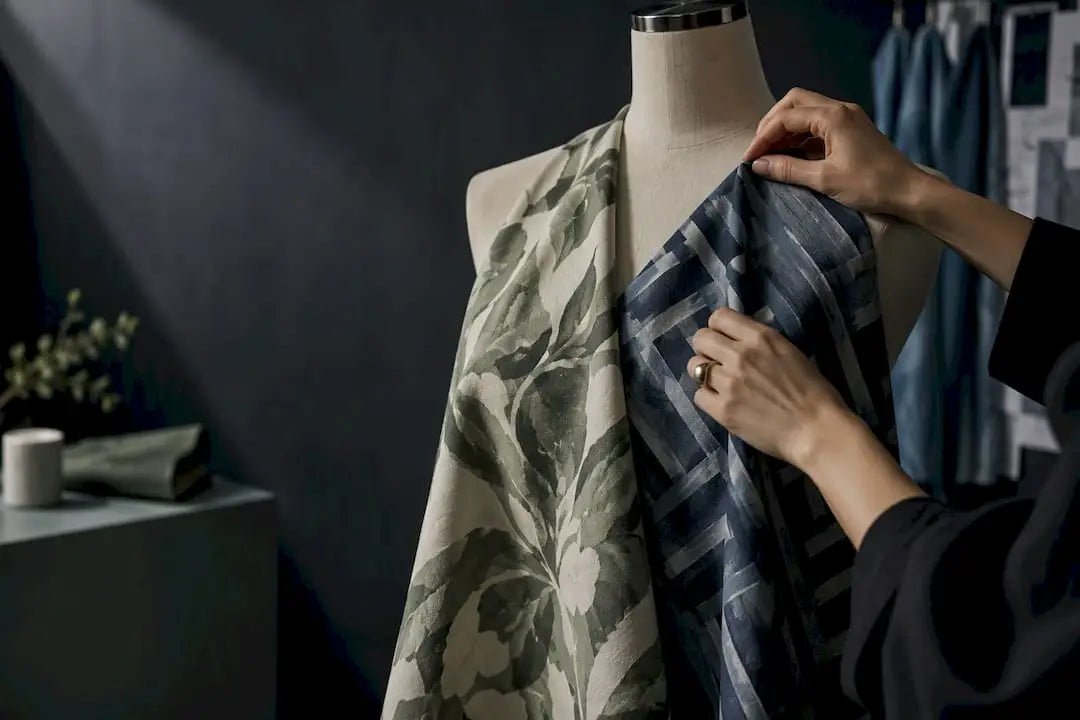
Mixing prints and patterns comes down to one move: pick an anchor print, repeat one of its colors somewhere else in the outfit, then pair it with a print in a different scale. Stripes, animal prints, and solids are your safest backup players while you build confidence, and many retailers stock pieces designed to slot into that formula. Start with one accessory before you commit to a full head-to-toe mix.
TL;DR:
- Use a shared color to connect different prints and create cohesion in a mixed outfit, especially when combining large and small scaled patterns.
- Pair a bold anchor print with a supporting print in a different scale and add a small accent pattern for balance.
- Incorporate structured or fitted pieces to ground the busy patterns and keep the outfit polished.
- Start mixing prints with accessories like scarves, belts, or shoes before trying full garments for lower risk.
- For quick success, choose versatile pieces such as a patchwork shirt dress or printed pants with solid tops to build confidence.
Table of Contents
- What Are the Real Rules for Mixing Patterns?
- How Do You Build a Mixed-Print Outfit Step by Step?
- What Are Some Foolproof Print Pairing Ideas?
- What’s the Easiest Way to Start Mixing Prints?
- Shopping Prints by Role: Anchor, Support, and Accent
- Why Confident Dressers Break Every One of These Rules
- Shop the Look: Quick Picks to Start Mixing Prints Today
- Sources
- FAQ
What Are the Real Rules for Mixing Patterns?
Four things separate a mixed-print outfit that looks styled from one that looks accidental: color, scale, intensity, and fit.
Color cohesion is the fastest fix for a look that feels disjointed. Pick a shade in your anchor print and let it reappear in your second piece. Stylists consistently point to a shared color as what ties unrelated patterns together and keeps a mixed outfit feeling cohesive instead of random.
Scale variation comes next. A large floral next to another large floral fights for attention. A large floral next to a fine pinstripe or a small polka dot lets each pattern breathe, which is why varying pattern scale is the first thing most stylists teach.
Intensity is the balance between loud and quiet. Not every print is a shout. Tonal prints, ones printed in a single color family, work like a “soft” anchor that lets a bolder second pattern take center stage without the outfit turning into visual noise.
Fit and silhouette hold the whole thing together. Busy patterns need at least one structured or fitted piece nearby, whether that’s a tailored blazer, a belted waist, or a slim pant, so the eye has somewhere to land.
- Repeat one color across two or more patterns.
- Combine one large print with one small print, never two of the same scale.
- Keep the palette to two or three dominant colors total.
- Anchor at least one piece with a fitted or structured shape.
Pro Tip: If you’re not sure where to start, mix textures before you mix patterns. A knit sweater over a printed skirt automatically lowers the visual density and makes the print pairing feel intentional.
How Do You Build a Mixed-Print Outfit Step by Step?
Think of it like layering a room, not stacking a wardrobe. Designers use a three-part formula, an anchor with a bold or complex pattern, a supporting print for structure, and a small textured or patterned finish, and it works just as well on a body as it does on a sofa.
- Choose an anchor print you love. This is usually the largest-scale or most emotionally compelling piece in the outfit, the one you built the look around. Starting with a print you’re drawn to gives you a visual home base and makes every other decision easier.
- Find a supporting print in a different scale that shares a color. A fine stripe, a small check, or a subtle geometric works well here since it adds contrast without competing.
- Add one small accent print. A scarf, a pair of patterned socks, or a printed bag delivers a third pattern in the smallest possible dose.
- Bring in one structured or fitted piece, plus a solid buffer. A blazer, a belt, or a pair of solid trousers keeps the outfit from tipping into costume territory.
- Decide the mood before you finalize proportions. A casual daytime mix can run looser and bolder; a formal mix should tighten the palette and lean on the fitted piece to do more visual work.
That order matters more than the pieces themselves. Skip step four and even a well-matched pair of prints can look unfinished.
- Anchor: the print that sets the tone.
- Support: same palette, different scale.
- Accent: the smallest dose of a third pattern.
- Buffer: one solid or structured piece to ground it.
What Are Some Foolproof Print Pairing Ideas?
Some combinations are close to failproof, and others take more confidence to pull off. Both belong in your rotation once you know which is which.
Safe starters:
- A striped tee under a small-scale floral skirt, matched by one shared color, like navy stripes with a navy-flecked floral.
- Two tonal prints in the same color family, which read as one cohesive statement instead of two competing patterns.
- Animal print in a small dose (a shoe, a belt) treated as a neutral rather than a pattern, since it pairs easily with florals and stripes alike.
Bolder clashes: A large floral dress under a geometric blazer sounds risky until a tiny polka dot scarf ties the palette together. The trick is limiting the geometric to one shared color from the floral, so three patterns still read as one intentional outfit rather than three separate decisions.
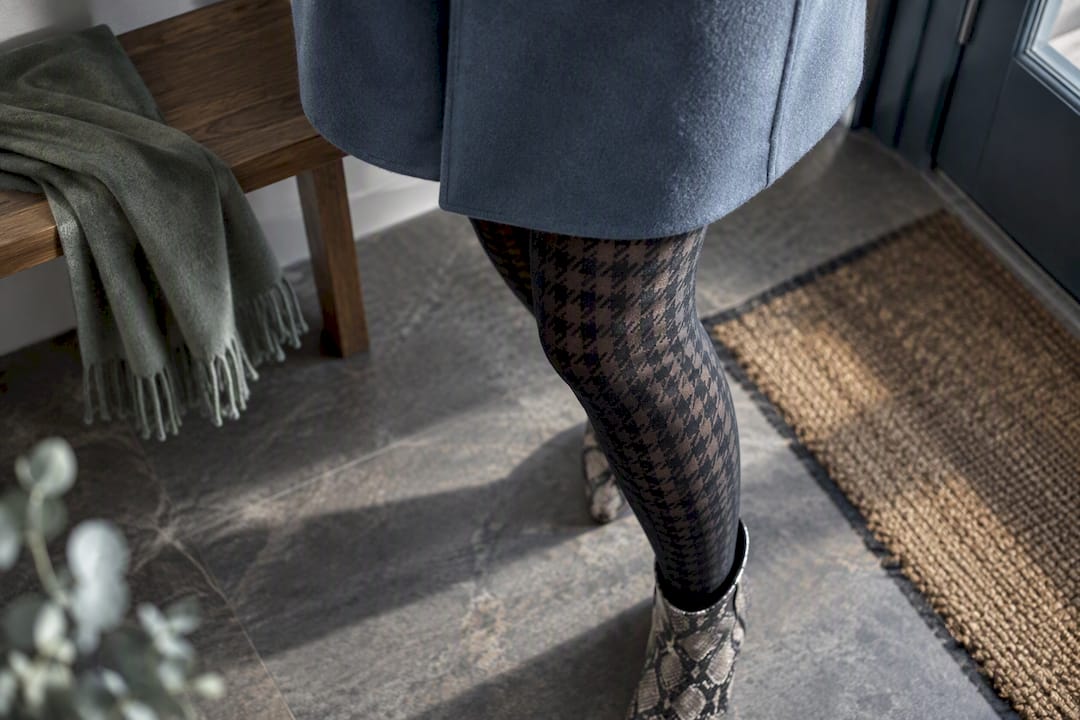
Seasonal transitions: Knitwear and solid coats work as buffers in cooler months, letting you wear a bold print underneath without overwhelming the whole look. Patterned tights or printed boots are an easy way to keep mixing prints going once heavier layers cover most of the outfit.
What’s the Easiest Way to Start Mixing Prints?
Accessories are the lowest-risk entry point into pattern mixing, and stylists routinely recommend starting there before committing to full outfits. A printed scarf, belt, sock, or bag adds a second or third pattern in a scale so small it’s nearly impossible to get wrong.
Texture does quiet work here too. Pairing a chunky knit with a leather bag and a lace hem lowers how “busy” a mixed-print outfit reads, even when the patterns themselves are bold.
- Men can start with a patterned tie, pocket square, or bandana against a solid shirt.
- Women often find scarves, printed tights, or a structured bag the easiest entry point.
- Shoes double as either a neutral base or a small printed accent, depending on the rest of the outfit.
Pro Tip: Buy one printed accessory before you buy a printed garment. It’s the cheapest way to learn whether a pattern actually works with your existing wardrobe.
Shopping Prints by Role: Anchor, Support, and Accent
Every mixed-print outfit needs pieces that know their job, and Some brands build several pieces with that exact purpose in mind.
- The Color-block Plaid Patchwork Shirt Dress works as a statement anchor on its own, thanks to its tiered skirt and flared sleeves, or as a playful mixed piece since the patchwork already blends patterns within a single garment.
- The Retro Floral Print Fringed Wide-Leg Pants function best as a supporting print. Pair them with a subtle printed top in a smaller scale, or ground them with a solid, fitted blazer so the floral has room to lead.
- The Printed Ruffle Sleeve Top Solid Color Pants Suit is one of the safest entry points into mixed-print dressing, since the solid pants do the grounding work automatically. Add a patterned scarf or printed bag as your accent and the outfit is done.
Certain brands design everyday pieces to boost confidence, and print mixing is one of the fastest ways to make an outfit feel deliberately styled rather than thrown together.
Why Confident Dressers Break Every One of These Rules
Rules like matching scale and repeating color exist to help beginners avoid visual chaos, not to cap how far you can take a look. Once you understand why a rule works, breaking it on purpose becomes a style statement instead of a mistake.
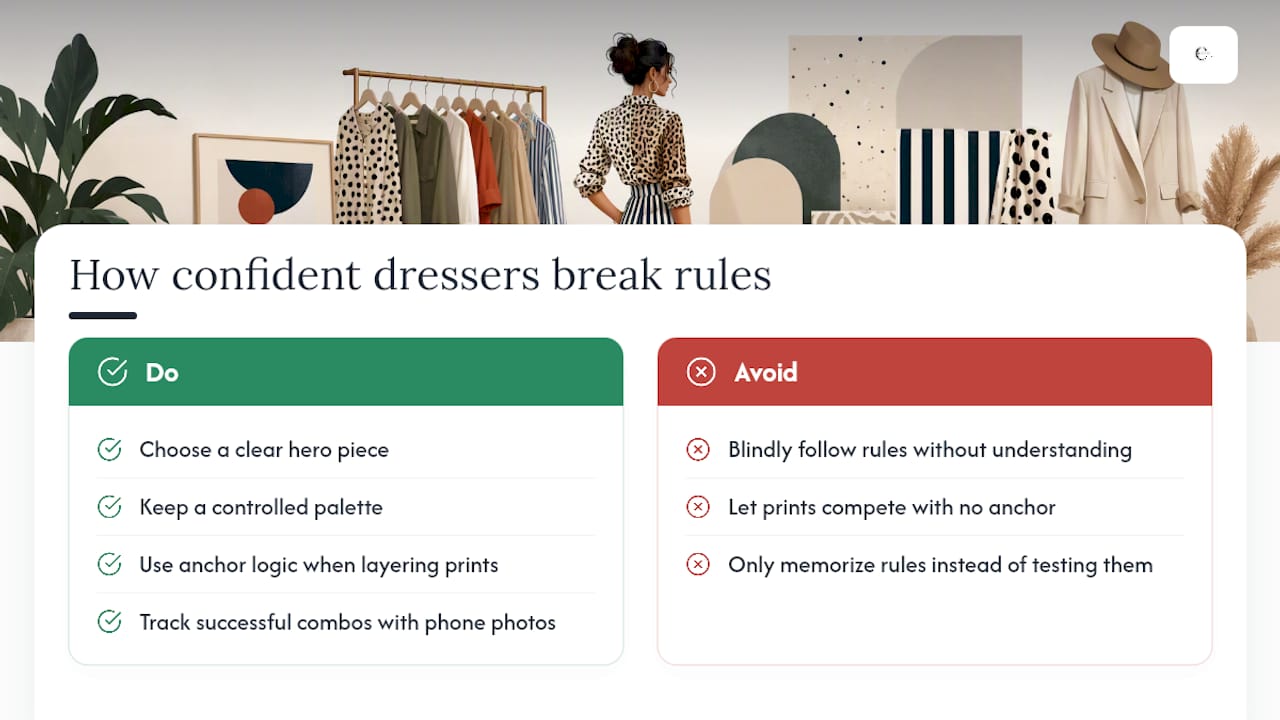
A maximalist outfit, three or four clashing prints, competing colors, reads as editorial rather than chaotic when there’s a clear hero piece and a controlled palette holding everything else in check. Some of the boldest work in prints for interiors and fashion alike still leans on that same anchor logic, just with more pattern layered on top.
The real skill isn’t memorizing rules. It’s repeating the combinations that work on you and tracking them, a phone photo diary does the job, until you know instinctively which clashes flatter your build and coloring and which ones don’t.
— CAS7M
Shop the Look: Quick Picks to Start Mixing Prints Today
Ready to put this into practice without overthinking every purchase? Start with the three pieces already built for print mixing. The Color-block Plaid Patchwork Shirt Dress works as your statement anchor for a night out. The Retro Floral Print Fringed Wide-Leg Pants pair with a solid fitted top for an easy weekend mix. The Printed Ruffle Sleeve Top Solid Color Pants Suit is the safest option if you’re mixing prints for work.
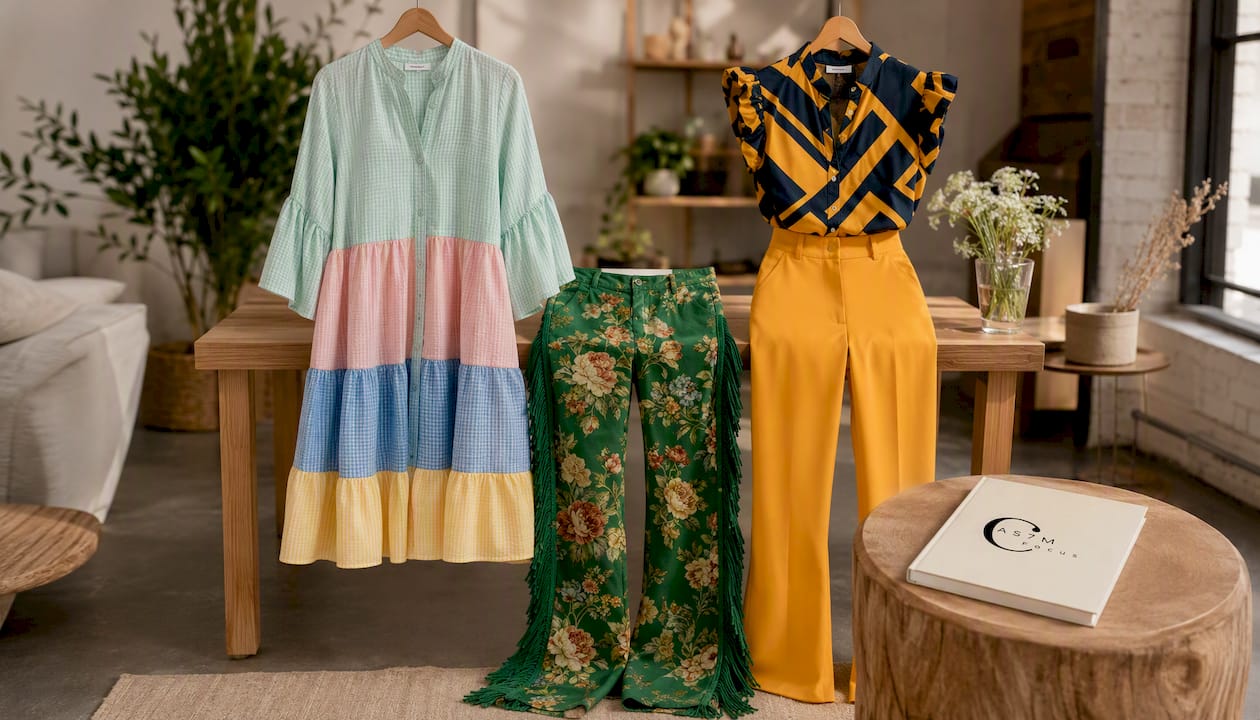
Some online stores are built for shoppers who want to act on a look right away instead of piecing one together from multiple retailers. Before you check out, zoom into the product photos and confirm the print’s actual scale and repeated colors match what you’re planning to pair it with; a pattern can look smaller or busier in person than it does on a thumbnail. Every listing includes detailed shots for exactly that reason. Browse the current dresses, pants, and suits at CAS7MFOCUS and build your next mixed-print outfit today.
Sources
- How to Mix Prints With Confidence — NeedleStyle
- 7 Ways to Mix Prints and Patterns Like a Pro — InStyle
- How to mix prints without clashing, according to fashion experts — Teen Vogue
- How to mix patterns like a designer — Sense of Spencer
FAQ
What Are the Basic Rules for Mixing Patterns?
Repeat a shared color across your prints, pair a large-scale pattern with a small-scale one, and keep at least one piece structured or solid to ground the look. Stripes, animal prints, and tonal patterns are the easiest starting points because they pair with almost anything.
What Is the 3-3-3 Rule for Clothes?
There’s no single, widely agreed-upon “3-3-3 rule” specific to pattern mixing; definitions of it vary across styling advice. If you’ve seen it referenced, it’s more commonly tied to general outfit-building (three pieces, three colors, three textures) than to a formal print-mixing standard.
How Do You Mix Prints and Patterns Without Clashing?
Start with accessories, a scarf, a belt, or a bag, rather than jumping straight to two printed garments. Choose one anchor print, add a second print in a different scale that shares a color, and let a solid or structured piece hold the rest of the outfit together.
What Patterns Don’t Go Together?
Two patterns of the same scale and busyness, like two large florals, tend to fight for attention and rarely work without heavy editing. Patterns that share no color at all also clash more easily, since there’s nothing tying them visually to the rest of the outfit.
Can Men Mix Prints and Patterns Too?
Yes, and the same rules apply: start small with a patterned tie, pocket square, or bandana against a solid shirt before layering a second bold print. A patterned tie against a subtly striped shirt is a low-risk way to practice the same anchor-and-accent formula.
