


Chariot
0
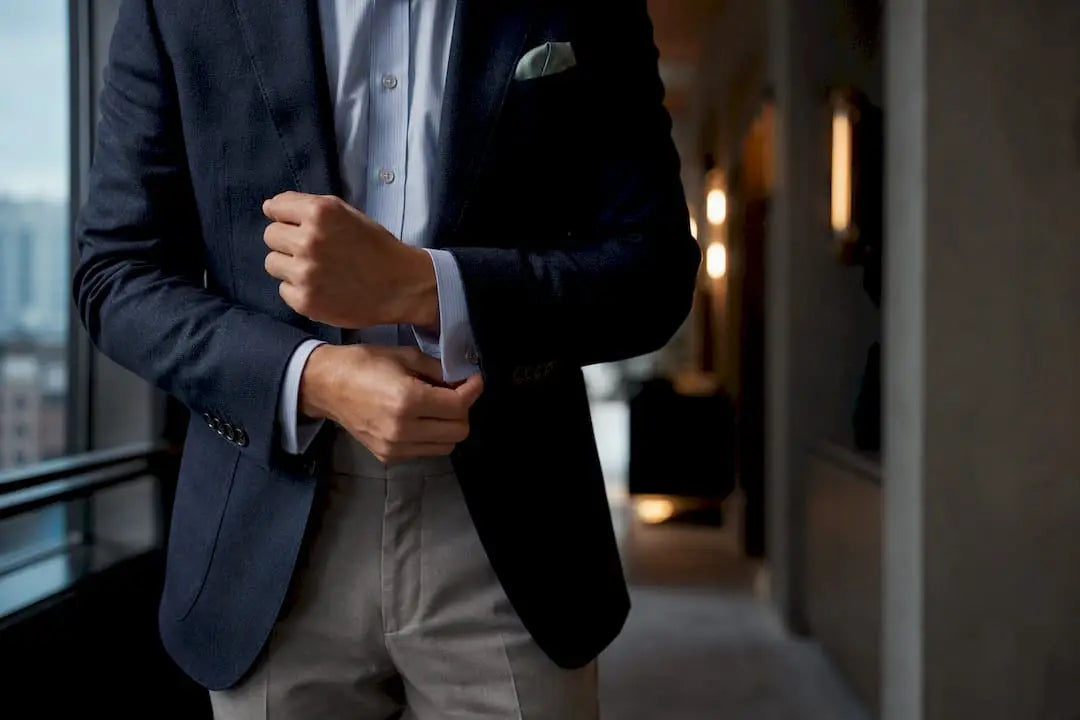
Business casual means office-formal with the tie removed; smart casual means weekend wear elevated with one polished piece. The fastest signal is denim and sneakers: business casual generally says no, smart casual says yes if the rest of the outfit is structured. A crisp business formal shirt covers the first code, while a tailored pair of high-stretch pants bridges both.
TL;DR:
- Denim is generally not acceptable for business casual unless it is dark, well-fitted, and paired with a blazer or structured top.
- Smart casual permits minimal sneakers only if they are clean, leather or suede, and the denim is free of distress or fading.
- For business casual, tailored trousers, collared shirts, and loafers are standard, with blazers adding credibility in client-facing roles.
- Smart casual outfits focus on one elevated piece like a blazer or leather shoes, combined with casual items such as dark jeans or chinos.
- When unsure of the dress code, prioritize business casual and bring a blazer to easily adapt if the event becomes more formal.
Table of Contents
- Smart Casual vs Business Casual: A Quick Comparison
- Business Casual Staples, Fit, and What to Avoid
- Smart Casual Staples and Making Jeans Actually Work
- Outfit Formulas You Can Build in Under Two Minutes
- Five Questions to Decide Which Code You Actually Need
- How CAS7M Thinks About Dressing for Both Codes
- Shop the Pieces That Cover Both Dress Codes
- Sources
- FAQ
Smart Casual vs Business Casual: A Quick Comparison
The two codes overlap more than people admit, but the gap shows up fast once you check three things: denim, footwear, and what’s doing the structural work in the outfit.
- Denim: Business casual usually rules it out. Smart casual allows dark, unzipped jeans if paired with a blazer or structured top.
- Sneakers: Business casual sticks to leather shoes or loafers. Smart casual permits clean, minimal sneakers as long as nothing else in the outfit is sloppy.
- Anchor piece: Business casual leans on tailored trousers and a collar. Smart casual leans on one elevated item, often a blazer or a good leather shoe, doing the heavy lifting for one casual piece.
- Typical occasions: Business casual fits client meetings, interviews, and standard office days. Smart casual fits dinner parties, creative-industry offices, and semi-formal social events.
A business casual outfit might look like tailored chinos, a tucked button-down, and loafers. A smart casual outfit might look like dark jeans, a fitted knit, and a blazer. Finance and law tend to interpret both codes more conservatively than tech or media, where dress codes have loosened considerably over the past two decades.
Business Casual Staples, Fit, and What to Avoid
Business casual is the relaxed cousin of a suit, not the formal cousin of weekend clothes. The starting point is still the office, and the goal is to look like you removed a jacket and tie, not that you rolled out of bed.
- Tops: Collared shirts and blouses in solid colors or subtle patterns.
- Bottoms: Tailored trousers, chinos, or skirts that fall at or near the knee.
- Layers: A blazer isn’t required everywhere, but it instantly raises the outfit’s credibility in a client-facing role.
- Shoes: Leather loafers, oxfords, or low block heels rather than anything athletic.
- Fabric and color: Structured fabrics like cotton twill and wool blends read better than jersey knits, and a muted palette (navy, gray, camel, white) reads more consistent than mixed brights.
Skip distressed denim, gym clothes, graphic tees with loud logos, and flip-flops entirely. These are the fastest way to read as underdressed even if every other piece is expensive.
Pro Tip: Keep one wrinkle-resistant collared shirt and one pair of tailored trousers in rotation specifically for last-minute meetings. It saves you from ironing at 7 a.m.
How strict this gets depends heavily on your sector. A law firm or bank often expects business casual to sit closer to formal, while a marketing agency might treat it as a loose suggestion.
Smart Casual Staples and Making Jeans Actually Work
Smart casual starts from the opposite direction: everyday clothes, elevated by one deliberate choice. Most people already own the pieces to pull it off, they just haven’t combined them with intention.
- Dark wash, straight or slim jeans with zero rips or fading
- Chinos in place of jeans when you want a slightly cleaner base
- A quality knit sweater, fitted blouse, or button-down in a texture that isn’t jersey
- A blazer or structured jacket as your one anchor piece
- Clean leather sneakers or loafers, never worn-in trainers
The jeans rule is about fit and condition, not the fact that they’re denim. Dark, well-fitting jeans without visible distress pass in most smart casual settings; light-wash, baggy, or ripped denim does not. The same logic applies to sneakers: minimalist leather or suede sneakers in white, black, or tan work, but mesh running shoes and chunky dad sneakers read as gym clothes no matter how clean they are.
Pro Tip: If you’re unsure whether your sneakers cross the line, ask whether they’d survive a walk through wet grass without getting ruined. If yes, they’re probably too casual.
Texture does a lot of the elevating work here. A leather belt, a structured bag, or a watch with a metal band adds polish without adding formality, which is exactly the balance smart casual is built on.
Outfit Formulas You Can Build in Under Two Minutes
The fastest way to dress for either code is the anchor-and-balance method: pick one structured item, then pair it with one casual item, and let the two of them set the tone for everything else.
- Business casual, office default: Tailored trousers plus a collared shirt plus loafers.
- Business casual, client meeting: Blazer plus dress shirt plus dark chinos plus leather shoes.
- Business casual, warm weather: Knee-length skirt plus blouse plus low block heels.
- Smart casual, dinner out: Dark jeans plus a blazer plus clean leather sneakers.
- Smart casual, creative office: Chinos plus a textured knit plus loafers.
- Smart casual, weekend event: Structured jacket plus a quality tee plus tailored jeans.
To move any of these up a notch, swap sneakers for leather shoes or add a blazer. To move one down, drop the blazer and swap dress shoes for clean sneakers. The anchor-and-balance principle works because it’s a ratio, not a checklist. Change one variable and the whole outfit shifts formality.
Five Questions to Decide Which Code You Actually Need
When the invitation just says “dress accordingly” or your calendar says “meeting” with no further detail, run through these five questions before you open your closet.
- Where is it happening? A conference room reads differently than a rooftop bar.
- Who’s hosting, and who else is coming? Senior leadership in the room usually means dress up.
- Has this event happened before? Precedent from last year’s version is often the best clue you’ll get.
- What are the stakes? An interview or new-client pitch calls for erring toward business casual.
- What does your industry or region typically expect? Dress-code terms describe a range, not a uniform, so a “smart casual” invite at a law firm and one at a design studio can mean different things.
When you genuinely can’t tell, dress toward business casual and adjust down if everyone else turns out to be more relaxed. Bringing a blazer you can remove is far easier than showing up underdressed with no way to fix it. Say the invite mentions a client dinner with no further detail: that’s high stakes plus outside guests, which points straight to business casual with a polished shoe.
How CAS7M Thinks About Dressing for Both Codes
We build our men’s and women’s collections around the same anchor-and-balance logic this article walks through. A structured shirt or a tailored pant does more styling work than five trendy pieces that don’t fit right, and fit consistently reads as more competent than logos or price tags. When you’re shopping for either code, prioritize fabric weight and a true fit through the shoulder and waist before anything else. One good anchor piece, paired with clothes you already own, usually solves the outfit faster than a full new wardrobe.
— CAS7M
Shop the Pieces That Cover Both Dress Codes
Instead of guessing which shirt or pant reads as “professional enough,” start with two pieces that were built to answer that question directly. The Business Formal Long Sleeved Shirt For Men is the collared anchor from the business casual section above: pair it with tailored trousers for the office, or open the top button and add a blazer for a client dinner that tips toward smart casual.
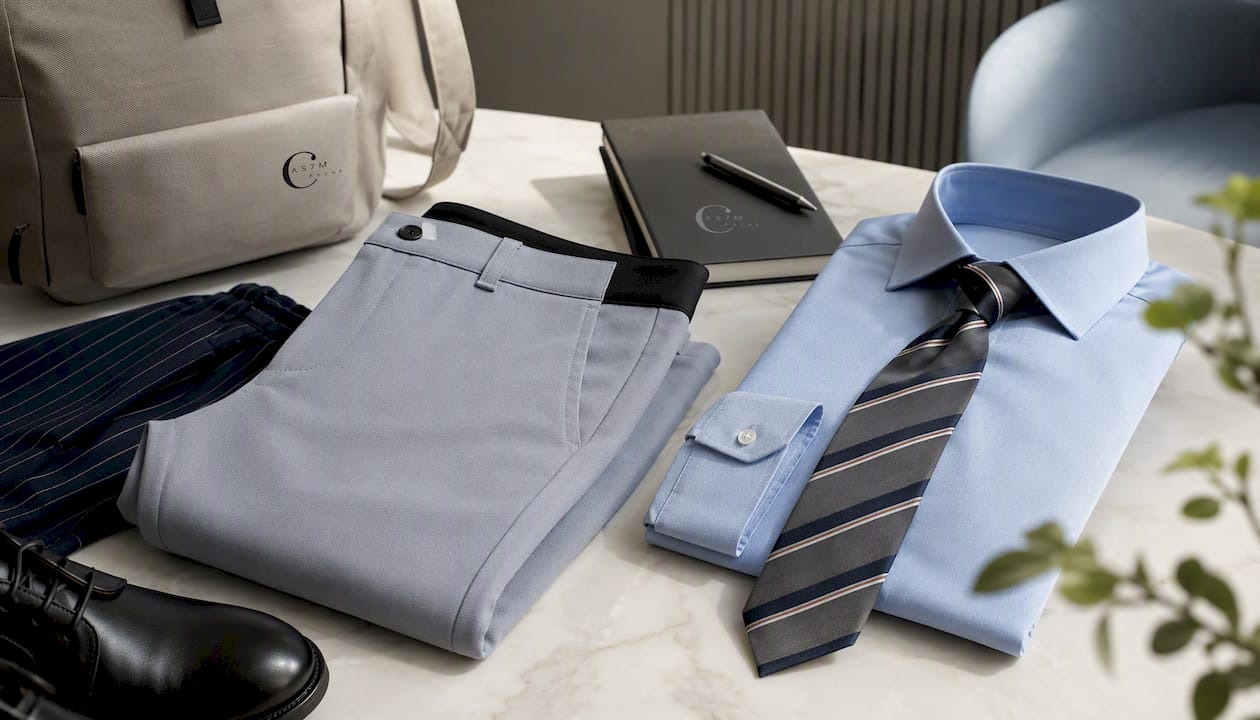
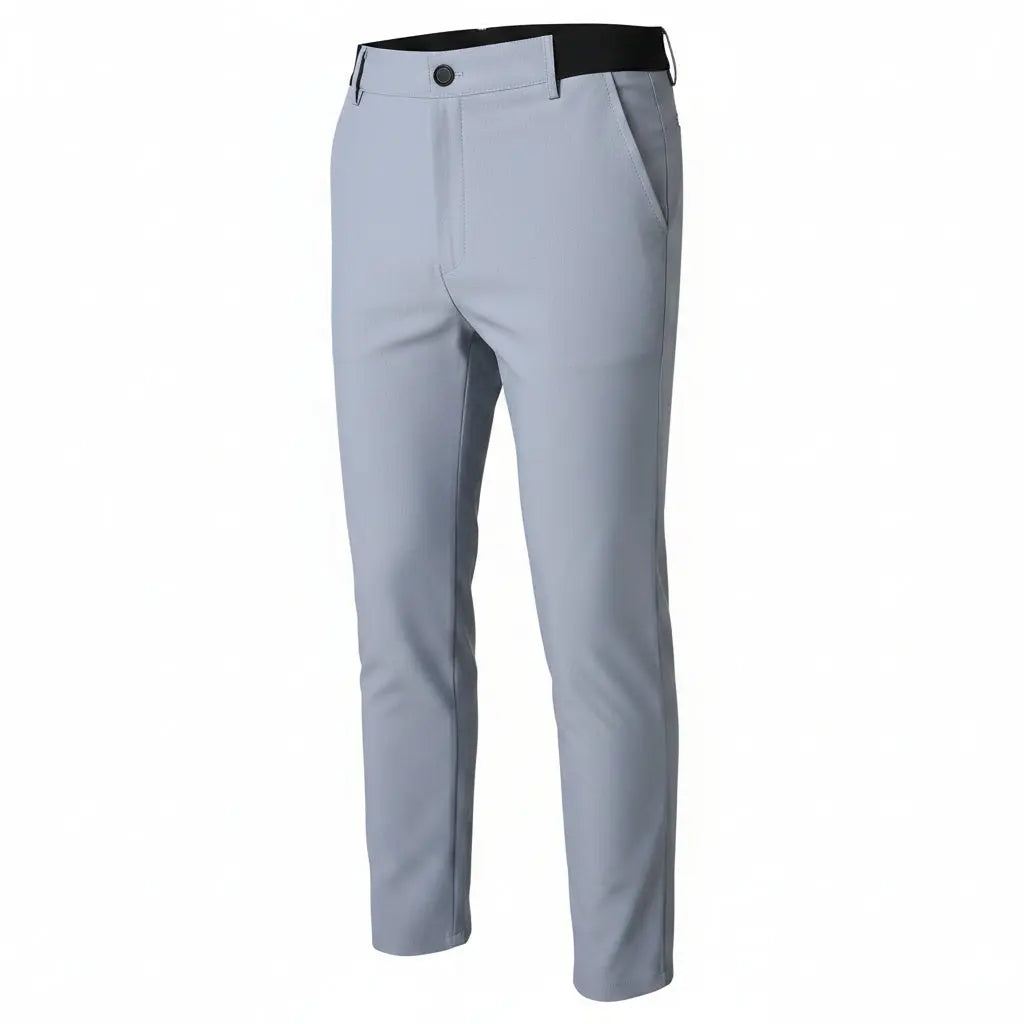
The Men’s Skinny Casual Pants High-stretch Business Casual Pants do the cross-code work the outfit formulas call for. High-stretch fabric holds a tailored shape for the office, then pairs with a knit and clean sneakers for a weekend event without changing anything else. For finishing touches like a workplace-appropriate scent, this fragrance guide covers what to wear and what to skip. Check the size chart on each product page before ordering. Both pieces run true to standard US sizing, and returns may be accepted on unworn items if the fit isn’t right.
Sources
- How To Dress Smart Casual: What You Need To Know — Forbes
- What is a smart casual dress code? — MIT (CAPD)
- Smart casual vs business casual: definitive guide — Klodsy
- What does ‘business casual’ or ‘smart casual’ actually mean? — Inside Out Style
FAQ
Are Jeans OK for Smart Casual?
Yes, as long as they’re dark wash, well-fitted, and free of rips or heavy distress, and you pair them with a structured piece like a blazer.
What Is Not Allowed for Smart Casual?
Ripped or light-wash denim, gym wear, flip-flops, and heavily worn sneakers all fall outside smart casual, since the code still requires a deliberate, put-together look.
Are Sneakers OK for Smart Casual?
Clean, minimal leather or suede sneakers in neutral colors work for smart casual, but mesh athletic shoes and chunky trainers generally don’t.
Are Jeans Okay for Business Casual?
Most business casual settings exclude denim entirely, sticking instead to tailored trousers, chinos, or knee-length skirts paired with leather shoes.
How Do I Know Which Code an Event Actually Calls For?
Check the venue, the guest list, any precedent from past versions of the event, and the stakes involved. When in doubt, lean toward business casual and adjust down once you see the room.
