


Cart
0
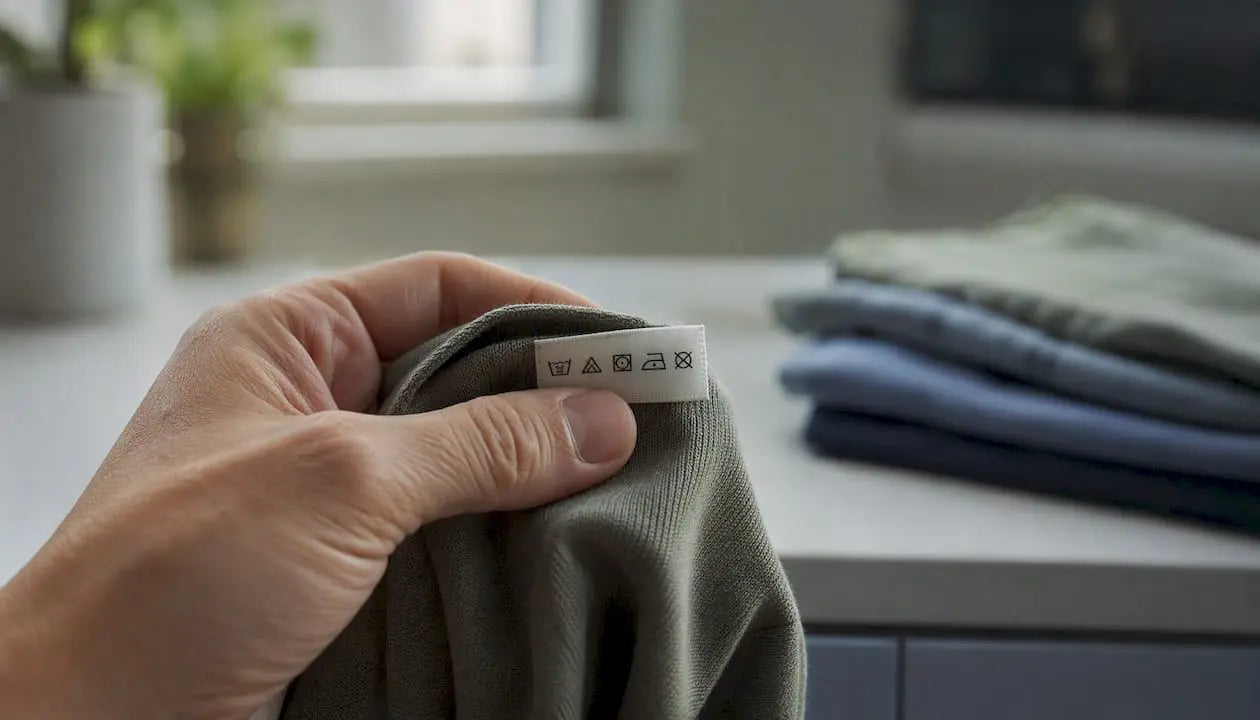
When you read clothing labels, check three things: fiber content, the five care-symbol blocks (wash, bleach, dry, iron, professional clean), and the most severe-treatment indicator. According to GINETEX, every symbol shows the harshest treatment a garment can safely handle, not a suggestion to push further.
Three rules to keep front of mind:
- Follow the most restrictive symbol. If one symbol says gentle and another says cold, honor both.
- Dots equal heat levels. More dots mean higher temperature, across washing and drying alike.
- An X means stop. Any symbol crossed out is an absolute restriction, not a soft guideline.
Pro Tip: Print a laundry-symbol cheat sheet and keep it inside your laundry room cabinet door. Before washing a borderline item, run a damp cotton swab along the inside seam. If dye transfers to the swab, treat the garment as non-colorfast and wash it separately in cold water.
Key Takeaways
Reading clothing labels correctly protects your garments from irreversible damage and extends the life of every piece in your wardrobe.
| Point | Details |
|---|---|
| Follow the most restrictive symbol | Always honor the harshest restriction shown, whether it’s cold wash, gentle cycle, or no dryer. |
| Dots equal heat levels | More dots mean higher temperature for both washing and tumble drying. |
| Cold + gentle is your safe default | When labels are unclear, use cold water, a gentle cycle, a mesh bag, and air-dry. |
| Keep the sewn-in tag | Don’t cut it until you’ve memorized or photographed the care instructions and RN number. |
| Mixed fibers follow the sensitive fiber | Care for the most delicate material in any blend, not the dominant one. |
Table of Contents
- How do you read a clothing label from top to bottom?
- What do washing symbols on clothing labels mean?
- What do drying symbols tell you about your clothes?
- How do bleach symbols work on clothing tags?
- What do the dots on an iron symbol mean?
- What do dry-cleaning symbols mean on a tag?
- What should you do when a clothing label is missing or unclear?
- What else does a clothing label tell you?
- What do label terms like “pre-shrunk” and “colorfast” actually mean?
- How do you care for mixed-fiber garments and special treatments?
- Shop Clothing That’s Built to Last
- Sources
- FAQ
How do you read a clothing label from top to bottom?
Most garments carry one or two sewn-in tags, typically at the back neckline or left side seam. U.S. law requires four disclosures on every garment label: fiber content, care instructions, country of origin, and a manufacturer identifier (usually an RN number). Knowing that order helps you find what you need fast.
Read the tag in this sequence: fiber content first, then the care symbols (wash → bleach → dry → iron → professional clean), then any written notes like “pre-shrunk” or “colorfast.” Fiber content tells you what you’re working with; the symbols tell you how to treat it.
Never cut the sewn-in tag until you’ve memorized the care instructions or photographed them. Beyond care, that tag holds resale value information and the RN number, which you can look up on the FTC’s database to verify the manufacturer.
Pro Tip: Fiber percentages are listed by weight, highest to lowest. That small elastane content also means you should avoid high heat, which degrades elastic fibers over time, per WearScore’s fiber guide.
What do washing symbols on clothing labels mean?
The washtub icon is the anchor of any laundry symbols guide. A plain tub means machine wash. A tub with a hand means hand wash only. A tub crossed out means do not wash with water at all.
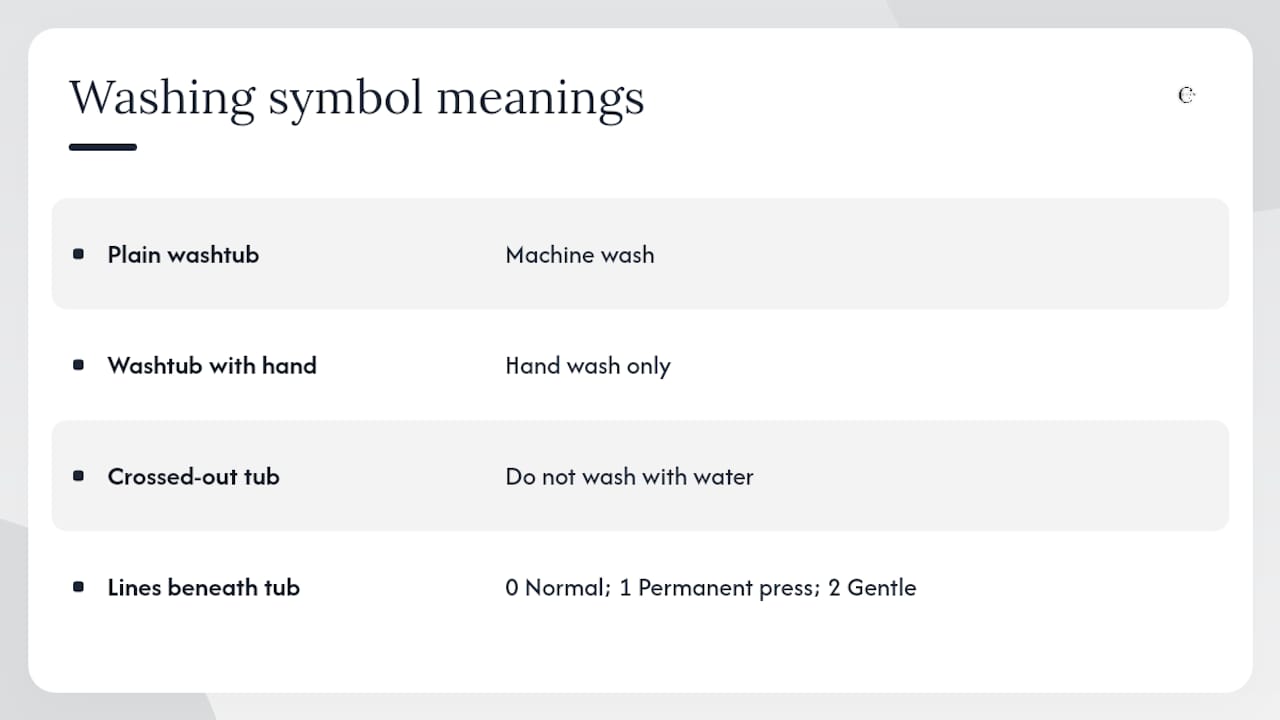
Dots inside the tub indicate temperature. Maytag’s temperature guide maps them as follows:
Lines beneath the tub control cycle agitation. No line means a normal cycle. One line means permanent press (reduced spin). Two lines mean gentle or delicate (minimal mechanical action). The “most severe treatment” principle applies here too: a symbol with two lines is telling you to go no rougher than gentle.
Pro Tip: When the label is ambiguous or you’re unsure, default to cold water and a gentle cycle. Toss delicates in a mesh laundry bag to reduce friction. Cold water handles most everyday fabrics safely and costs less to run.
What do drying symbols tell you about your clothes?
The square family handles all drying instructions, as documented by Whirlpool’s care symbol guide. A circle inside a square means tumble dry. Lines inside the square indicate air-drying methods:
- Horizontal line inside square: dry flat (lay the garment on a clean surface)
- Curved line at the top: hang to dry
- Three vertical lines: drip dry (hang while wet, no wringing)
- Lines in the corner: dry in shade (avoid direct sunlight)
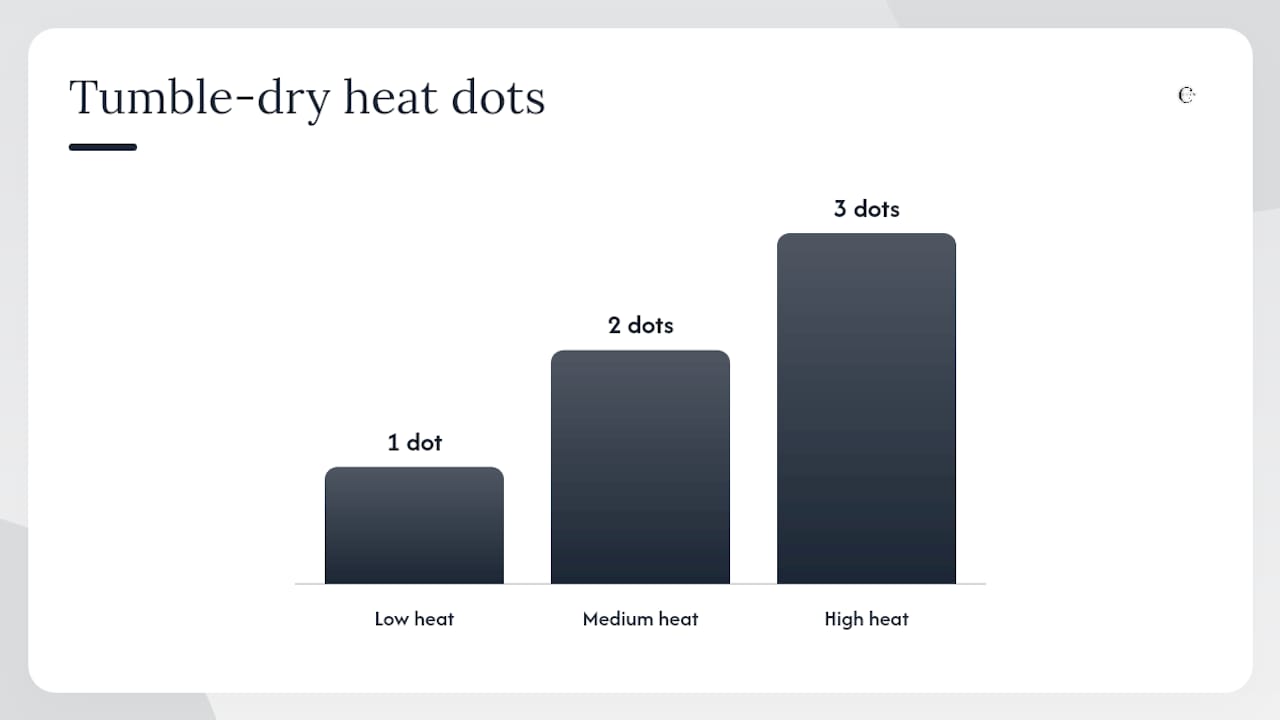
Dots inside the tumble-dry circle mirror the washing temperature logic. One dot means low heat, two dots mean medium, three dots mean high. A circle inside a square with no dots means tumble dry at any heat. A circle inside a square crossed out means no machine drying at all.
A line beneath the tumble-dry symbol signals reduced tumble action, the dryer equivalent of a gentle wash cycle.
- Wool and cotton shrink under high dryer heat. Pull them out slightly damp and reshape by hand.
- Waterproof-coated jackets and technical outerwear should always air-dry. Heat degrades the DWR (durable water repellent) coating.
- Mixed-fiber garments follow the most sensitive fiber’s rule. A 60% cotton, 40% polyester hoodie dries best on low heat or air.
Pro Tip: For waterproof or coated items, air-dry completely before storing. Tumble heat can delaminate bonded fabrics and strip protective finishes. Check the jacket care guide for fiber-specific drying advice.
How do bleach symbols work on clothing tags?
The triangle is the bleach symbol. Empty triangle means any bleach is safe, including chlorine bleach. A triangle with two diagonal lines means non-chlorine (oxygen-based or color-safe) bleach only. A crossed-out triangle means no bleach of any kind.
Chlorine bleach works on white cotton and linen but will strip color, weaken synthetic fibers, and destroy waterproof finishes. Non-chlorine alternatives like OxiClean or hydrogen peroxide-based products are gentler and safe for most colors when the label permits it.
Pro Tip: Before using any bleach product, test on a hidden seam. Apply a small amount, wait two minutes, and blot with a white cloth. If color transfers or the fabric changes texture, skip bleach entirely and treat the stain with an enzyme-based cleaner instead.
What do the dots on an iron symbol mean?
The iron icon with dots tells you exactly how much heat to apply. One dot means low heat (up to around 230°F), suitable for silk and most synthetics. Two dots mean medium heat (up to around 300°F), good for wool and nylon. Three dots mean high heat (up to around 390°F), appropriate for cotton and linen.
Steam lines below the iron mean steam is safe. A crossed steam line means dry iron only. A crossed-out iron means do not iron at all, which is common on embellished or heat-sensitive garments.
Fiber-specific guidance:
- Silk and synthetics: low heat, no steam. Steam can leave water marks on silk and warp synthetic fibers.
- Wool: low to medium heat with a pressing cloth between the iron and the fabric.
- Cotton and linen: high heat works well, especially with steam to release stubborn wrinkles.
Pro Tip: Skip the iron entirely when you can. Hang a wrinkled garment in the bathroom while you shower. The steam relaxes most wrinkles in ten minutes. Wrinkle-release sprays work well on synthetics, and a dryer’s wrinkle-prevent cycle handles many casual fabrics without any heat risk.
What do dry-cleaning symbols mean on a tag?
A plain circle means dry clean. Letters inside the circle are instructions for the cleaner about which solvents to use. A means any solvent is safe. P means petroleum-based solvents are allowed (a common restriction for delicate dyes). F means petroleum solvent only, a more limited option. W inside a circle means professional wet cleaning, a water-based process gentler than traditional dry cleaning.
A circle crossed out means do not dry clean. This appears on some waterproof items and garments where solvent exposure would damage the finish.
Tide cautions that “dry clean only” is sometimes a conservative label brands use to limit liability rather than a strict fabric requirement. That said, ignoring it on silk, cashmere, structured wool suits, or garments with adhesive interfacing can cause irreversible shrinkage or color bleeding.
Pro Tip: When you drop off a garment, tell the cleaner the letter code. A good cleaner will adjust their solvent choice accordingly. For lightly worn “dry clean only” items like blazers, professional wet cleaning is often a gentler and more eco-friendly option.
What should you do when a clothing label is missing or unclear?
Labels fade, get cut off, or simply aren’t there on vintage or handmade pieces. Here’s a safe fallback sequence:
- Check fiber content first (if any text remains). Natural fibers like wool and silk need the most caution.
- Run a cold, gentle machine wash in a mesh laundry bag. Cold water rarely causes shrinkage or color bleeding.
- Air-dry flat or hang in shade. Avoid the dryer until you know how the fabric responds.
- Do the cotton-swab colorfastness test on an inside seam before washing. Dye transfer means hand-wash cold, separately.
- Send structured garments to a professional. Tailored jackets, suits, and items with stiff interfacing lose their shape in a home washer regardless of fiber content.
On apps: Tide notes there is no universally reliable app for scanning and interpreting all clothing care symbols. Some apps can help with common symbols, but accuracy is inconsistent. Learning to read the symbols manually remains the most dependable method.
For specialty items like period underwear or other delicate garments with specific care needs, a portable mini washing machine designed for delicates gives you control over water temperature and agitation without risking damage in a full-size machine.
Pro Tip: When choosing between professional wet cleaning and dry cleaning, wet cleaning is gentler on most natural fibers and avoids harsh solvents. Tell your cleaner the garment’s fiber content and any letter codes you remember from the original tag.
What else does a clothing label tell you?
Beyond care symbols, U.S. garment labels carry a few more pieces of useful information. The country of origin tells you where the garment was manufactured, which can signal production standards and sometimes fabric quality. The RN (Registered Number) is a manufacturer identifier you can cross-reference on the FTC’s public database to verify who made the item.
For employee uniforms and workwear, the country of origin and fiber content are especially relevant because institutional laundering at high temperatures requires fabrics that hold up to repeated hot-water cycles.
Manufacturer instructions sometimes appear as written notes alongside the symbols. These might specify “wash inside out,” “remove hardware before washing,” or “do not wring.” Follow them. They’re there because the brand has seen what happens when customers don’t.
What do label terms like “pre-shrunk” and “colorfast” actually mean?
Pre-shrunk means the fabric was treated during manufacturing to minimize further shrinkage. It does not mean zero shrinkage. Washing in hot water or drying on high heat can still cause some contraction, just less than an untreated fabric.
Colorfast means the dye was set to resist fading and bleeding under normal wash conditions. It’s not a guarantee. Garment-dyed items, for example, often bleed slightly in the first few washes. The garment-dyed sweatshirt guide explains why that first-wash bleed is normal and how to manage it.
Eco-friendly on a label can mean several things: organic fiber sourcing, low-impact dyes, recycled content, or certified production processes. It’s a marketing term with no single legal definition in the U.S., so look for specific certifications like GOTS (Global Organic Textile Standard) or OEKO-TEX to verify the claim.
How do you care for mixed-fiber garments and special treatments?
Mixed-fiber garments follow the most sensitive fiber in the blend. The dominant fiber sets the wash temperature; the minority fiber sets the ceiling on heat and agitation.
Special treatments add another layer. Waterproof coatings (DWR), flame-retardant finishes, and anti-wrinkle treatments are all heat-sensitive. High dryer temperatures degrade them faster than normal wear does. Air-drying extends the life of these finishes significantly.
For specialty garments like period underwear, the care approach combines delicate-fabric rules with hygiene requirements. Cold or warm water, gentle detergent, and air-drying preserve both the fabric and the functional layer.
Structured garments (tailored blazers, suits, anything with boning or stiff interfacing) are a different category entirely. At-home washing distorts the internal structure even when the outer fabric survives. These belong at the cleaner regardless of what the outer-fabric label says.
Why reading labels is the smartest habit you can build
Most garment damage happens in the laundry, not on the street. A $90 merino sweater ruined in a hot dryer is a $90 mistake that a 30-second label check would have prevented. The five-symbol system, standardized by GINETEX and aligned with ISO guidelines, is consistent across most international brands sold in the U.S., which means once you learn it, you apply it everywhere.
CAS7MFOCUS designs clothing meant to last, from everyday streetwear to structured outerwear. The care label is part of that design. Following it isn’t just about protecting one garment; it’s about getting full value from your wardrobe and reducing the cycle of replacing pieces that wore out too soon.
Shop Clothing That’s Built to Last
Every piece in the CAS7MFOCUS collection comes with clear care labels so you always know exactly how to keep it looking its best. From elegant everyday T-shirts to full collections for women, men, and kids, the store is built around quality you can feel and style you can wear with confidence. Browse the full collection at CAS7MFOCUS and shop pieces designed to go the distance.
Sources
- Textile care symbols (GINETEX)
- How to Read Laundry Symbols | Tide
- How to Read Laundry Symbols — Maytag
- Laundry care symbols explained — Whirlpool
- How to Read Clothing Labels (What They Tell You) | WearScore
For a printable laundry-symbol cheat sheet, the Maytag guide above includes a downloadable chart you can print and post in your laundry room.
FAQ
How do you identify a clothing label?
Look at the back neckline or left side seam for a sewn-in tag. It will list fiber content, care symbols, country of origin, and an RN manufacturer number, all required by U.S. law.
What fabrics should never be dry cleaned?
Garments with a circle crossed out on the label should not be dry cleaned. Waterproof-coated fabrics and some specialty finishes fall into this category because solvent exposure degrades the coating.
Is there a reliable app that reads clothing care symbols?
No universally reliable scanner app exists for all clothing labels. Tide confirms that learning to read the symbols manually remains the most accurate method, as app accuracy is inconsistent across symbol types.
How do you read clothing care labels on an iPhone?
Point your iPhone camera at the label and use the Live Text feature to capture any written text. For symbol-based icons, cross-reference them against a printable cheat sheet or the Maytag symbol guide, since no app reliably interprets all care icons automatically.
What does “dry clean only” really mean?
It means the manufacturer recommends professional cleaning, though Tide notes some brands use it conservatively. For silk, cashmere, structured jackets, and garments with adhesive interfacing, treat it as a firm instruction to avoid irreversible damage.

