


Carrito
0
Types of hoodies fall into four practical groups: everyday pullovers and zip-ups, fashion-driven cuts like cropped and oversized, performance styles built for movement, and specialty constructions like sherpa or knit. This guide breaks down close to 30 named styles, explains which fabrics and fits actually matter, and shows you how to pick one with real product examples from CAS7M along the way.
TL;DR:
- Heavier midweight fleece hoodies with reinforced seams last longer and resist pilling, especially when paired with structured ribbing and durable fabrics.
- Oversized hoodies are dominant among Gen Z due to their relaxed fit, while fitted and cropped styles suit layered or fashion-forward looks.
- Fabric choice, particularly thickness and material, significantly impacts durability, warmth, and suitability across different seasons and activities.
- Proper fit is indicated by shoulder seam placement and hem length, with sizing adjustments needed for layered wear or outerwear use.
- Curated shopping selections from brands like CAS7M focus on quality construction and fabric weight, ensuring longevity and comfort in everyday, fashion, or performance hoodies.
Table of Contents
- Types of Hoodies: The Full Breakdown by Category
- Materials and Fabric Weight: What Actually Holds Up
- Fits, Cuts, and Sizing: Getting the Silhouette Right
- How to Choose a Hoodie: A Buyer’s Checklist
- Styling Hoodie Types for Real Outfits
- CAS7M’s Take: What We Look for in a Good Hoodie
- Shop the Styles: Three CAS7M Picks Worth Your Cart
- Sources
- FAQ
Types of Hoodies: The Full Breakdown by Category
Most hoodie guides throw thirty names at you with no organization, which makes shopping harder, not easier. A better approach groups styles by why you’d actually wear one. Vistaprint’s breakdown separates hoodies by purpose and construction, and that framework holds up well for real shopping decisions.
Everyday and layering styles cover the hoodies you reach for without thinking:
- Pullover hoodie — no zipper, kangaroo pocket, drawstring hood. It remains the single most common hoodie style because it’s simple, warm, and cheap to produce well, according to ApparelnBags.
- Full-zip hoodie — a front zipper from hem to collar, chosen specifically for layering flexibility over a T-shirt or under a jacket.
- Half-zip hoodie — zipper stops mid-chest, giving a mock-neck look with less bulk than a full zip.
- Quarter-zip hoodie — a shorter zip still, closer to a pullover in feel but with a small vent for temperature control.
- Hooded sweatshirt — technically the parent category, often used interchangeably with “pullover” but sometimes lacking a front pocket.
- Basic crew neck-hood hybrid — a hoodie with a flatter, less structured hood, common in minimalist collections.
- Sleeveless hoodie — a hooded vest, worn over long sleeves for layering without bulk at the arms.
- Long-sleeve zip hoodie — the standard silhouette most people picture, midweight, versatile, unisex.
Fashion and trend-driven cuts lean into silhouette as the whole point:
- Oversized hoodie — dropped shoulders, extra room through the body and sleeves. Gen Z’s pull toward relaxed, roomy fits has kept this style dominant in recent style tracking.
- Cropped hoodie — hem hits at or above the waist, usually paired with high-rise bottoms.
- Longline hoodie — the opposite extreme, hem drops past the hip for a coat-like silhouette.
- Fitted or slim hoodie — tapered through the torso and arms, built to layer cleanly under jackets.
- Cardigan-style zip hoodie, including a zipper cardigan hoodie for both men and women, which swaps the pullover front for an open, jacket-like drape you can wear closed or loose.
- Side-zip hoodie — zipper runs along the side seam instead of the center front, a detail borrowed from sport silhouettes.
- Color-block hoodie — panels of contrasting color or fabric, popular in streetwear drops.
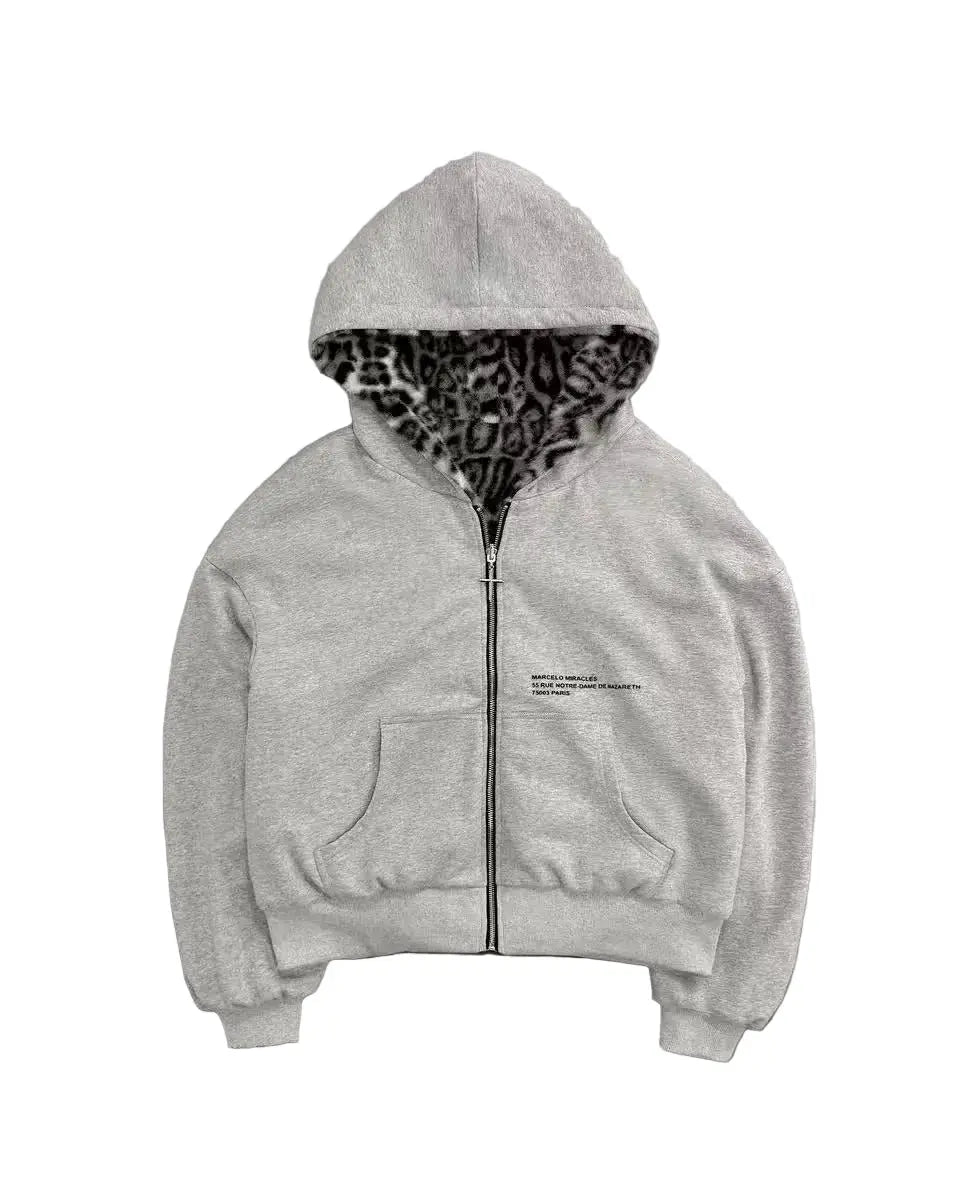
- Graphic or print hoodie — the print is the design, from logo hits to full all-over patterns like a vintage leopard print zipper hoodie that flips between two distinct looks depending on which side faces out.
- Tie-dye or wash hoodie — garment-dyed or hand-dyed finishes that make every piece slightly unique.
- Cinched-waist hoodie — drawstring or elastic at the hem pulls the silhouette in for shape.
Performance and activewear styles are built around movement first:
- Athletic zip hoodie — tech fleece or moisture-wicking fabric, thumbholes, and a closer fit for training.
- Running hoodie — lighter weight, often with reflective details and a higher hem for stride clearance.
- Sport cardigan hoodie, like a women’s sport cardigan side zipper hoodie, which blends a relaxed cardigan cut with performance fabric for gym-to-street wear.
- Compression hoodie — snug through the torso, worn as a base layer under padding or outerwear.
- Neoprene hoodie — wetsuit-grade material, common in surf and waterspout lines for warmth without heavy absorption.
- Windbreaker hoodie — technical shell fabric replaces fleece for wind resistance over insulation.
Specialty constructions solve for texture, warmth, or a specific occasion:
- Sherpa-lined hoodie — fleece or sherpa lining inside a heavier shell, built for cold-weather wear.
- Knit hoodie — sweater-weight yarn instead of fleece, giving a dressier, textured look.
- French terry hoodie — looped, uncut fabric on the inside, lighter and more breathable than brushed fleece.
- Fleece-lined denim or canvas hoodie — a hybrid jacket-hoodie for rugged outdoor wear.
- Detachable-hood hoodie — the hood zips or snaps off, converting the piece into a crewneck.
- Two-in-one reversible hoodie — wearable on either side, often with a different print or color per face.
Some of these overlap heavily. A side-zip hoodie can also be a sport cardigan; an oversized hoodie can also be French terry. The quickest way to identify what you’re looking at: check the closure (zip, half-zip, pullover), the hem length, and the fabric texture.
Materials and Fabric Weight: What Actually Holds Up
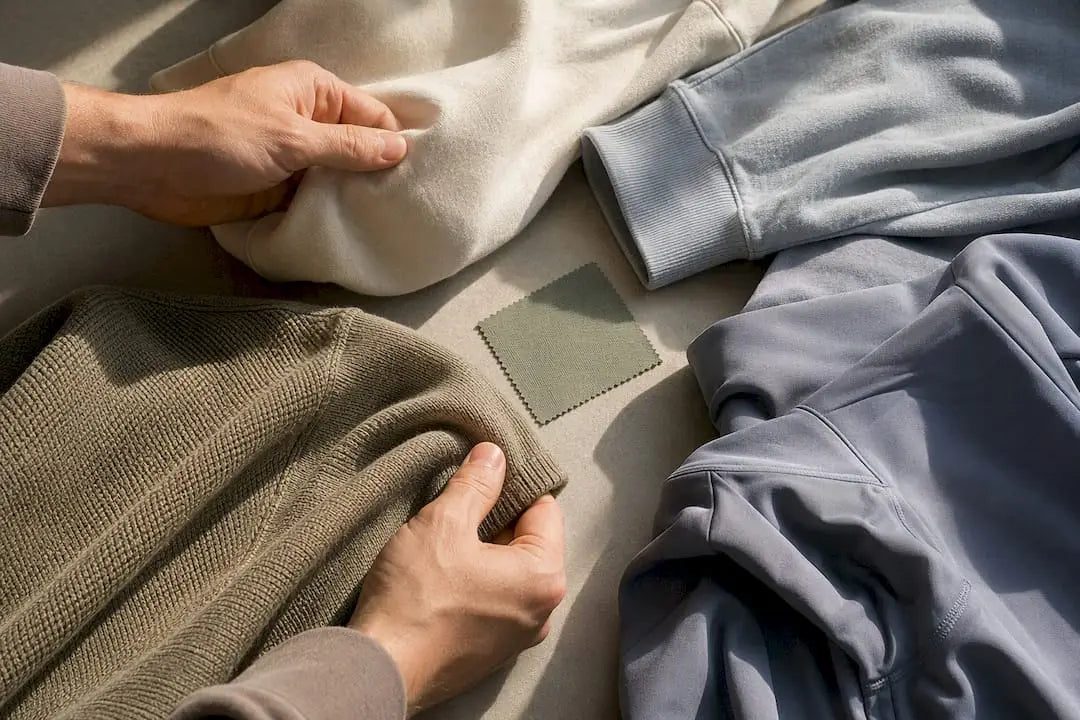
Fabric weight, more than brand or price point, separates a hoodie that lasts three winters from one that pills after five washes. According to FashionBeans, heavier midweight and heavyweight fleeces paired with structured ribbing are what keep a hoodie’s shape intact over time. Thin, low-weight cotton looks fine on day one and sags by week three.
Here’s how the common materials break down:
- Cotton fleece — soft, breathable, moderate warmth; the standard for everyday pullovers.
- French terry — lighter and more breathable than brushed fleece, better for mild weather or layering.
- Polyester or tech fleece — wicks moisture, dries fast, the default for athletic zip hoodies.
- Sherpa — thick, plush lining for genuine cold-weather insulation.
- Neoprene — dense, water-resistant, used in performance and outdoor-specific pieces.
- Knit — sweater-like construction, warmer for its weight but less stretch-recovery than fleece.
Fabric Fact: Midweight brushed fleece with reinforced seams and sturdy ribbing resists shape loss and pilling far better than thin cotton blends, per FashionBeans’ testing notes.
For seasonal matching: lightweight French terry works from spring through early fall, midweight cotton fleece covers three seasons, and heavyweight or sherpa-lined builds are for genuine cold. Wash fleece inside-out on cold, skip the dryer’s high heat, and the ribbing will outlast the rest of the garment.
Fits, Cuts, and Sizing: Getting the Silhouette Right
Fit changes a hoodie’s entire personality more than color or print ever will. A fitted hoodie tapers close to the body through the chest and arms, built to sit cleanly under a jacket. A regular fit follows your natural shoulder line with a little room to move. Oversized hoodies drop the shoulder seam past your actual shoulder, adding volume through the body and sleeve. Slim cuts split the difference between fitted and regular, trimmer through the waist without being restrictive. Longline hoodies extend the hem well past the hip, while cropped styles stop at or above the waistband.
Three details signal fit before you even try one on:
- Shoulder seam placement — sitting on your shoulder means true-to-size; dropped past it means oversized.
- Hem length — hitting at the hip is regular; anything shorter or longer shifts the whole proportion.
- Sleeve taper — straight-cut sleeves read boxier; tapered sleeves read more fitted even in a relaxed body.
Pro Tip: Buying online and planning to layer? Size up one from your usual fit if you want room for a T-shirt underneath, but size true-to-fit for anything you’ll wear as an outer layer over just a tank or tee.
How to Choose a Hoodie: A Buyer’s Checklist
Comparing five browser tabs of hoodies gets easier once you run through the same four questions every time.
- Decide the primary use first. Warmth for daily wear, gym performance, fashion statement, or a mid-layer under a coat all point to different fabrics and fits.
- Match fabric weight to season and activity. Lightweight French terry for warm climates and layering, midweight cotton fleece for year-round versatility, heavyweight or sherpa for genuine cold.
- Check the construction details. Look at zipper quality (metal pulls outlast plastic), pocket type (kangaroo vs. side-entry), rib density at the cuffs and hem, and whether seams are reinforced or simply overlocked.
- Confirm sizing and the return policy before you buy. Hoodie sizing varies wildly between oversized streetwear labels and fitted athletic lines, so a flexible return window matters more here than almost any other clothing category.
If you’re shopping for a team, club, or group order rather than a single piece, custom team hoodie programs handle bulk sizing and branding differently than retail sizing charts, so that’s worth a separate look entirely.
Styling Hoodie Types for Real Outfits
A pullover hoodie works hardest under a denim or bomber jacket, hood tucked flat so it doesn’t bunch at the collar. A full-zip hoodie styles best half-open. Leaving the zipper partway down creates a vertical line that elongates the torso and lets an inner layer show, according to FashionBeans, while zipping it fully closed reads as a solid, minimalist block. Oversized hoodies pair naturally with slim joggers or straight denim to balance the volume up top. Cropped hoodies work best with high-waisted bottoms so no skin gap shows at the midsection. Knit hoodies dress up more easily than fleece, and layer well under a blazer or overskirt for a smart-casual look that still reads as comfortable.
- Swap sneakers for boots to shift any hoodie from athleisure to street-ready.
- A cross-body bag or chain layered over a hoodie adds a fashion edge without changing the garment at all.
- Roll the sleeves on a full-zip for a more finished, intentional look instead of a “just threw this on” feel.
Pro Tip: If your zip-up hoodie is heavier fleece, wear it open over a fitted tee rather than zipped, since bulky fabric closed all the way tends to add visual weight instead of structure.
CAS7M’s Take: What We Look for in a Good Hoodie
Comfort and construction come before trend every time we source or design a hoodie at CAS7MFOCUS. We prioritize fabric weight that holds its shape, ribbing that doesn’t loosen after a few washes, and sizing that works across genuinely different body types, not just one sample block. Three hoodie examples cover the everyday layering category, fashion-forward statement dressing, and the performance-meets-comfort gap many activewear options miss.
— CAS7M
Shop the Styles: Three CAS7M Picks Worth Your Cart
Reading about hoodie types is one thing. Actually finding pieces built with the fabric weight and construction details that matter is another, and some e-commerce stores offer such curated selections.
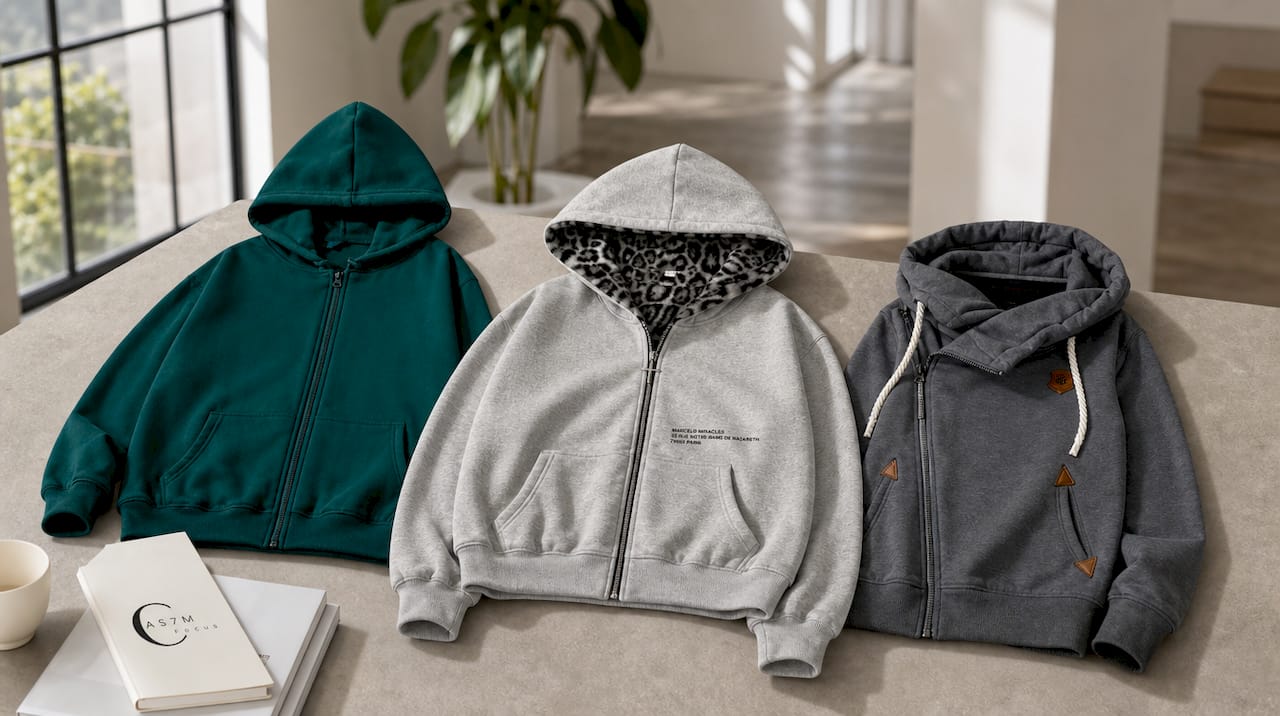
The zipper cardigan hoodie for both men and women covers the everyday layering category from the list above, an open-front cut you can wear zipped for structure or loose for a relaxed look, available across a broad size range. If fashion-forward prints are what you’re after, the vintage leopard print zipper hoodie wears two different ways depending on which side you flip out, giving you two looks in one garment. For anyone splitting time between the gym and everyday errands, the women’s sport cardigan side zipper hoodie blends a performance-ready cut with the comfort of a cardigan silhouette. Browse any of the three, check the size chart on the product page, and add the one that matches how you’ll actually wear it.
Sources
- Different Types of Hoodies | VistaPrint US
- Mockey
- Best zip-up hoodies for men (FashionBeans)
- 15 Types of Hoodies | Popular Hoodie Styles to Consider (ApparelnBags)
FAQ
How many types of hoodies are there?
There’s no single fixed number, but comprehensive style guides commonly name between 20 and 40 distinct types once you account for fit, fabric, and construction variations.
What are the different styles of sweatshirts?
Sweatshirts split into crew necks (no hood), pullover hoodies, and full-zip or half-zip hoodies, with further variation in fit like oversized, cropped, or fitted.
What is the most popular type of hoodie?
The pullover hoodie remains the most widely worn style because of its simple construction and universal comfort, while full-zip hoodies are the go-to pick whenever layering flexibility matters more than simplicity.
Why does Gen Z love hoodies?
Gen Z’s preference runs toward relaxed, oversized silhouettes that prioritize comfort and self-expression over tailored fits, a trend that’s kept oversized hoodies at the center of casual wardrobes.
Should I choose a zip-up or pullover hoodie?
Choose a pullover for simplicity and warmth, and a zip-up when you need to layer, vent heat, or style it open over another piece for a more finished look.

