


Chariot
0

Pick a jacket by the feels-like temperature and whether it’s wet or windy. Use the 58°F rule: 58°F (14°C) or below means wear a jacket, 58 to 70°F (14 to 21°C) means bring a light layer just in case, and above 70°F (21°C) you can usually leave it home. Wind and rain push those numbers down fast, so check the sections below to match the right jacket type to your actual conditions and stay warm, dry, and comfortable.
TL;DR:
- A jacket’s suitability depends on feels-like temperature, with below 58°F requiring one, 58-70°F calling for a light layer, and above 70°F usually being unnecessary.
- Wind and rain can lower the effective temperature by several degrees, making lighter jackets or layers necessary even in milder conditions.
- The role of layering significantly extends a jacket’s usefulness, with base, mid, and outer layers adaptable to different weather scenarios.
- Down is lightweight and warm but loses loft when wet, while synthetic insulation performs better in damp conditions.
- Waterproof shells with sealed seams protect better in persistent rain than water-resistant coatings alone.
Table of Contents
- How Do You Choose a Jacket for the Weather?
- What Role Does Layering Play in Picking a Jacket?
- Down, Synthetic, or Wool: Which Insulation Fits Your Climate?
- Waterproof or Water-Resistant: What’s the Real Difference?
- Does Jacket Fit Change How Warm You Stay?
- Which Jacket Fits Your Activity: Commuting, Hiking, or Standing Around?
- A Six-Step Checklist for Picking the Right Jacket
- How Much Should Weight and Packability Matter?
- How Do You Keep a Jacket Performing Season After Season?
- Why Does Material Durability Matter as Much as Warmth?
- Start Building Your Weather-Ready Wardrobe with CAS7MFOCUS
- A Straight Answer on Jacket Shopping
- Tools and Guides Worth Bookmarking
- Sources
- FAQ
How Do You Choose a Jacket for the Weather?
Choosing a jacket for weather comes down to one number: the “feels-like” temperature, not the number on the forecast app. Feels-like accounts for wind and humidity, and it’s a far better predictor of comfort than raw air temperature. A 45°F day with a 20 mph wind feels closer to 35°F, and that ten-degree swing is often the difference between a light jacket and a real winter coat.
A widely used benchmark from Jacket or Not? sets the wear threshold at 58°F (14°C). At or below that, most people are more comfortable in a jacket than without one. Between 58 and 70°F (14 to 21°C), you’re in gray-area territory. Carry something light, even if you don’t put it on right away. Above 70°F, a jacket usually becomes dead weight in your bag.
Pro Tip: Check the “feels-like” number, not just the temperature. A calm 50°F afternoon and a windy 50°F afternoon are two completely different jackets.
Here’s the breakdown by band:
- 70 to 60°F: A light jacket, denim jacket, or unlined windbreaker is enough. You want wind cutoff more than insulation here.
- 59 to 50°F: Step up to a light puffer or a lined jacket. This is where a hoodie alone starts to fail once the sun drops.
- 49 to 40°F: A mid-weight puffer, wool overcoat, or insulated trench does the job. Practical guidance on this exact band from Klodsy points to the same conclusion: a solid mid-weight layer with something warm underneath beats a single thick coat.
- 39 to 30°F: You need a heavy puffer or a genuinely winter-rated parka. Thin jackets stop working here even if they “looked warm” in the store.
- Below 30°F: This is expedition parka territory: heavy down, an insulated hood, and a longer hem that covers your hips.
Wind changes all of this. A 15 mph wind can make a 40°F day feel like 30°F, which bumps you a full tier up the list. Precipitation does something different: it’s not about warmth, it’s about material. A wool coat that’s perfectly warm at 45°F becomes miserable the moment it starts raining, because wet wool loses insulating power and takes hours to dry. If rain or wet snow is likely, prioritize a synthetic or waterproof shell over natural fibers regardless of the temperature reading.
One thing worth remembering: these bands assume you’re moving around normally, walking to work, running errands, standing at a bus stop occasionally. If you’re going to be stationary in the cold for long stretches (watching a game, waiting for a train) or highly active (hiking uphill), shift your pickup or down a tier. The activity-specific section below covers exactly how much that matters.
What Role Does Layering Play in Picking a Jacket?
Layering is the reason one good jacket can cover a 40 degree temperature range instead of just one. The system breaks into three jobs, and understanding them changes how you shop for outerwear entirely.
According to REI’s layering guidance, the three-layer system works like this:
- Base layer wicks sweat off your skin so you don’t get cold and damp underneath your clothes.
- Mid layer traps body heat. Think fleece, wool sweaters, or a light puffer.
- Outer layer blocks wind, rain, and snow so the warmth you’ve built up doesn’t escape or get soaked out.
Here’s the part people miss: your jacket doesn’t always play the same role. On a 55°F breezy afternoon, a light insulated jacket can be your outer layer over a t-shirt, full stop. On a 20°F morning, that same jacket might need to become your mid layer, worn under a heavier, windproof shell if you’re going to be outside for a while.
A few real combinations:
- Mild and dry (55 to 65°F): T-shirt plus a light jacket. No mid layer needed.
- Cold and dry (30 to 40°F): Base layer, sweater or fleece, insulated jacket as the outer.
- Cold and wet (30 to 40°F, raining): Base layer, thin fleece, waterproof shell on top, possibly with the insulated jacket worn underneath as the mid layer instead of on its own.
- Severe cold (below 20°F): Base layer, heavy mid layer, and a high-fill parka that does double duty as both insulation and weather block.
The mistake most people make is buying one jacket meant to do everything and one job at a time. A jacket that’s warm enough for 20°F is usually too much jacket for 45°F, no matter how good it looks. Building a small rotation, a light shell, a mid-weight puffer, and a heavier parka, gets you further than a single “do it all” purchase ever will. For a deeper walkthrough of specific outfit combos by season, CAS7MFOCUS’s layering guide for cold weather breaks this down piece by piece.
Down, Synthetic, or Wool: Which Insulation Fits Your Climate?
The insulation inside your jacket matters more than the brand on the tag. Each type solves a different problem, and picking wrong means either sweating indoors or freezing the moment it rains.
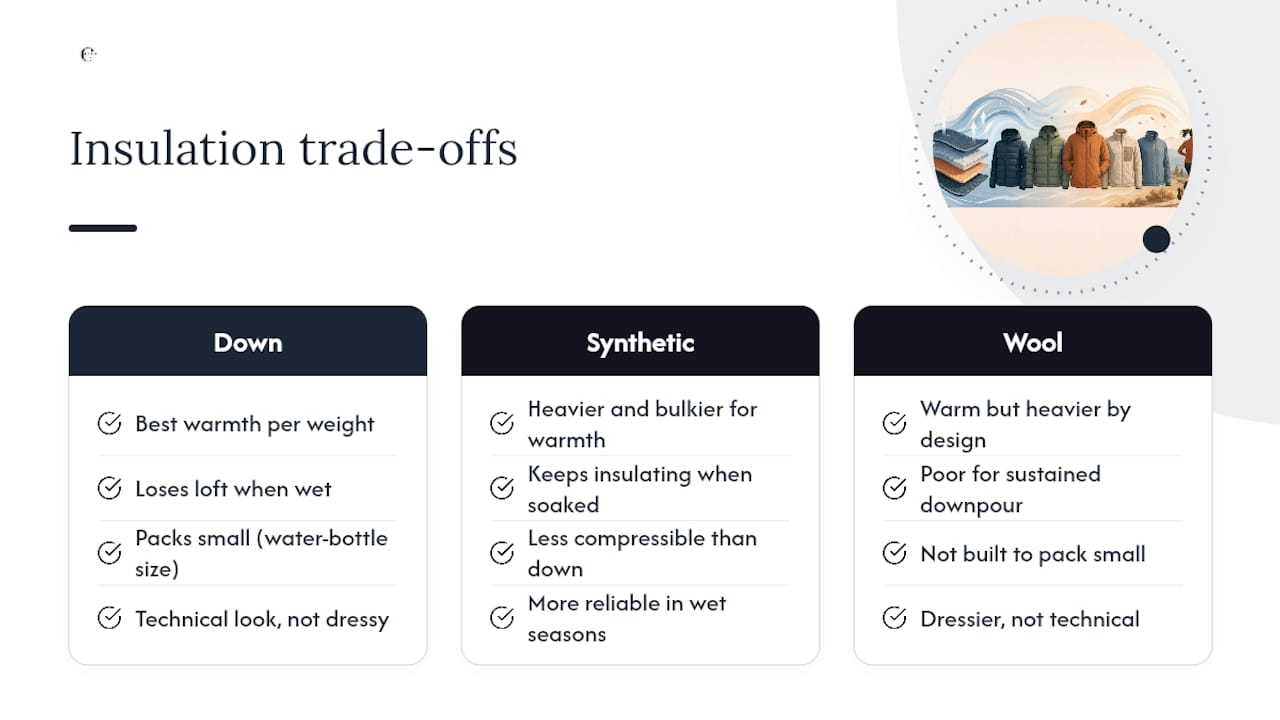
Down gives you the best warmth for the least weight. A high-fill-power down jacket can pack down to the size of a water bottle and still outperform a bulkier synthetic coat. The catch: down loses loft when wet, and wet down stops insulating almost entirely. Reviews of jacket warmth ratings from Alton Goods note that hydrophobic-treated down and down/synthetic hybrid builds close most of that gap, making them a reasonable pick even in damp climates.
Synthetic insulation is heavier and bulkier for the same warmth, but it keeps insulating even when soaked through. If you live somewhere with frequent rain or wet snow, a synthetic-fill jacket is often the more reliable choice over a season, even if it’s slightly less warm ounce for ounce.
Wool and wool-blend coats bring warmth and a cleaner, dressier look, but they’re not built for technical performance. A wool overcoat is excellent for a 40°F commute where you’re mostly indoors between stops. It’s a poor choice for a sustained downpour or an all-day hike.
There’s no standardized warmth rating for jackets the way sleeping bags have EN/ISO ratings, so fill power and fill weight are your best comparison tools. A jacket with 800 fill power down needs less material to hit the same warmth as one with 550 fill power, which is why two jackets can look similarly puffy but perform very differently in the cold.
Pro Tip: If a product page doesn’t list a fill power number, judge warmth by loft and bulk instead. More visible puff for the same weight usually means better insulation.
Shell fabric matters just as much as what’s inside it. A jacket with a membrane like Gore-Tex or a comparable proprietary laminate blocks wind and water almost completely, but it costs more and adds weight. BetterTrail’s winter jacket reviews recommend membrane shells specifically for wet climates, and insulation-only jackets (no membrane) for places that are cold but consistently dry.
Waterproof or Water-Resistant: What’s the Real Difference?
Waterproof and water-resistant are not interchangeable claims, and confusing them leads to a lot of soaked commutes. Waterproof jackets use a sealed membrane and taped seams. Water-resistant jackets rely on a surface coating called DWR (durable water repellent) that beads water off the fabric without fully sealing it.
The distinction matters because DWR wears off. According to Wikipedia’s entry on durable water repellent, DWR sheds light rain effectively when it’s fresh, but the coating degrades with washing and abrasion and eventually “wets out,” meaning water starts soaking into the fabric instead of rolling off. A membrane with taped seams doesn’t have that failure point; it stays waterproof until it’s physically damaged.
That doesn’t mean membranes always win. Full waterproof-breathable shells trap more heat and moisture inside than a simple water-resistant jacket, which is a real problem if you’re generating a lot of body heat.
- Choose a waterproof membrane shell if you’re dealing with sustained rain, wet snow, or long outdoor exposure.
- Choose a water-resistant, DWR-treated jacket for light drizzle, short walks, or anywhere breathability matters more than full sealing.
- For high-exertion activity, breathability usually outweighs total waterproofing. Sweating inside a fully sealed shell during a hard hike can leave you just as damp as standing in the rain would have.
A few practical signs a jacket is built to actually handle wet weather: taped or sealed seams (check the inside lining for a shiny tape strip), water-resistant zippers with a rubberized coating, and a storm flap covering the main zipper. CAS7MFOCUS’s breakdown of waterproof versus water-resistant jackets walks through how to spot these details before you buy.
Does Jacket Fit Change How Warm You Stay?
Fit affects warmth almost as much as insulation type does. A jacket that’s too tight compresses the insulation and reduces its ability to trap air, which cuts its effective warmth. A jacket that’s too loose lets warm air pump out with every step.
Length is the most overlooked variable. A hip-length jacket is fine for quick errands, but a thigh-length or full parka cut covers more of your body’s surface area, which matters enormously below freezing. If your winters regularly dip under 30°F, a longer coat outperforms a short one even at the same insulation level.
- Hoods: An insulated hood with a stiffened brim blocks wind off your face far better than an uninsulated shell hood. Helmet-compatible hoods matter only if you’re doing winter sports; for everyday wear, a fitted, removable hood covers most needs.
- Cuffs: Elastic or adjustable cuffs stop warm air from escaping at the wrist and keep snow from sliding up your sleeve.
- Hem cinches: A drawstring hem seals warmth at the waist, which matters more than people expect on windy days.
- Draft flaps: A strip of fabric behind the main zipper blocks the thin line of cold air that sneaks through zipper teeth.
- Pockets: Zippered hand pockets trap heat when closed; mesh-lined pit zips vent it when you’re overheating during activity.
OutdoorGearLab’s winter jacket testing consistently flags these small details, hoods, hems, draft flaps, as the difference between jackets with identical fill power performing very differently in real wind and cold. Try a jacket on with the layers you’ll actually wear underneath it, not just a t-shirt in a warm store. If you can’t move your arms freely with a sweater on, the fit is wrong. For a longer look at how fit interacts with your day-to-day wardrobe, CAS7MFOCUS’s guide to choosing jackets that fit your lifestyle is worth a read before you commit to a size.
Which Jacket Fits Your Activity: Commuting, Hiking, or Standing Around?
The same temperature calls for different jackets depending on what you’re doing in it. Movement generates heat, standing still loses it fast.
- Commuting: An insulated trench coat or a lined wool overcoat covers most commute scenarios well, because you’re moving in short bursts between warm indoor spaces. Prioritize wind resistance and pocket space over technical performance. You’re not hiking a ridge, you’re walking three blocks to a train.
- Active outdoor use (hiking, walking dogs, errands on foot for an hour or more): A light to mid-weight down or synthetic jacket paired with a breathable shell handles this better than one heavy coat. Packability matters here too. A jacket that compresses into your bag means you can shed a layer the moment you warm up, which happens fast once you’re moving uphill or picking up pace.
- Standing or stationary in severe cold (watching a game, waiting outside, working outdoors without much movement): This is the one case where you should go heavier than the temperature alone suggests. A long, high-fill down parka with an insulated hood beats a lighter jacket every time, because you’re not generating enough body heat through movement to make up the difference.
Wet winters complicate all three. If your region gets consistent rain or wet snow, swap wool for a treated synthetic or membrane shell in every one of these scenarios, even the commute. A stylish wool coat that soaks through on a rainy platform isn’t doing its job, no matter how good it looks.
A Six-Step Checklist for Picking the Right Jacket
Run through this before you buy, whether you’re shopping online or standing in a fitting room.
- Know your typical feels-like range. Check the average low for your area and season, then match it to the temperature bands above.
- Identify your dominant precipitation. Mostly dry cold and mostly wet cold call for different insulation entirely.
- Match insulation to moisture. Down for dry cold, synthetic or hydrophobic-treated down for wet cold.
- Confirm the fit with your real layers. Try it on over the sweater or fleece you’ll actually wear underneath, not a bare t-shirt.
- Check the weatherproofing level. Look for taped seams and sealed zippers if rain is common where you live.
- Test movement and pockets. Raise your arms overhead, reach across your body, and check that your phone and wallet fit without bulging or falling out.
Pro Tip: Do the arm-raise test in the store, not at home after the tags are off. A jacket that rides up at the waist when you reach overhead will do it every single time you’re outside.
How Much Should Weight and Packability Matter?
Weight and packability decide whether a jacket actually gets worn or just sits in the closet. A heavy parka that’s perfect for a stationary cold snap becomes a liability the moment you’re carrying it around on a 55°F afternoon that turned out warmer than expected.
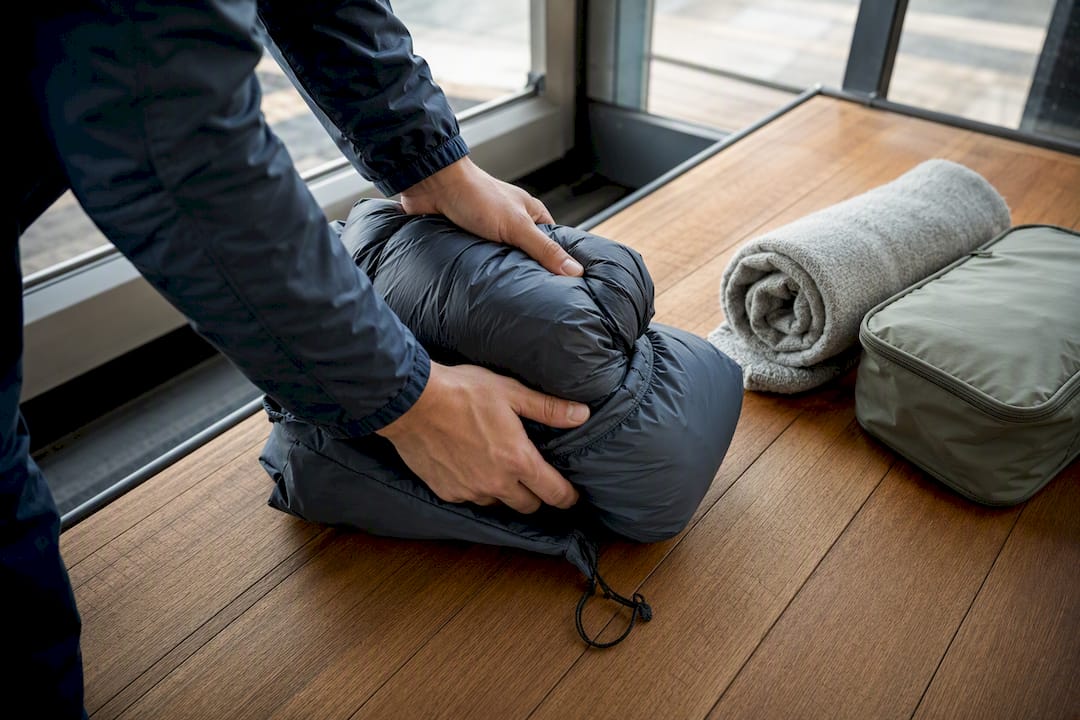
High fill-power down compresses smaller than lower fill-power down or synthetic insulation for the same warmth level, which is why premium packable jackets tend to lean toward higher fill numbers. If you travel often or need a jacket that can stuff into a bag between activities, that compressibility is worth paying for.
Synthetic jackets, while more reliable when wet, typically pack bulkier than down for equivalent warmth. That trade-off is fine for a car-to-office commute where packability barely matters, but it becomes a real annoyance for anyone hiking with a daypack or flying with carry-on luggage only.
A useful gut check: pick the jacket up and squeeze it into a ball with one hand. If it springs back to shape quickly and takes up less space than a rolled sweater, it’s genuinely packable. If it stays compressed or takes real effort to shove into a bag, plan on wearing it rather than carrying it. Neither is wrong. It just depends on whether your jacket needs to travel with you or simply needs to keep you warm on a fixed route.
How Do You Keep a Jacket Performing Season After Season?
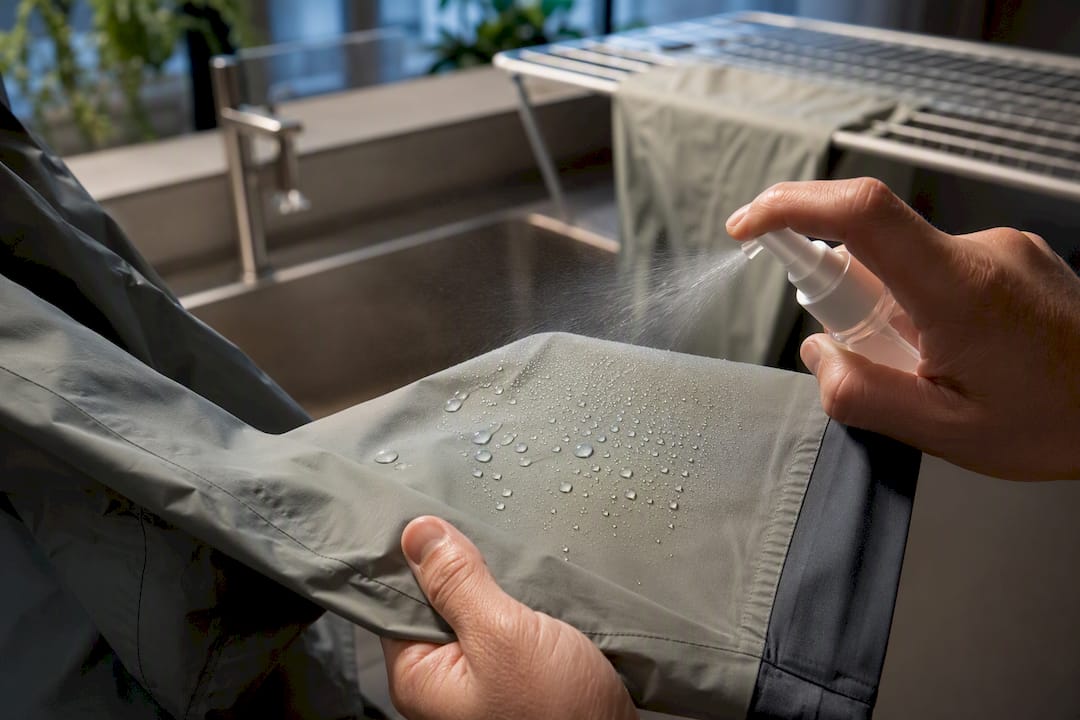
A jacket loses performance long before it looks worn out, and most of that loss comes from neglect rather than age. DWR coatings wear off with washing and everyday abrasion, which is exactly why a three-year-old “waterproof” jacket might soak through on a walk that used to leave you dry.
Wash technical jackets less often than you think you should, and always follow the care label rather than tossing them in with regular laundry. Overwashing breaks down membranes and insulation faster than normal wear does. When a jacket does start beading water less effectively, a DWR reproofing spray or wash-in treatment restores most of that repellency without needing a new coat.
Down jackets need specific care too. Regular detergent strips the natural oils that keep down clusters lofted, so a down-specific cleaner protects warmth over the long run. Always dry down jackets fully before storing them; damp down clumps together and stops insulating properly, and mildew sets in fast in a compressed storage bag.
Store jackets loosely hung rather than permanently stuffed into a compression sack. Down and synthetic insulation both lose loft if left compressed for months at a time, and that lost loft doesn’t always bounce back the way it did when the jacket was new. A few minutes of basic care each season adds years of real performance to a jacket that would otherwise quietly stop doing its job.
Why Does Material Durability Matter as Much as Warmth?
A jacket’s outer fabric takes more abuse than any other part of it, from backpack straps to subway railings to branches on a trail, and that wear shows up as thinning fabric, pilling, or torn seams long before the insulation gives out. Denier count is the simple number to check: a higher denier rating means a thicker, tougher outer fabric, though it usually comes with more weight.
Ripstop weaves reinforce fabric with a grid pattern that stops small tears from spreading into larger ones, which matters if you’re brushing against branches or rough surfaces regularly. A jacket without ripstop can develop a small snag that turns into a real hole within a season of hard use.
Reinforced high-wear zones, shoulders, elbows, and the bottom hem near zippers, extend a jacket’s life significantly if you’re wearing it daily rather than occasionally. For anyone using a jacket as a genuine daily driver rather than an occasional dress-up piece, that reinforcement is worth checking for before purchase, not something to discover after the fabric already shows wear. Matching durability expectations to how hard you’ll actually use the jacket saves money over the long run.
Start Building Your Weather-Ready Wardrobe with CAS7MFOCUS
This guide follows the idea of matching the piece to the conditions, rather than buying one jacket and hoping it covers everything. If you’re layering for cooler days, the tight-fitting long-sleeved fitness clothes for men work as a base layer that wicks moisture before your mid or outer layer goes on, useful anywhere from a brisk 55°F walk to a full winter setup underneath a heavier coat.
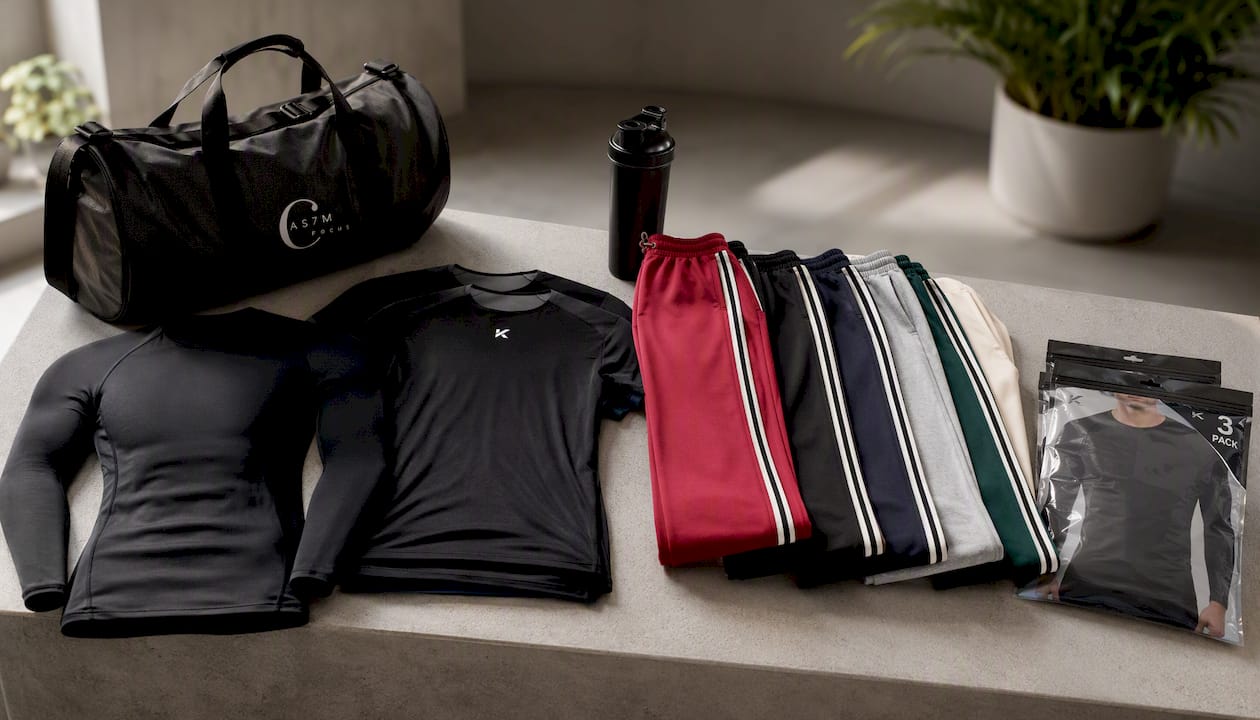
For active days where you’re generating heat and need moisture control, the Men Pro Sauna Shirt 2.0 3-pack gives you a base-layer option built for workouts or high-exertion outdoor use, the kind of activity where breathability matters more than a fully sealed shell. Pair either with the men’s casual fitness straight-leg sports pants for a full layering system that moves with you instead of against you, whether you’re commuting, hiking, or just running errands in shifting weather.
If you’re still working out what actually fits your day-to-day rotation, the fit and lifestyle guide walks through sizing and layering choices in more depth. Start with your base layer, check the temperature bands above for your outer jacket, and build the rotation from there.
A Straight Answer on Jacket Shopping
Most people overbuy warmth and underbuy versatility. A single “warmest possible” parka sounds like the safe choice, but it’s overkill for three out of every four days you’ll actually wear a jacket, and it teaches you nothing about how layering works. The smarter approach, and the one this guide keeps circling back to, is building a small rotation around feels-like temperature bands rather than chasing one perfect coat.
The other overlooked point: wet-weather planning gets treated as an afterthought when it should be a first filter. A gorgeous wool overcoat that’s technically warm enough for 40°F becomes useless the moment it rains, and that’s a far more common failure than buying something too thin. If your region sees regular rain or wet snow, weatherproofing should narrow your choices before insulation type even enters the conversation.
Modular pieces with removable liners deserve more attention than they get, too. A shell that adapts across three temperature bands instead of covering just one is often the better long-term buy over three separate single-purpose jackets, even when the single-purpose options look more appealing individually. Buy for how you actually move through a season, not for the single coldest day you might see once a year.
— CAS7M
Tools and Guides Worth Bookmarking
A few resources are worth keeping handy beyond this guide. Jacket or Not? gives a live wear/bring/leave call based on your local forecast, useful for daily decisions rather than seasonal planning. What Should I Wear Outside factors in wind and evening temperature drops for a fuller picture than a single number provides. REI’s cold-weather dressing guide remains one of the clearest technical explainers on layering mechanics. For jacket-specific performance data, OutdoorGearLab’s winter jacket reviews and BetterTrail’s roundup both test warmth and weather protection under real conditions rather than lab specs alone.
Sources
- Jacket or Not? (wear/bring/leave guidance)
- How to dress in cold weather — REI
- Best men’s winter jackets — BetterTrail
- Durable water repellent — Wikipedia
FAQ
What Is the Best Jacket for Different Weather Conditions?
There’s no single best jacket for every condition. The right choice depends on the feels-like temperature, whether it’s wet or dry, and how active you’ll be, which is why matching jacket type to temperature band and precipitation, as outlined above, works better than chasing one “do everything” coat.
What Is the Three-Layer Rule for Winter?
The three-layer rule uses a base layer to wick moisture, a mid layer to trap warmth, and an outer layer to block wind and precipitation, as described in REI’s layering guidance. Your jacket can serve as either the mid or outer layer depending on the temperature and conditions.
What Type of Jacket Should I Wear in 40 Degree Weather?
At 40°F, a mid-weight puffer, wool overcoat, or insulated trench coat with a warm mid-layer underneath is the reliable choice, per guidance from Klodsy’s temperature-specific outfit breakdown. Switch to a synthetic or waterproof option if rain is likely.
Is 70 Degrees Too Hot for a Jacket?
At 70°F, most people are comfortable without a jacket, since the practical wear threshold sits around 58°F and the 58 to 70°F range is really just a “bring a light layer just in case” zone, based on feels-like wear/bring/leave guidance. A light unlined jacket is the most anyone typically needs at 70°F.
